?

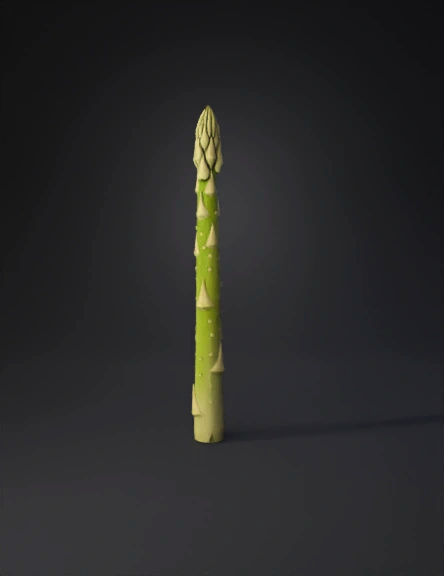
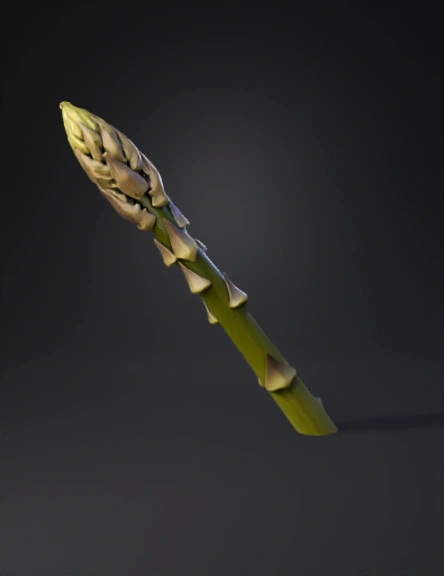
Asparagus 3D Models

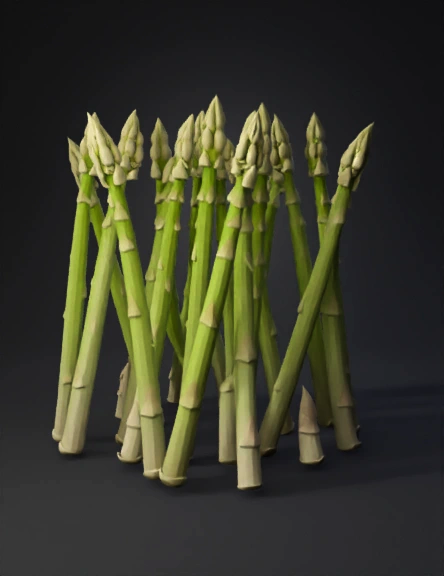
Find the best Asparagus 3D Models, free download in STL, FBX, GLB, OBJ, 3MF, USDZ for 3D modeling and creation in Blender, 3D printing, game developing, animation, eCommerce, AR/VR and etc. Generated by Tripo AI 3D Generator.

一盘切开的黄芪
Anonymous1756525527
A pristine white ceramic round dinner plate containing a perfectly cooked premium steak. The steak is placed neatly in the center of the plate. Next to the steak, not touching it, are arranged roasted vegetables and asparagus. Clear separation between the meat and the garnish. High-end plating, organized food arrangement, photorealistic 8k, studio food photography, clean geometry, isolated object.
nbs282
A pristine white ceramic round dinner plate containing a perfectly cooked premium steak. The steak is placed neatly in the center of the plate. Next to the steak, not touching it, are arranged roasted vegetables and asparagus. Clear separation between the meat and the garnish. High-end plating, organized food arrangement, photorealistic 8k, studio food photography, clean geometry, isolated object.
nbs282
Rectangular aluminum grill
Anonymous1709923409
plate
Anonymous1763324664
一个盘子里面的食物
Anonymous1751990267
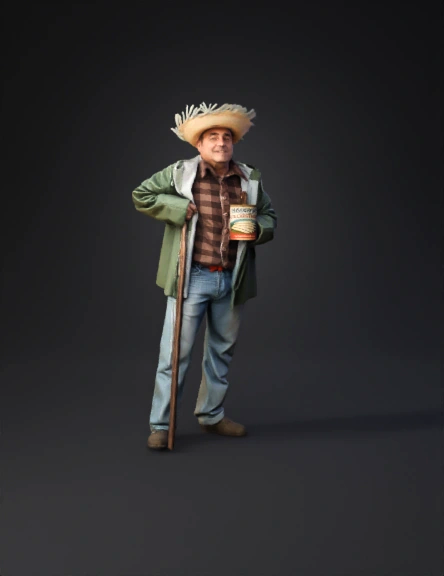
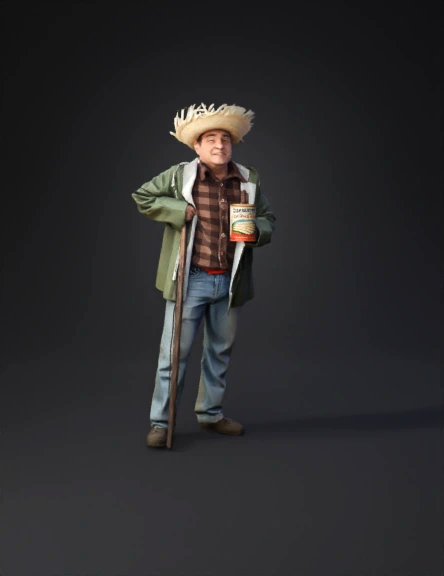
Erstelle mir einen Pokal. Er soll eine Gesamthöhe von ca. 12 bis 15 cm haben
Der Pokal soll über 3d Druckverfahren hergestellt werden.
Der Pokal soll einen Sockel haben von Länge = 5cm x breite = 5cm x Höhe = 4cm
Auf dem Pokal soll eingraviert sein:
"Gewinner des" 
"dünner Spargel" 
"Pokals 2025"

auf dem Sockel soll eine Figur sein, die eine Mischung aus einem Mensch und einem Dünnen Spargel ist - Stiel karikatur
Anonymous1764008008
Anonymous1726824462
a portion of rissoto rice
Anonymous1762462773
Anonymous1762850037
Anonymous1740449183
Anonymous1762047795
Anonymous1761213471
如图生成带盘子的油麦菜
Anonymous1757926945
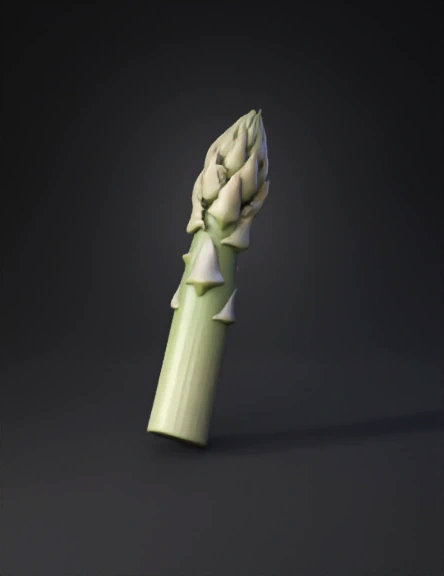
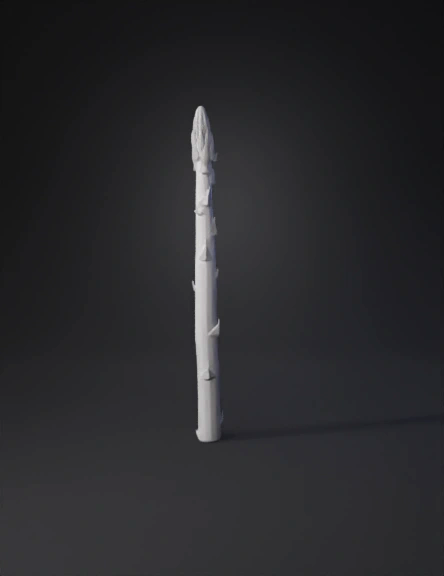
make 3d design with texture this asparagus
Anonymous1760500955
Objective: To provide a detailed breakdown of the plant's features for accurate 3D modeling or AI generation.

1. Overall Shape and Size:
Overview: A perennial, climbing herbaceous plant, forming a bushy clump but with long, slender, vining stems.

Average Height: Typically 1–2 meters tall, but can grow longer if provided with a good climbing support.

Appearance: Slender, light, and airy, creating a soft and delicate impression.

2. Tuberous Roots (The most characteristic part):
Location: Grows deep underground, the most important part of the plant in traditional medicine.

Shape: Clustered together (fasciculated tubers), usually 5–10 or more per cluster. Each tuber is fusiform (spindle-shaped) or cylindrical, swelling in the middle and tapering towards both ends.

Size: Approximately 3–7 cm long, 1–2 cm in diameter.

Color: Outer skin is pale yellow or off-white, slightly glossy. Inside is opaque white and succulent.

Surface Texture: The skin may be slightly wrinkled vertically or have fine striations, not completely smooth. Fine, small rootlets may branch out from the main tubers.

3. Stem:
Form: Climbing, slender, round, or slightly angular.

Color: Bright light green when young, transitioning to a darker green or slightly brownish hue on older sections.

Surface: Smooth and sometimes slightly glossy, may have a few faint vertical streaks.

Structure: Heavily branched, spreading outwards to form a wide and airy canopy. Small, downward-curving spines (thorns) are present on the stems and branches (these are very small and often difficult to see without close inspection/magnification).

4. Leaves (Actually Cladodes – Modified Branches):
Shape: Not true leaves, but "false leaves" or cladodes (phylloclades) that are needle-like or flattened, very small, slender, and soft. They grow in fascicles (clusters) of 2–3 (or more) at each stem node/axil.

Size: Approximately 1–3 cm long, 0.5–1 mm wide.

Color: Bright, fresh green, slightly glossy.

Arrangement: Radiate outwards from the branch like small clouds or threads, creating a "fluffy" and dense appearance that is still airy and transparent. The cladodes hang slightly down or spread horizontally.

5. Flowers:
Location: Grow in racemes (clusters) in the leaf axils (cladode axils) or at the tips of branches.

Shape: Tiny, bell-shaped or 6-pointed star-shaped.

Color: Pure white or creamy white.

Time: Blooms around May–June. Often unnoticed due to their small size.

6. Fruit:
Shape: Spherical, fleshy berry.

Size: Small, approximately 0.5–1 cm in diameter.

Color: Green when unripe, turning a vivid bright red or orange-red when mature, highly noticeable.

Arrangement: Usually grows in small clusters or singly along the branches.

Time: Fruits around August–September.

7. Overall Foliage/Branch Structure:
Impression: Creates a light, ethereal, and fluffy feeling, somewhat similar to a fern but with needle-like "leaves."

Density: The canopy is not too dense, containing gaps that allow light to pass through.

Key Considerations for 3D Modeling:
Climbing Nature: Ensure the branches can be posed to climb on a support structure or extend long distances naturally.

Cladode Fineness (Diệp chi): This is the crucial element defining the plant's beauty. They must be modeled as sufficiently slender and naturally arranged.

Tuberous Roots: If the model includes the underground section, the roots must be clearly defined with their characteristic shape and color.

Small Spines (Thorns): Can be omitted for low-detail models, but for high-detail models, including these small spines will enhance realism.

Proportions: Ensure the proportions between all parts (stem, branches, cladodes, flowers, fruit) are balanced and accurate.
Anonymous1760427943
Anonymous1744108927
蔬菜和肉
Anonymous1760064774
Enter invite code to get credits!