?

Bone shaped 3D Models

Find the best Bone shaped 3D Models, free download in STL, FBX, GLB, OBJ, 3MF, USDZ for 3D modeling and creation in Blender, 3D printing, game developing, animation, eCommerce, AR/VR and etc. Generated by Tripo AI 3D Generator.

Anonymous1759504186
Anonymous1748351129
Anonymous1746411136
Anonymous1763293193
Vero Lyn Esque
可拆卸的前臂外側裝甲模組。
這是一件可穿戴的裝甲設備,不是武器。

設計用於安裝在人類前臂的外側,
比例依循人體結構,靠近手肘處較寬,
向手腕方向逐漸收斂,但不形成刀刃造型。

以骨骼結構為靈感的結構型裝甲設計。
骨骼本身即構成外殼結構,
骨骼肋狀結構高聳、具承重感,彼此之間保留清楚的間隙。
骨骼定義整體結構,而非表面裝飾紋路。

整體設計強調剛性、結構張力,
具有明確的高度層次與清楚的平面轉折。
整體外觀必須清楚呈現為可穿戴裝甲,
而不是刀、匕首或任何武器。
Anonymous1767714094
Anonymous1741871329
Anonymous1765380015
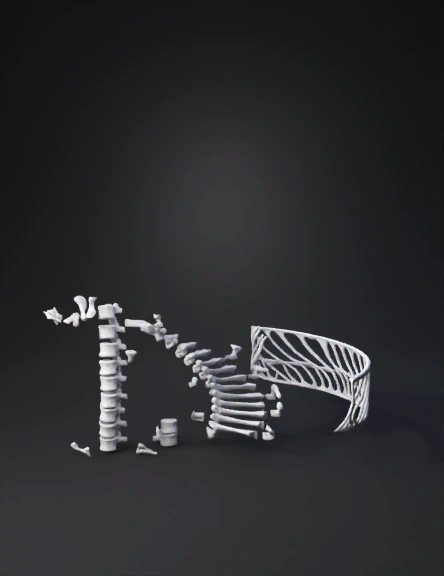
human rib cage (low poly, within 1500 faces)
Anonymous1763282102
human rib cage
Anonymous1763282102
厚度3cm,直径18.5cm
Anonymous1764142512
Anonymous1737179124
Anonymous1744816113
Anonymous1713287584
請根據圖片生成一個3D模型, 每隻腳只有4隻向前的腳趾
Anonymous1757490064
Lito22
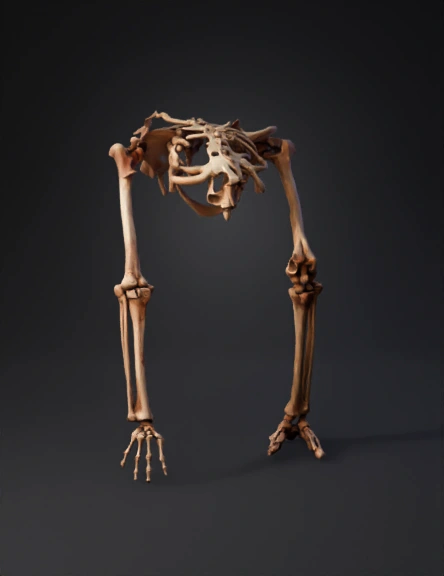
Male bust portrait with dual-skull chimeric structure, face to sternum, 185mm height, primary human skull frontal view, face aged approximately 45 years, expression solemn, eyes closed, eyelids showing fine wrinkles, orbital region deep-set, brow ridge pronounced, nose 22mm length with slight deviation suggesting old fracture, lips thin and slightly compressed, face showing lived texture (pores, fine lines, weathered skin at 0.1mm detail if printable), beard beginning at jawline (individual hairs 0.6mm where separable, suggesting but not fully modeling thousands), cranium intact with visible coronal, sagittal, lambdoid sutures, temporal bones showing external acoustic meatus (6mm diameter), mastoid process visible behind ears, zygomatic arch intact, but at occipital region skull begins splitting: lambdoid suture widening (3mm gap), gap filled with interstitial bone growth showing secondary skull emerging, wolf skull (Canis lupus, adult male, sagittal length 245mm scaled to 120mm for composition) growing from within human cranium, wolf skull oriented 180 degrees (facing backward), wolf occipital bone fused to human occipital, creating Janus-like structure, wolf frontal bones visible erupting from human parietal bones, wolf nasal bones and maxilla extending backward (from human perspective), wolf dentition complete: 42 teeth including 4 canines (15mm in wolf scale), carnassials visible, wolf mandible articulated but oriented posteriorly, wolf zygomatic arches threading through human temporal bones creating structural lattice, shared cranial vault space between species (visible in cross-section): human brain tissue (gyri and sulci visible, 0.8mm detail) in anterior cranial fossa, wolf brain tissue in posterior cranial fossa, separation membrane between (falx cerebri extended and modified), both brains connected at corpus callosum analog, neural tissue showing fiber tracts crossing species barrier, cervical spine showing transitional vertebrae: C1 atlas human proportions, C2 axis showing enlarged dens (wolf characteristic), C3-C4 intermediate morphology, C5-C7 fully wolf (larger, more robust), spine visible through transparent neck tissue, neck musculature visible: sternocleidomastoid present (human) but also deeper wolf neck muscles (splenius capitis, semispinalis), creating impossible anatomy that somehow articulates, larynx visible (human thyroid cartilage) with wolf hyoid bones lateral, suggesting dual vocalization possibility, clavicles human (145mm span) but thickened, sternum showing fusion line vertically: left half human manubrium morphology, right half showing wolf xiphoid characteristics, ribcage beginning: ribs 1-3 human spacing and curvature, ribs 4-6 showing progressive increase in robusticity, thoracic cavity partially visible showing anatomically confused lung: left lung human three-lobed, right lung wolf single-lobed, heart visible as shared organ (22mm) showing both species' circulatory requirements (higher wolf metabolic rate visible as thicker myocardium), scapulae suggestion: human scapular spine visible left, wolf scapular notch visible right, shoulders present but transformation incomplete, botanical elements minimal but significant: small spruce branches (Picea, 15-20mm) growing from interstitial spaces between skulls, needles dark green, branches emerging from sutures like hair, single crow skull (Corvus, 45mm) suspended in thoracic cavity where trachea bifurcates, held by bronchial branches transformed to thin twigs, crow skull oriented upward (beak pointing to chin), creating three-species triad, entire composition suggesting man who looked backward and found wolf looking forward, meeting in same space, designed for vertical printing with strategic separation: dual-skull complex as single piece (print inverted with support on wolf snout and human crown), neck/chest unit separate, connection at C1 via 1.5mm pin, human face printed in opaque resin with skin texture, wolf skull in aged bone white with yellowed teeth detail, skeletal elements visible through transparency in clear resin, brain tissue in translucent grey resin (minimal opacity), botanical elements separate inserts, crow skull printed separately (6mm hollow) inserted via bronchi access point, post-processing intensive: face requires preserved texture (minimal sanding), wolf skull aged with brown wash in temporal lines and tooth roots, brain tissue benefits from internal LED if display allows, appears as man containing his predator containing his victim (crow), mythological but anatomically argued, each bone justified, museum specimen of impossible natural history, Nordic folk tale anatomized, disturbing through precision not fantasy, suggests transformation is always bidirectional, the human contains the wolf that contains the raven that contains the forest, printable truth of composite being
Anonymous1760636067
Female bust portrait transitioning to cervidae anatomy, face to pelvis, 220mm total height, human face serene with eyes half-open (iris detailed, pupils 4mm), gaze directed slightly upward, skin porcelain smooth, facial features delicate with pronounced cheekbones, lips 8mm full slightly parted, cranium intact showing suture lines, temporal regions with velvet antler buds emerging (15mm nascent antlers, fuzzy texture), occipital bone beginning cervid transformation, ears human but positioned 8mm higher than normal (first sign of species drift), neck elongated 20mm beyond human proportion (C1-C7 vertebrae visible through translucent skin), cervical musculature (sternocleidomastoid, scalenes) showing fiber direction changing from human vertical to deer diagonal, clavicles extended and thinning, sternum beginning transformation at manubrium (human) to body (deer keel developing), ribcage showing progressive change: ribs 1-4 human curvature and spacing, ribs 5-8 intermediate (longer, flatter), ribs 9-12 fully cervid (extreme curvature, wider intercostal spaces), thoracic cavity exposed through transparency showing lungs as delicate branch structures (bronchial tree literal tree, alveoli as leaves), heart visible as red muscle tissue (only colored element) appearing as bleeding flower, scapulae transforming: human acromion and spine evident, infraspinous fossa elongating, coracoid process disappearing, glenoid fossa repositioning for quadrupedal stance, shoulders showing muscle transition: deltoid fibers becoming cervid trapezius pattern, arms beginning human (humerus, radius, ulna visible through skin) terminating mid-forearm as front legs (carpals fusing to cannon bone, phalanges reducing, small hooves forming), spine showing continuous transformation: thoracic vertebrae T1-T13 with progressive spinous process heightening, lumbar vertebrae L1-L6 (deer count, not human 5), pelvis visible as wire-frame: ilium flaring, acetabulum repositioning, ischium extending for quadrupedal mechanics, hip region draped with flowering vines (wild roses climbing from pelvis through ribs), botanical elements appearing to grow from bone marrow (stems emerging through nutrient foramen), antlers on head now 45mm, three-pointed, showing velvet peeling revealing bone underneath, face maintaining human emotion despite cranial transformation, entire figure designed for vertical printing with strategic sectioning: head/neck one piece (breakpoint at C7), torso second piece (C7 to L3), lower torso/pelvis third piece (L3 to ischium), connection via 1.2mm brass pins at intervertebral spaces, face printed in opaque resin (skin tone), skeletal elements in translucent amber resin, heart in translucent red resin (single colored element), botanical elements as separate detailed insertions through bone cavities, final assembly height 220mm, base width (pelvis) 95mm, printable on Form 3L, requires 50-micron layers for muscle fiber detail, post-processing: graduated vapor polish (most polish on skeletal regions, minimal on face for texture retention), appears as woman caught mid-transformation accepting metamorphosis, Victorian anatomical preparation meets mythological becoming, museum specimen with emotional weight, face conveys neither fear nor joy but profound recognition
Anonymous1760636067
Enter invite code to get credits!