?

Buoyancy 3D Models

Find the best Buoyancy 3D Models, free download in STL, FBX, GLB, OBJ, 3MF, USDZ for 3D modeling and creation in Blender, 3D printing, game developing, animation, eCommerce, AR/VR and etc. Generated by Tripo AI 3D Generator.

You May Also Like :
Anonymous1776270837
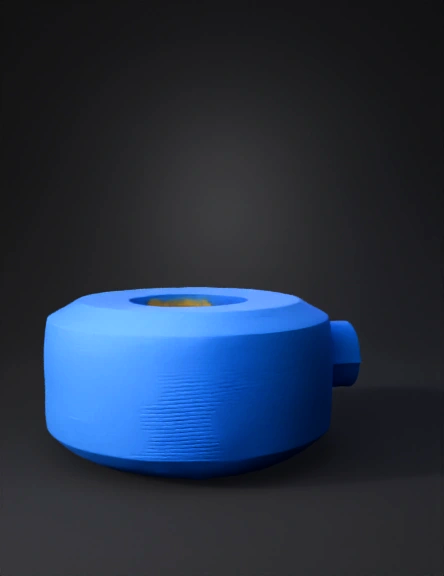
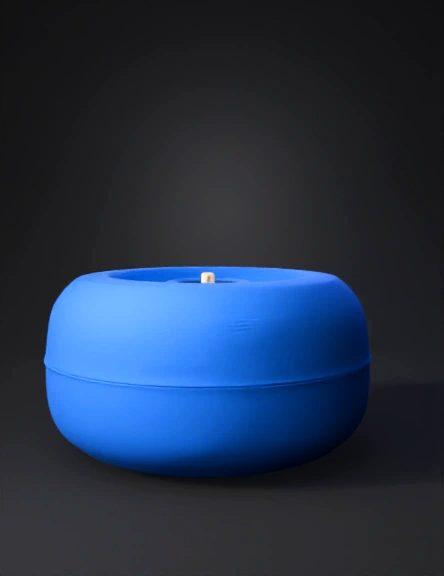
small cylindrical float, hollow buoyancy part, plug-in connector, under the bridge deck, blue, simple geometry, 3D printable
Anonymous1773054443
small cylindrical float, hollow buoyancy part, plug-in connector, under the bridge deck, blue, simple geometry, 3D printable
Anonymous1773054443
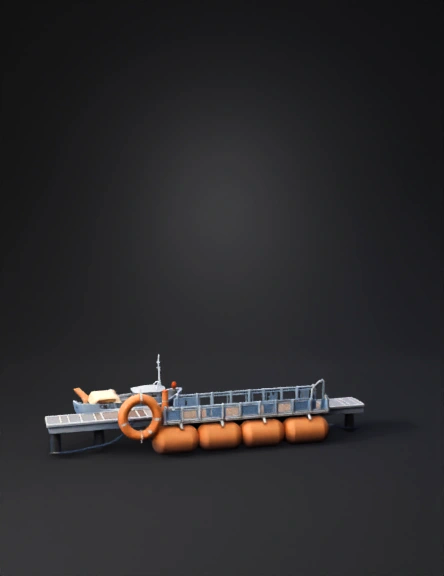
生成一个海边救援用浮桥,这个浮桥下面有至少四个以上的圆柱体的大圆浮筒横放,H形浮筒承托,它们并列排,上面是有围栏的平台,可载人或载物。一边用锁链链接码头,另一边链接船。浮力升降桥面,有澳门元素,整体很宽。H型浮筒铺在桥底提供较大的浮力
Anonymous1776072009
Anonymous1763594564
Anonymous1772366040
Anonymous1765279725
Anonymous1773786289
Anonymous1742705223
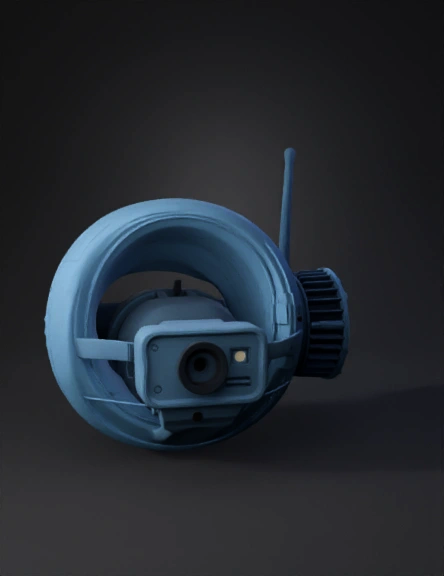
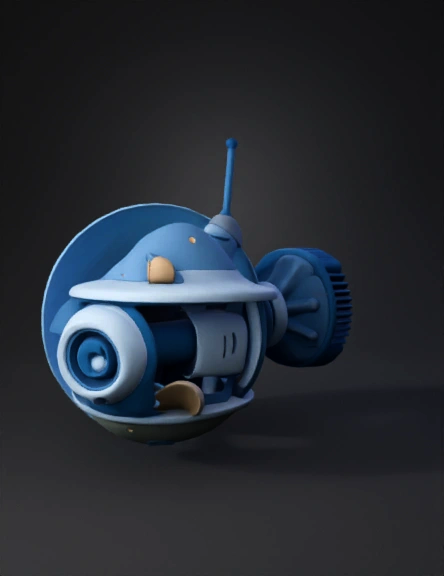
Create a realistic 3D model of a compact underwater tracking and recording device.
The design must be industrial and scientific, NOT shaped like a fish and with no decorative or organic details.

FRONT:
The front section must include a clearly visible front-facing camera and a small LED light.
Both are placed inside a transparent, waterproof dome.

RIGHT SIDE:
On the right side of the device, add a highly detailed suction-based attachment system inspired by the internal structure of a remora fish’s suction mouth.
Include layered suction pads and directional ridges designed for strong underwater adhesion.
This is the ONLY attachment method.

SYSTEMS:
Include an external antenna for receiving signals.
Inside the body, add a compressed air chamber used for buoyancy.
When a signal is received, the compressed air expands, increasing buoyancy and causing the device to float to the surface.
No motors, propellers, or active movement.

The device attaches passively to marine animals, records vi
Anonymous1772268995
Create a realistic 3D model of a compact underwater tracking and recording device.
The design must be industrial and scientific, NOT shaped like a fish and with no decorative or organic details.

FRONT:
The front section must include a clearly visible front-facing camera and a small LED light.
Both are placed inside a transparent, waterproof dome.

RIGHT SIDE:
On the right side of the device, add a highly detailed suction-based attachment system inspired by the internal structure of a remora fish’s suction mouth.
Include layered suction pads and directional ridges designed for strong underwater adhesion.
This is the ONLY attachment method.

SYSTEMS:
Include an external antenna for receiving signals.
Inside the body, add a compressed air chamber used for buoyancy.
When a signal is received, the compressed air expands, increasing buoyancy and causing the device to float to the surface.
No motors, propellers, or active movement.

The device attaches passively to marine animals, records vi
Anonymous1772268995
Anonymous1770099115
Anonymous1770099115
Anonymous1771009879
Anonymous1769172638
Anonymous1770349478
Create a realistic 3D model of a low-cost floating river monitoring buoy built using commonly available PVC pipes and fittings, exactly as described in an academic engineering project.

Overall Structure (Low-Cost Design):
The buoy uses a trimaran floating configuration made entirely from PVC pipes.

• One central vertical PVC pipe (primary buoyancy pipe), closed at both ends using PVC end caps
• Two smaller diameter PVC pipes acting as side outriggers, placed symmetrically on the left and right of the central pipe
• The three PVC pipes are connected using PVC clamps, brackets, or simple cross-arms, indicating a low-cost, easy-to-assemble structure

All pipes are plain white or light grey PVC, with visible joints, couplers, and end caps, clearly showing that the structure is made from off-the-shelf plumbing materials, not custom-manufactured parts.

Buoyancy & Stability:
• Each PVC pipe is hollow and air-filled to provide buoyancy
• Approximately 40–50% of the pipe length is submerged
Anonymous1769953656
Create a realistic 3D model of a floating river monitoring buoy exactly as described in an academic engineering project, designed for real-world deployment.

Overall Structure:
The buoy has a trimaran floating configuration consisting of:
• One central vertical cylindrical hull (primary buoyancy body)
• Two smaller cylindrical side outriggers, symmetrically placed on the left and right of the central hull
• The three cylinders are connected by rigid horizontal support arms

All hulls are made of PVC or HDPE-like material, with smooth rounded ends, designed to float stably in flowing river water. Approximately 40–50% of each hull is submerged below the waterline.

Buoy Geometry & Stability:
• Central hull is visibly larger in diameter than the side hulls
• Side hulls are hollow and used only for lateral stability
• The trimaran layout prevents tilting, rolling, and rotation in river currents

Top Section (Above Water):
Mounted on top of the central hull is:
• A compact, weatherproof ele
Anonymous1769953656
Enter invite code to get credits!