?

Casting mold 3D Models

Find the best Casting mold 3D Models, free download in STL, FBX, GLB, OBJ, 3MF, USDZ for 3D modeling and creation in Blender, 3D printing, game developing, animation, eCommerce, AR/VR and etc. Generated by Tripo AI 3D Generator.

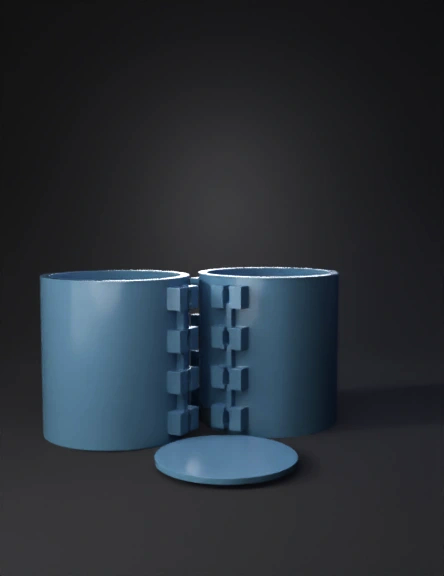
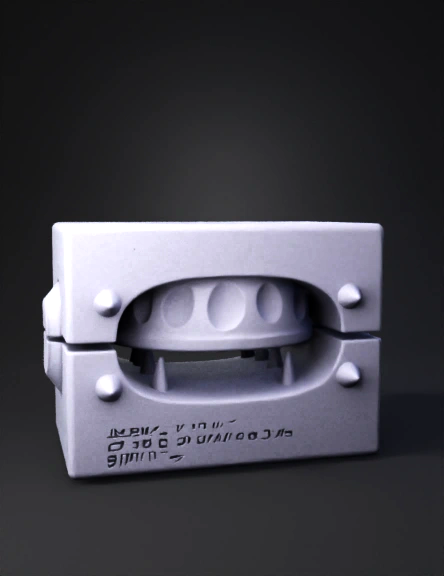
Create a cylindrical mold box (cylinder enclosure) that is split vertically into two equal halves.
Along the vertical seams, add outward locking tabs or keys so the two halves can be fixed together using clothespins or clips.
Keep the inner surface of the cylinder smooth and round.
The bottom of the mold should be removable, making it easier to pour and demold silicone.
Target dimensions: inner diameter around 95 mm, height 85 mm, wall thickness 4 mm.
Design it to be easy to 3D print without supports — both halves and the bottom should be printable in a flat (lying) orientation.
Anonymous1759068334
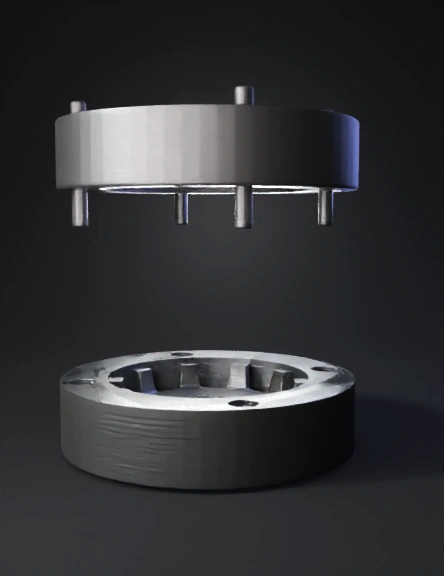
Create a precise 3D model of a mechanical gear based on the provided front-view reference image.
The gear must have 12 rounded teeth and a central through-hole (pass-through shaft).
The outer radius is 18.3 mm, inner tooth radius 14.0 mm, and tooth spacing and curvature must match the reference image accurately.
Generate a two-part circular mold that encases the gear — the mold should be split horizontally into two symmetrical halves that align perfectly when assembled.
Include alignment pins and sockets on each half for accurate joining.
The mold body should be slightly thicker than the gear profile, allowing space for pouring casting material.
Material for the mold: PLA (3D printed).
The final result must preserve exact real dimensions according to the reference drawing.
Keep the design clean, mechanical, and suitable for 3D printing without supports inside the cavity.
Output format: STL or OBJ, ready to slice for 3D printing.
Perspective: frontal and isometric preview.
Lighting: neutral.
Background: white
Anonymous1750273189
Create a watertight 3D model of a decorative silicone mold for gypsum casting.
The mold should have the shape of a tapered cup (slightly narrower at the bottom), with a smooth outer surface and faceted sides similar to glass crystal texture.
Height: 70 mm, outer diameter at top: 70 mm, inner diameter: 60 mm, wall and bottom thickness: 5 mm.
The inner surface should be smooth and straight, forming a perfect cavity for pouring gypsum.
The bottom must be solid and flat, with 5 mm thickness.
The model must be watertight, manifold, and suitable for 3D printing (STL format) — no holes, clean geometry, ready to print.
Style reference: clear glass tumbler with elegant vertical facets, slightly rounded bottom edges.
Anonymous1760606289
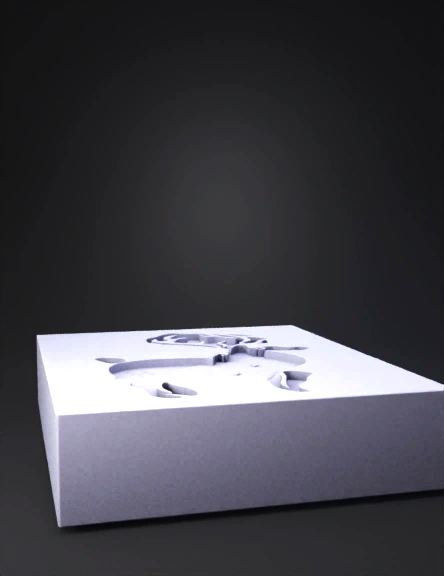
"Create a high-detail 3D model of a casting mold. Use the provided image as reference: a carved wooden relief with an indented cartoon-style horse. Generate an inverted mold model (negative), where all cavities accurately match the shape, proportions, curves, and decorative details of the horse in the image. Preserve the smooth rounded forms, mane, tail, saddle patterns, and leg details. The final result should be a clean 3D mold negative without any wooden texture or background, ready for casting
Anonymous1764268408
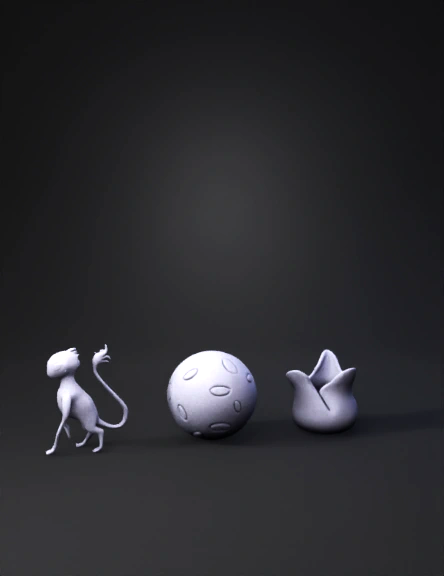
Convert the three objects in the image into practical molding tools, similar to cookie or mooncake molds.
Each model should have a solid base and raised border, with embossed or recessed relief patterns on the bottom for pressing designs.
The shapes must appear symmetrical, sturdy, and manufacturable, featuring a clean, unified, matte-finished metal or plastic material.
The final rendering should look like a realistic, functional mold design ready for casting — smooth edges, precise proportions, and refined craftsmanship.
Anonymous1760628332
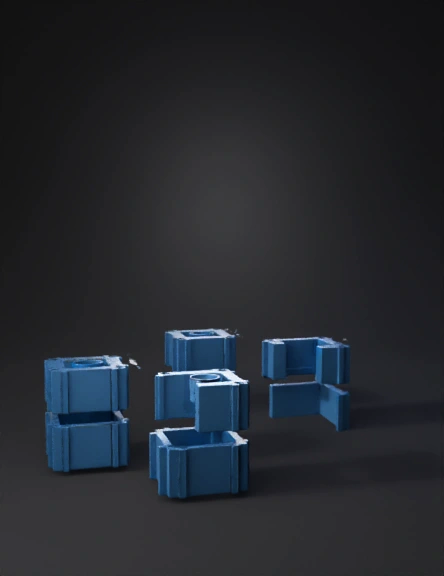
“Design a 3D model of a removable, two-piece mold for a five-stone ring. The mold should include:

Empty cavities for five stones, without the stones themselves.

Smooth inner cavity for lost wax casting.

Alignment pins and locking mechanisms for precise assembly.

Modular design for easy opening and controlled breaking of the ceramic mold.

Optimized for high-detail lost wax casting of gold or silver.

Include a slight draft angle to facilitate mold removal and ensure detailed surface replication.

Output format: STL suitable for 3D printing.”
Anonymous1759108672
Enter invite code to get credits!