?

Ecosystem 3D Models

Find the best Ecosystem 3D Models, free download in STL, FBX, GLB, OBJ, 3MF, USDZ for 3D modeling and creation in Blender, 3D printing, game developing, animation, eCommerce, AR/VR and etc. Generated by Tripo AI 3D Generator.

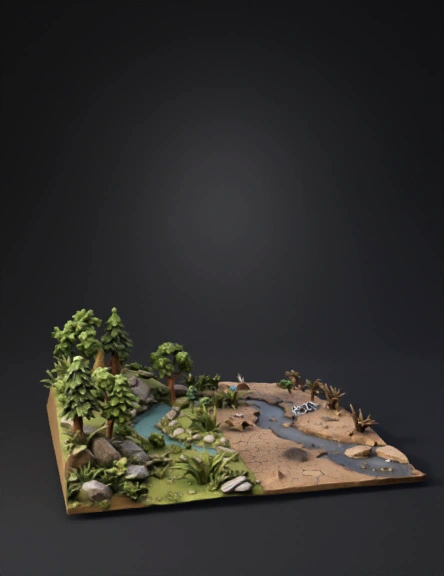
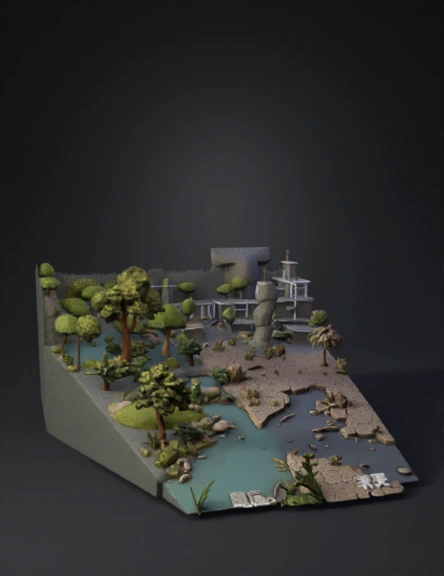
A 3D ecosystem diorama split into two halves. The left side labeled ‘Present’ shows a lush, healthy environment with dense green vegetation, trees, clean flowing water, rocks, and detailed natural terrain. The right side labeled ‘Future’ shows the same environment degraded, with dry cracked ground, dead plants, polluted or dried water, and signs of human damage like trash and smoke. Strong contrast between vibrant and dull colors. Focus only on environment and landscape. No animals, no people, no creatures, no wildlife
Anonymous1776746240
The left side, labeled “Present,” shows a healthy, thriving environment with lush green plants, trees, and clean, flowing water. The vegetation is dense and varied, with different shades of green and natural textures to make the ecosystem feel full of life. The scene should look vibrant, balanced, and rich in biodiversity, even without including animals.

The right side, labeled “Future,” shows the same environment after severe environmental damage. The land is dry, cracked, or barren, with dead or withered plants and little to no vegetation. The water is polluted, stagnant, or completely dried up. Elements like trash, smoke, or industrial structures can be added to show human impact. The colors should be dull, faded, and darker to emphasize decay and loss.

The two halves should clearly connect, showing they represent the same ecosystem over time, transitioning from a healthy present to a damaged future, with a strong visual contrast in color, texture, and environmental quality.
Anonymous1776746240
The left side, labeled “Present,” shows a healthy, thriving environment with lush green plants, trees, and clean, flowing water. The vegetation is dense and varied, with different shades of green and natural textures to make the ecosystem feel full of life. The scene should look vibrant, balanced, and rich in biodiversity, even without including animals.

The right side, labeled “Future,” shows the same environment after severe environmental damage. The land is dry, cracked, or barren, with dead or withered plants and little to no vegetation. The water is polluted, stagnant, or completely dried up. Elements like trash, smoke, or industrial structures can be added to show human impact. The colors should be dull, faded, and darker to emphasize decay and loss.

The two halves should clearly connect, showing they represent the same ecosystem over time, transitioning from a healthy present to a damaged future, with a strong visual contrast in color, texture, and environmental quality.
Anonymous1776746240
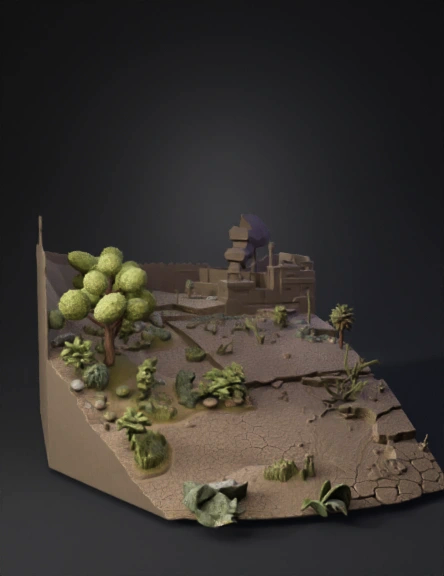
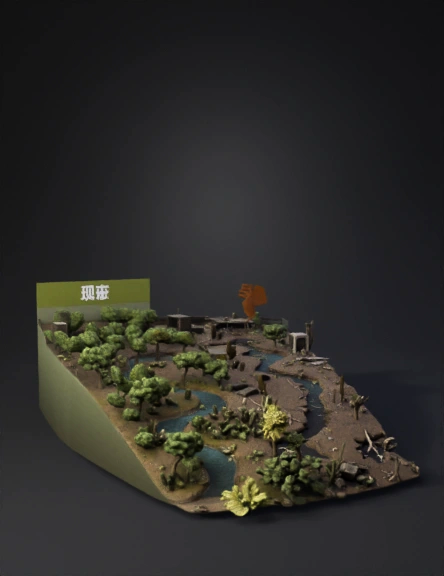
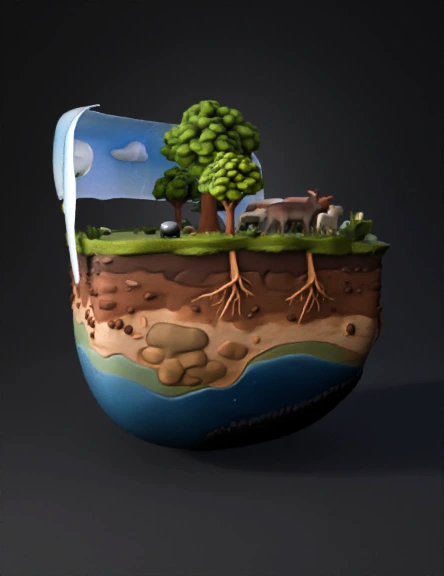
A 3D ecosystem model divided into two contrasting halves.
The left side, labeled “Present,” shows a healthy, thriving environment with lush green plants, trees, and clean, flowing water. The vegetation is dense and varied, with different shades of green and natural textures to make the ecosystem feel full of life. The scene should look vibrant, balanced, and rich in biodiversity, even without including animals.

The right side, labeled “Future,” shows the same environment after severe environmental damage. The land is dry, cracked, or barren, with dead or withered plants and little to no vegetation. The water is polluted, stagnant, or completely dried up. Elements like trash, smoke, or industrial structures can be added to show human impact. The colors should be dull, faded, and darker to emphasize decay and loss.

The two halves should clearly connect, showing they represent the same ecosystem over time,
Anonymous1776746240
A 3D ecosystem model divided into two contrasting halves.
The left side, labeled “Present,” shows a healthy, thriving environment with lush green plants, trees, and clean, flowing water. The vegetation is dense and varied, with different shades of green and natural textures to make the ecosystem feel full of life. The scene should look vibrant, balanced, and rich in biodiversity, even without including animals.

The right side, labeled “Future,” shows the same environment after severe environmental damage. The land is dry, cracked, or barren, with dead or withered plants and little to no vegetation. The water is polluted, stagnant, or completely dried up. Elements like trash, smoke, or industrial structures can be added to show human impact. The colors should be dull, faded, and darker to emphasize decay and loss.

The two halves should clearly connect, showing they represent the same ecosystem over time,
Anonymous1776746240
Anonymous1775645423
Anonymous1768906465
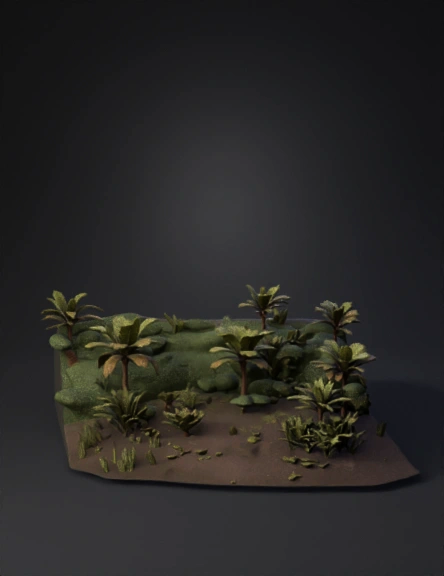
wetland habitat, riverbank, tropical vegetation, muddy terrain, dense greenery, natural ecosystem, realistic lighting
Anonymous1775276942
Anonymous1774787743
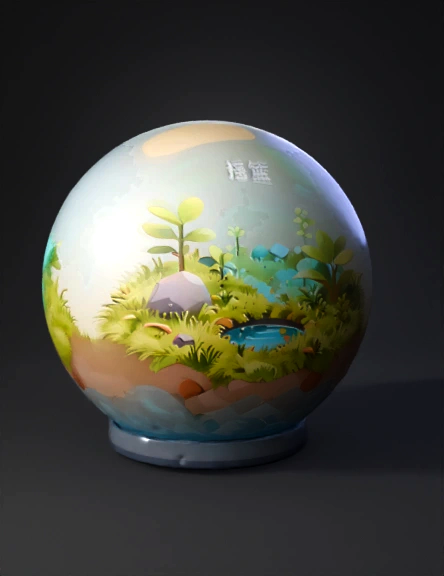
Stylized portable biosphere sphere called "The Cradle".

A transparent glass sphere containing a small evolving ecosystem inside.
Inside the sphere there are small patches of grass, moss, tiny plants, a little water pool, and small stones.

The ecosystem should feel alive and hopeful, like a miniature world growing inside a glass container.

Style:
stylized, painterly, indie game concept art style.
Soft colors, slightly hand-painted textures.

Design:
simple geometry, game-ready, low to medium poly.
The sphere is slightly glowing with soft green and blue light.

Mood:
hopeful, ecological, peaceful.
A machine carrying the conditions for life to grow again.

Avoid photorealism. Focus on stylized concept-art inspired visuals.
Anonymous1773565605
Anonymous1773411937
Anonymous1773411937
Anonymous1772998781
Anonymous1772780824
A detailed 3D educational diorama of a rainforest ecosystem designed in Tinkercad style. The model is built on a flat rectangular green base. It clearly shows the four rainforest layers: emergent layer with very tall trees, dense canopy layer, understory with smaller trees, and forest floor with plants and small shrubs. Include simple geometric shapes like cylinders for tree trunks and spheres for leaves. Add animals such as a monkey hanging on a tree, colorful birds sitting on branches, and a jaguar on the forest floor. The style should look like a clean 3D school project model made from basic shapes, bright colors, smooth lighting, white background, high resolution, realistic shadows, isometric view
Anonymous1772548408
Anonymous1772462207
模型核心定位​ 
置于透明玻璃鱼缸内的微型木制树屋景观造景,整体尺寸严格适配鱼缸内部空间(高≤440mm、宽≤240mm、深≤290mm,预留少量水体流动间隙),以“精巧立体+自然共生”为核心风格,营造清新森林微缩生态感。
主体结构细节(按鱼缸三维空间布局)​ 
1. 树屋主体(居中偏后,占鱼缸纵深约60%)​ 
基础形态:由多段粗细渐变的原木色木块堆叠而成,模拟天然树干质感(表面带细微树皮纹理,粗糙度适中),整体呈“主树干+分支延展”结构。
多层架构:
底层:树干基部固定于鱼缸底部棕色基底(厚约5mm,模拟腐殖土),周围覆盖绒状绿色苔藓(面积约150mm×120mm,边缘自然散落),苔藓上点缀2-3株迷你蕨类叶片(浅绿,高≤15mm)。
中层:树干中段(距底约180mm处)伸出横向平台(宽80mm×深60mm),平台边缘设镂空格栅围栏(高8mm,棕色木质),平台中央立一根细圆柱支撑“高塔”——塔体为锥形木柱(底部直径20mm,顶部收至12mm,高120mm),塔身开1个圆形瞭望口(直径25mm,边缘磨圆),塔顶覆微型松果装饰(棕褐色)。
上层:树干另一侧(距底约280mm处)设悬挑平台(宽60mm×深50mm),通过弧形木桥(长70mm、宽15mm,模仿藤蔓缠绕纹理)与主树干中层平台连接,桥面铺薄苔藓垫。
2. 延伸平台与阶梯(占鱼缸前部,增强层次)​ 
阶梯系统:从鱼缸前侧底部(距玻璃壁20mm)向上延伸一组木质阶梯(共5级,每级高12mm、宽40mm、深30mm),阶梯扶手为缠绕藤蔓(绿色细条,模拟常春藤质感),末端连接至中层平台的侧面入口(平台开口宽35mm)。
附属小平台:阶梯中段(第3级上方)横向伸出一小平台(宽50mm×深40mm),平台边缘同样设格栅围栏,表面散落几片枯叶(深褐近黑,增加自然细节)。
3. 植被与装饰(全缸点缀,强化生态感)​ 
藤蔓缠绕:树屋主干、塔身、平台栏杆均缠绕绿色细藤蔓(模拟真实藤蔓垂坠感,长度随机分布,最长延伸至鱼缸水面下10mm处),部分藤蔓末端结微型浆果(红色,直径3mm,点缀2-3颗即可)。
苔藓覆盖:除基底外,树干裸露处(如分支节点)也点涂小块苔藓(深绿与浅绿相间),模拟湿润环境生长状态。
尺寸适配关键参数​ 
总高度:树屋最高点(塔顶)距鱼缸底≤430mm(留16mm水体缓冲);
总宽度:树屋最宽处(含两侧平台)≤235mm(留11mm侧向间隙);
总纵深:树
Anonymous1769653083
Anonymous1771772051
Enter invite code to get credits!