
?

Kingfisher 3D Models

Find the best Kingfisher 3D Models, free download in STL, FBX, GLB, OBJ, 3MF, USDZ for 3D modeling and creation in Blender, 3D printing, game developing, animation, eCommerce, AR/VR and etc. Generated by Tripo AI 3D Generator.

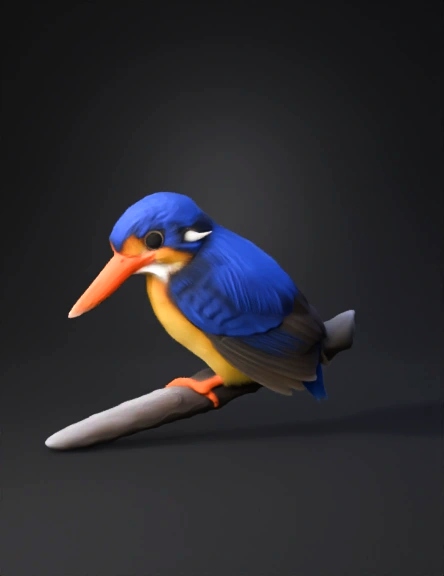
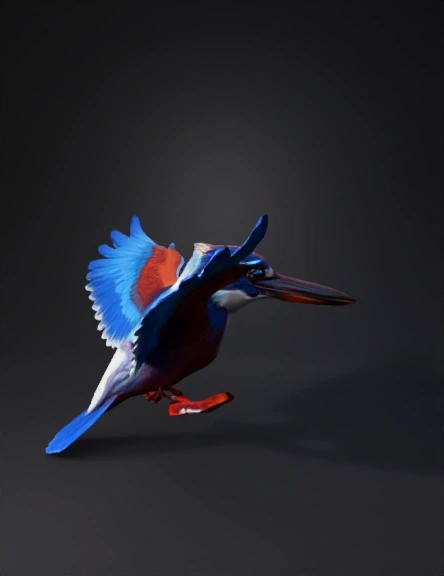
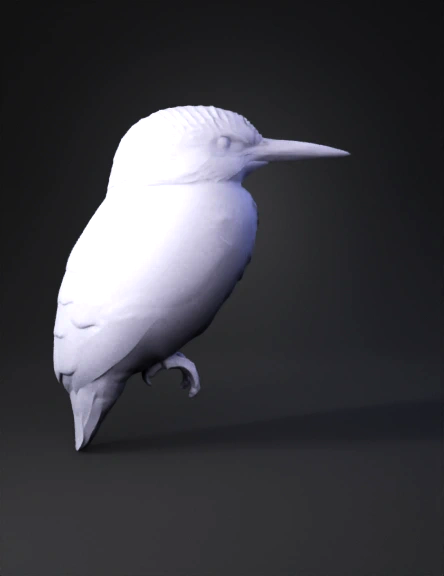
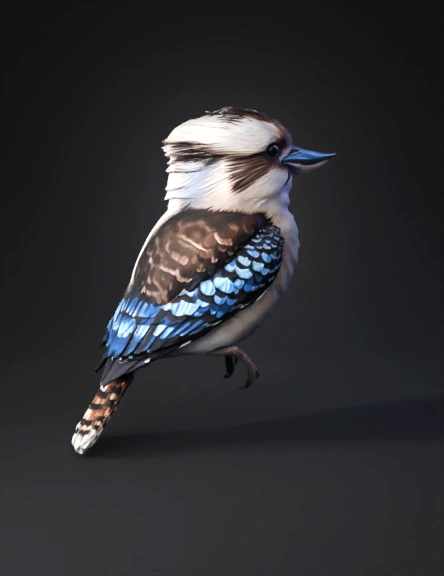
White throated Kingfisher bird in high detail. the paws are like it can sit on a branch
Anonymous1761546007
The Javan kingfisher (Halcyon cyanoventris) is a medium-sized bird, measuring about 25 centimeters in length. It has a large, bright red bill typical of tree kingfishers. The head and neck are rich reddish-brown, contrasting with the bright turquoise-blue back, wings, and tail. The chest and belly show a vivid blue-green sheen with paler tones underneath. Its eyes are dark brown, bordered by a fine black eye line. The wings are broad and the tail relatively short, giving it a sturdy, compact appearance when perched. The body is well-proportioned, reflecting its strength in catching prey such as insects and small fish. The striking contrast between its chestnut head and brilliant blue plumage makes the Javan kingfisher one of the most colorful and distinctive birds in its natural habitat of open forests and riverbanks.
Anonymous1761128080
Stork-billed kingfisher (Pekaka emas)
Anonymous1761128080
Anonymous1761111928
The Eurasian Kingfisher (Alcedo atthis) exhibits a distinctive foot structure known as syndactyly, where two of the front toes are partially fused at the base. Specifically, the second and third toes share a common skin covering along part of their length. This adaptation is typical among kingfishers and contributes to the bird’s efficient perching ability. The feet, small and bright orange-red, provide a strong grip on narrow branches near water bodies, where the bird often waits motionlessly before diving for prey. While the bird has a standard four-toed anisodactyl arrangement—three toes forward, one backward—the syndactyl fusion strengthens the foot’s base and improves stability during quick movements or sudden launches. Though the feet are not used for catching prey, their structure is essential for balance, especially during rapid dives and returns to perches. This syndactyl trait highlights a key evolutionary adaptation for life along riverbanks and wetlands.
Anonymous1760188834
The Eurasian Kingfisher (Alcedo atthis) exhibits a distinctive foot structure known as syndactyly, where two of the front toes are partially fused at the base. Specifically, the second and third toes share a common skin covering along part of their length. This adaptation is typical among kingfishers and contributes to the bird’s efficient perching ability. The feet, small and bright orange-red, provide a strong grip on narrow branches near water bodies, where the bird often waits motionlessly before diving for prey. While the bird has a standard four-toed anisodactyl arrangement—three toes forward, one backward—the syndactyl fusion strengthens the foot’s base and improves stability during quick movements or sudden launches. Though the feet are not used for catching prey, their structure is essential for balance, especially during rapid dives and returns to perches. This syndactyl trait highlights a key evolutionary adaptation for life along riverbanks and wetlands.
Anonymous1760188810
One notable morphological feature of the Eurasian Kingfisher (Alcedo atthis) is its foot structure, which plays an essential role in its perching and hunting behavior. Unlike some related species with three toes, the Eurasian Kingfisher retains the typical four-toed arrangement found in most perching birds. This configuration consists of three toes facing forward and one backward—a pattern known as anisodactyl. The inner two front toes are partially fused at the base, a condition called syndactyly, which enhances grip and stability on narrow branches and perches near water. The toes are short and bright orange-red, matching the bird’s vivid coloration. Despite being small and delicate in appearance, the feet are strong enough to support the bird as it dives from a perch to catch fish and returns with its prey. This traditional four-toed foot structure reflects the Eurasian Kingfisher’s more generalized morphology compared to tridactyl kingfishers like those in the Ceyx genus.
Anonymous1760188834
One notable morphological feature of the Eurasian Kingfisher (Alcedo atthis) is its foot structure, which plays an essential role in its perching and hunting behavior. Unlike some related species with three toes, the Eurasian Kingfisher retains the typical four-toed arrangement found in most perching birds. This configuration consists of three toes facing forward and one backward—a pattern known as anisodactyl. The inner two front toes are partially fused at the base, a condition called syndactyly, which enhances grip and stability on narrow branches and perches near water. The toes are short and bright orange-red, matching the bird’s vivid coloration. Despite being small and delicate in appearance, the feet are strong enough to support the bird as it dives from a perch to catch fish and returns with its prey. This traditional four-toed foot structure reflects the Eurasian Kingfisher’s more generalized morphology compared to tridactyl kingfishers like those in the Ceyx genus.
Anonymous1760188810
One notable morphological feature of the Eurasian Kingfisher (Alcedo atthis) is its foot structure, which plays an essential role in its perching and hunting behavior. Unlike some related species with three toes, the Eurasian Kingfisher retains the typical four-toed arrangement found in most perching birds. This configuration consists of three toes facing forward and one backward—a pattern known as anisodactyl. The inner two front toes are partially fused at the base, a condition called syndactyly, which enhances grip and stability on narrow branches and perches near water. The toes are short and bright orange-red, matching the bird’s vivid coloration. Despite being small and delicate in appearance, the feet are strong enough to support the bird as it dives from a perch to catch fish and returns with its prey. This traditional four-toed foot structure reflects the Eurasian Kingfisher’s more generalized morphology compared to tridactyl kingfishers like those in the Ceyx genus.
Anonymous1760188810
One of the most distinctive morphological features of the Rufous-backed Kingfisher (Ceyx rufidorsa) is its unusual foot structure. Unlike most birds that possess four toes, this species has only three toes—a trait known as tridactyly. This evolutionary adaptation is characteristic of many species within the Ceyx genus. The three toes are small, reddish-orange in color, and well-adapted for perching on slender branches near streams and forest edges. Typically, two toes point forward and one backward, providing a stable grip despite the reduced number. The absence of the fourth toe does not hinder the bird’s mobility or agility; in fact, it reflects the specialized perching behavior and compact size of this forest-dwelling kingfisher. The reduced toe count is a rare and notable trait among birds and serves as an important identifier for species classification within this group. This tridactyl foot structure highlights the bird’s evolutionary refinement for life in dense tropical environm
Anonymous1760188834
One of the most distinctive morphological features of the Rufous-backed Kingfisher (Ceyx rufidorsa) is its unusual foot structure. Unlike most birds that possess four toes, this species has only three toes—a trait known as tridactyly. This evolutionary adaptation is characteristic of many species within the Ceyx genus. The three toes are small, reddish-orange in color, and well-adapted for perching on slender branches near streams and forest edges. Typically, two toes point forward and one backward, providing a stable grip despite the reduced number. The absence of the fourth toe does not hinder the bird’s mobility or agility; in fact, it reflects the specialized perching behavior and compact size of this forest-dwelling kingfisher. The reduced toe count is a rare and notable trait among birds and serves as an important identifier for species classification within this group. This tridactyl foot structure highlights the bird’s evolutionary refinement for life in dense tropical environm
Anonymous1760188810
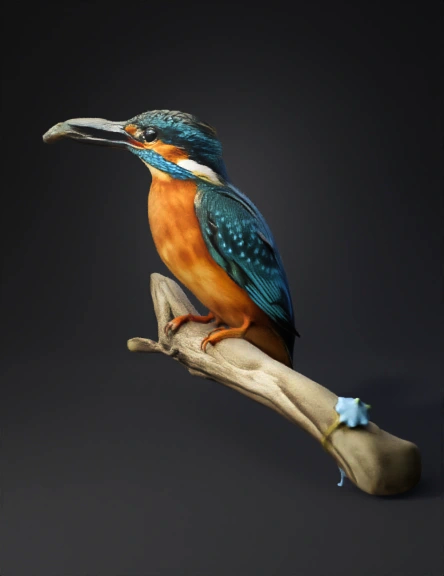
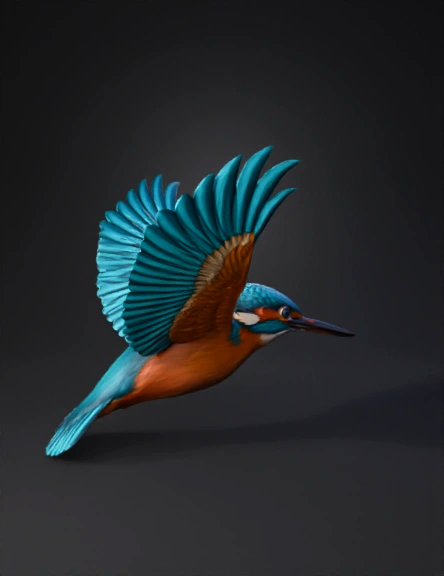
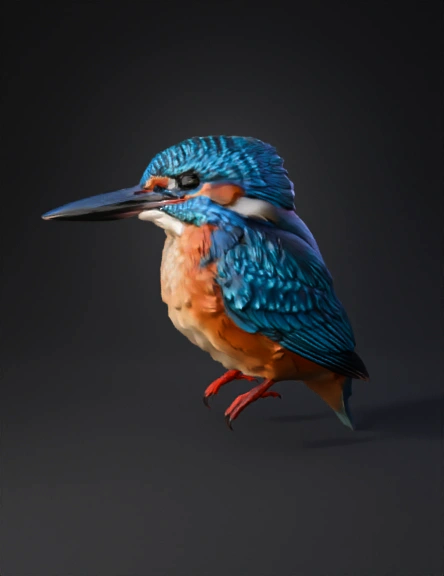
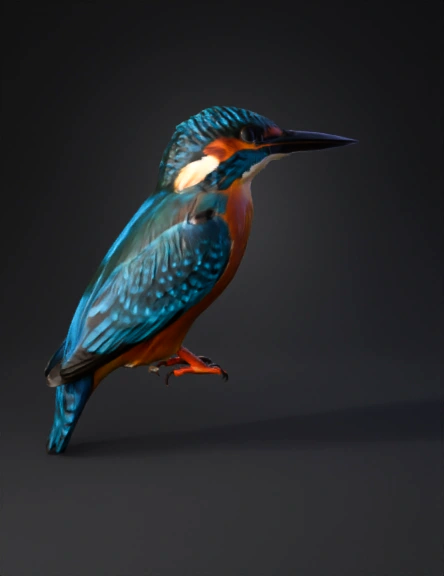
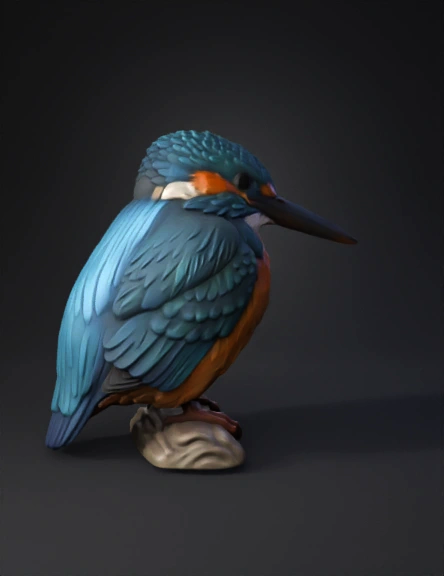
The Common Kingfisher is a small bird, measuring 16–17 cm in total length. It has a compact, stocky body, a large head, a long, pointed bill, and a very short tail, creating a top-heavy appearance.

The bill is straight, sharply pointed, and measures about 3.5–4.5 cm, roughly one-fourth of the body length. It is black in males, with females showing an orange-red base on the lower mandible.

The head and upperparts are a vibrant blue to turquoise, with the crown featuring fine, pale speckles. A distinct orange-rust stripe runs from the bill, below the eye, to the side of the neck.

The underparts, including the throat, breast, and belly, are a rich orange to rufous, contrasting sharply with the blue upperparts. The wings are deep blue with darker flight feathers. The rump and tail are bright azure blue, most vivid when seen in sunlight.

With a short neck, rounded body, and wings about 7–8 cm long, the bird is built for rapid, low flight over water. The eyes are dark brown, adding to it
Anonymous1760098844
The Common Kingfisher is a small, compact bird with a striking appearance and distinct proportions adapted for rapid, darting flight and precision fishing. The total body length ranges from 16 to 17 cm, including the short tail.

The bill is long, straight, and sharply pointed, measuring approximately 3.5 to 4.5 cm, or roughly one-fourth of the total body length. The bill is laterally compressed and dagger-like, ideal for spearing fish. Males typically have an entirely black bill, while females often show a reddish-orange base on the lower mandible.

The head is large relative to the body, with a head length of about 4.5–5 cm. The crown is slightly flattened and features fine azure-blue spotting that extends down the nape. The neck is short and thick, giving the bird a sturdy, top-heavy profile.

The wings are relatively short and rounded, with a wing length of about 7–8 cm (from carpal joint to wing tip). In flight, the wingbeats are rapid and buzzing, suited for short bursts of speed
Anonymous1760099225
The Common Kingfisher is a small, compact bird with a striking appearance and distinct proportions adapted for rapid, darting flight and precision fishing. The total body length ranges from 16 to 17 cm, including the short tail.

The bill is long, straight, and sharply pointed, measuring approximately 3.5 to 4.5 cm, or roughly one-fourth of the total body length. The bill is laterally compressed and dagger-like, ideal for spearing fish. Males typically have an entirely black bill, while females often show a reddish-orange base on the lower mandible.

The head is large relative to the body, with a head length of about 4.5–5 cm. The crown is slightly flattened and features fine azure-blue spotting that extends down the nape. The neck is short and thick, giving the bird a sturdy, top-heavy profile.

The wings are relatively short and rounded, with a wing length of about 7–8 cm (from carpal joint to wing tip). In flight, the wingbeats are rapid and buzzing, suited for short bursts of speed
Anonymous1760099225
Anonymous1760001451
The White-throated Kingfisher is a medium-sized tree kingfisher, measuring 26 to 28 cm in total length. One of its most prominent features is its large, straight, and sharply pointed bill, which is highly adapted for hunting a wide range of prey, from insects and small reptiles to fish and amphibians.

The bill is long, heavy, and dagger-like, with a straight alignment between the upper and lower mandibles when closed. It tapers evenly to a narrow, pointed tip, giving it a piercing profile ideal for striking and grasping prey. The average bill length is about 5 to 6.5 cm, making up approximately 20–25% of the total body length, and about 70–80% of the head length. This proportion is large relative to body size, which is typical of predatory birds that rely on their bill as a primary hunting tool.

The bill color in adults is a bright reddish-orange to coral red, often uniform across both mandibles. The strong, straight shape and vibrant color make the bill a key identifying feature of
Anonymous1760001451
The White-throated Kingfisher is a medium-sized tree kingfisher, measuring 26 to 28 cm in total length. One of its most prominent features is its large, straight, and sharply pointed bill, which is highly adapted for hunting a wide range of prey, from insects and small reptiles to fish and amphibians.

The bill is long, heavy, and dagger-like, with a straight alignment between the upper and lower mandibles when closed. It tapers evenly to a narrow, pointed tip, giving it a piercing profile ideal for striking and grasping prey. The average bill length is about 5 to 6.5 cm, making up approximately 20–25% of the total body length, and about 70–80% of the head length. This proportion is large relative to body size, which is typical of predatory birds that rely on their bill as a primary hunting tool.

The bill color in adults is a bright reddish-orange to coral red, often uniform across both mandibles. The strong, straight shape and vibrant color make the bill a key identifying feature of
Anonymous1760000586
The Sacred Kingfisher is a medium-sized bird measuring about 19 to 23 cm in total length. It has a strong, straight bill and a compact body, but one of its distinctive features lies in the shape and structure of its tail.

The tail is moderately long and square-ended, typically consisting of 12 feathers (rectrices). The tail feathers are broad and sturdy, providing stability during flight and quick maneuvers when hunting. Unlike kingfishers with deeply forked or rounded tails, the Sacred Kingfisher’s tail is straight and blunt at the tip, which aids in precise steering through wooded and coastal habitats.

In flight, the tail appears broad and flat, and the bird often flicks or fans its tail during perching or display behaviors. The tail plumage is mostly turquoise to greenish-blue, matching the bird’s back and wing coloration, with some feathers showing subtle darker edges that add a delicate pattern.

The tail plays an important role during hunting, as the bird often uses rapid wingb
Anonymous1760000586
Enter invite code to get credits!