?

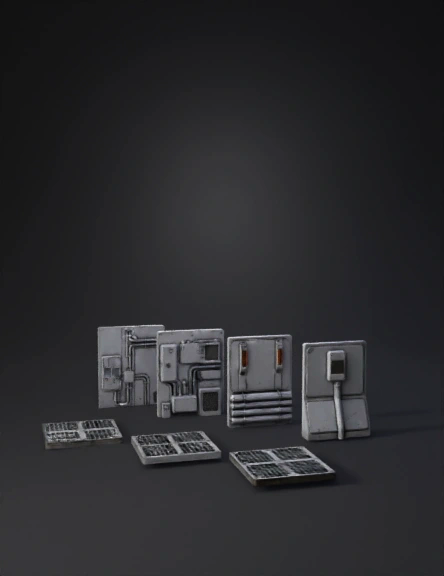
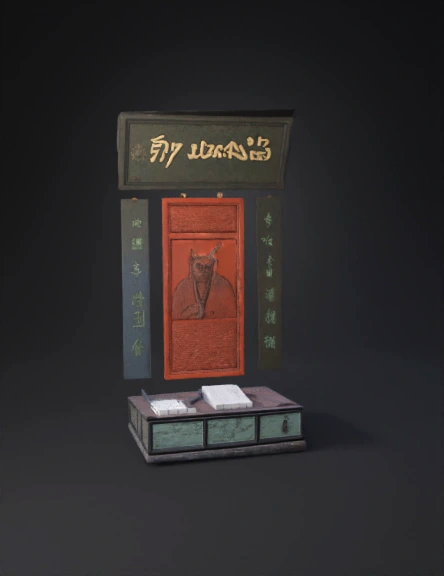
Panel 3D Models

Find the best Panel 3D Models, free download in STL, FBX, GLB, OBJ, 3MF, USDZ for 3D modeling and creation in Blender, 3D printing, game developing, animation, eCommerce, AR/VR and etc. Generated by Tripo AI 3D Generator.

Anonymous1759242104
Create one connected object composed of three required elements: a C-channel, a cylindrical hinge, and a flat panel with a rounded lower edge. These three elements must form one continuous printable part. Do not omit, duplicate, or stylize.

Panel (primary element):

The panel is flat and planar, not curved or domed.

Shape: the top edge is straight and horizontal, while the bottom edge is a smooth semicircular arc, so the outline looks like a rectangle with its lower half replaced by a half-circle.

Overall dimensions: width left-to-right ≈ 95 mm; maximum height at the center ≈ 64 mm.

Thickness (front-to-back depth): ≈ 2.5 mm across the full area.

Surfaces must be plain, smooth, and featureless, with softly rounded (filleted) outer edges.

Optionally add a lip ridge along the top edge, where the panel meets the clip and hinge: ridge ≈ 2 mm tall × 2 mm wide, continuous along that edge, to block light leakage.

The panel must exist only once — no duplication, no stacking, no secondary plates.

Hinge (secondary element):

A plain cylindrical pivot axis that connects the clip to the panel.

Cylinder diameter ≈ 3.5 mm.

Axis runs parallel to the panel’s width (the long 95 mm edge).

The hinge is a simple smooth cylinder, no gears, no teeth, no springs, no knuckles.

Placement: centered vertically on the rear/top edge of the panel, joining panel to the outer side of the C-channel.

C-channel Clip (support element):

A slim rectangular C-shaped channel sized to fit over a cap brim.

Length along panel edge: ≈ 26 mm.

Depth front-to-back: ≈ 12 mm.

Internal slot gap in vertical dimension strictly ≈ 3–6 mm (narrow).

Two parallel jaws form this slot; each jaw ≈ 2–3 mm thick.

Inside faces of both jaws must contain shallow grip ribs: 2–3 ribs per jaw, rounded, each ≈ 0.5–0.8 mm tall and ≈ 1 mm wide, oriented lengthwise. These provide friction without sharp teeth or fabric damage.

Exterior surfaces plain, smooth, no cutouts, no textures, no decorative details.

Overall constraints:

The object must be one manifold: clip, hinge, and panel all fused.

Bilaterally symmetrical about a vertical midplane so the part can be flipped left-to-right for reversible use.

The hinge must clearly connect the clip to the panel, not float or separate.

Style: minimalist, utilitarian, printable engineering part.

Absolutely no duplication of panels, no ornamental features, no decorative holes, and no dome-like curves.

The result should appear as a slim, flat, rounded-bottom shield panel attached by a small cylindrical hinge to a narrow ribbed C-channel clip sized for a standard brim (3–6 mm).
Anonymous1759508085
Create one connected object composed of three required elements: a C-channel, a cylindrical hinge, and a flat panel with a rounded lower edge. These three elements must form one continuous printable part. Do not omit, duplicate, or stylize.

Panel (primary element):

The panel is flat and planar, not curved or domed.

Shape: the top edge is straight and horizontal, while the bottom edge is a smooth semicircular arc, so the outline looks like a rectangle with its lower half replaced by a half-circle.

Overall dimensions: width left-to-right ≈ 95 mm; maximum height at the center ≈ 64 mm.

Thickness (front-to-back depth): ≈ 2.5 mm across the full area.

Surfaces must be plain, smooth, and featureless, with softly rounded (filleted) outer edges.

Optionally add a lip ridge along the top edge, where the panel meets the clip and hinge: ridge ≈ 2 mm tall × 2 mm wide, continuous along that edge, to block light leakage.

The panel must exist only once — no duplication, no stacking, no secondary plates.

Hinge (secondary element):

A plain cylindrical pivot axis that connects the clip to the panel.

Cylinder diameter ≈ 3.5 mm.

Axis runs parallel to the panel’s width (the long 95 mm edge).

The hinge is a simple smooth cylinder, no gears, no teeth, no springs, no knuckles.

Placement: centered vertically on the rear/top edge of the panel, joining panel to the outer side of the C-channel.

C-channel Clip (support element):

A slim rectangular C-shaped channel sized to fit over a cap brim.

Length along panel edge: ≈ 26 mm.

Depth front-to-back: ≈ 12 mm.

Internal slot gap in vertical dimension strictly ≈ 3–6 mm (narrow).

Two parallel jaws form this slot; each jaw ≈ 2–3 mm thick.

Inside faces of both jaws must contain shallow grip ribs: 2–3 ribs per jaw, rounded, each ≈ 0.5–0.8 mm tall and ≈ 1 mm wide, oriented lengthwise. These provide friction without sharp teeth or fabric damage.

Exterior surfaces plain, smooth, no cutouts, no textures, no decorative details.

Overall constraints:

The object must be one manifold: clip, hinge, and panel all fused.

Bilaterally symmetrical about a vertical midplane so the part can be flipped left-to-right for reversible use.

The hinge must clearly connect the clip to the panel, not float or separate.

Style: minimalist, utilitarian, printable engineering part.

Absolutely no duplication of panels, no ornamental features, no decorative holes, and no dome-like curves.

The result should appear as a slim, flat, rounded-bottom shield panel attached by a small cylindrical hinge to a narrow ribbed C-channel clip sized for a standard brim (3–6 mm).
Anonymous1759508085
Create one minimalist, functional clip-on blinder designed for a baseball cap brim. It must be a single reversible part, not decorative. The design is composed of three clear elements: clip, hinge, and shade panel. All three must be included as one connected geometry. Do not omit any of these parts.

Shade Panel (primary feature):

The panel is the main element and must dominate the shape.

It is tapered, not a rectangle. This taper is mandatory.

Rear edge (temple side) height: ~64 mm.

Front edge (nose side) height: ~45 mm.

Length along brim edge: ~95 mm.

Width front-to-back: ~55–60 mm.

Thickness: ~2.5 mm.

Surfaces must be perfectly flat and smooth, not curved, not domed.

Edges should be softly rounded (filleted) for comfort and printability.

Optional lip: add a small straight ridge along the inner brim edge of the panel, ~2 mm tall x ~2 mm wide, to block light leaks.

The taper should be visible in side view as a trapezoid: tall at the back, short at the front.

Hinge (secondary feature):

A plain cylindrical friction hinge, not gears, not latches, not knuckles.

Cylinder diameter: ~3.5 mm.

Hinge axis runs parallel to the brim edge.

The hinge connects the outer side of the clip to the side of the panel.

Function: allows panel to rotate down beside the eye or fold up flat against the brim.

Must be visually obvious that the hinge joins the clip and the panel.

Clip (support feature):

A slim C-shaped clip, not bulky.

Length along brim: ~26 mm.

Depth front-to-back: ~12 mm.

Inner slot gap: 3–6 mm only (narrow).

Jaws: 2–3 mm thick each.

Inside surfaces: add 2–3 shallow ribs per jaw. Each rib ~0.5–0.8 mm tall, ~1 mm wide, running front-to-back.

These ribs increase friction on the hat brim. They must be rounded, not sharp teeth.

Outside surfaces smooth, plain, no textures, no ornament.

Overall requirements:

Geometry must be one single connected part: clip + hinge + tapered panel.

The part must be reversible: can be used left or right simply by flipping.

The overall style should be slim, utilitarian, engineering-like, printable in PETG.

No decorative textures, logos, or extra geometry.

No duplication of panels — exactly one panel.

No large dome shapes or helmet-like curves.

No gear teeth or serrations on hinge.

The result should look like a slim, tapered flat shield attached by a hinge to a narrow clip, sized correctly to snap onto a standard baseball cap brim (3–6 mm thick).
Anonymous1759508085
Anonymous1749976074
Anonymous1750067135
Anonymous1738912303
OPAUser
Create a highly realistic 3D model of a professional LED display panel seen from an angled perspective, showing both the front and back. The front must display a vivid digital screen with swirling neon pink and purple ink in water, creating a fluid abstract visual. The back should be a continuation of the same solid structure, with geometric, armored casing details — sharp lines, bolts, and recessed panels — matching the style of high-end modular LED panels. Use matte black and dark gray textures on the back with subtle reflections. Ensure the front and back parts are seamlessly connected, floating in a clean white environment. Lighting should emphasize depth and edges.
Anonymous1742484318
Anonymous1749718256
Anonymous1765622376
Anonymous1765622376
Anonymous1765622376
Anonymous1773752207
Anonymous1770093805
Anonymous1763400705
PISO DE BAMBOO CUADRADO
KamikazeShut
Anonymous1769660081
Enter invite code to get credits!