?

Sacred 3D Models

Find the best Sacred 3D Models, free download in STL, FBX, GLB, OBJ, 3MF, USDZ for 3D modeling and creation in Blender, 3D printing, game developing, animation, eCommerce, AR/VR and etc. Generated by Tripo AI 3D Generator.

Anonymous1766532319
Anonymous1756806274
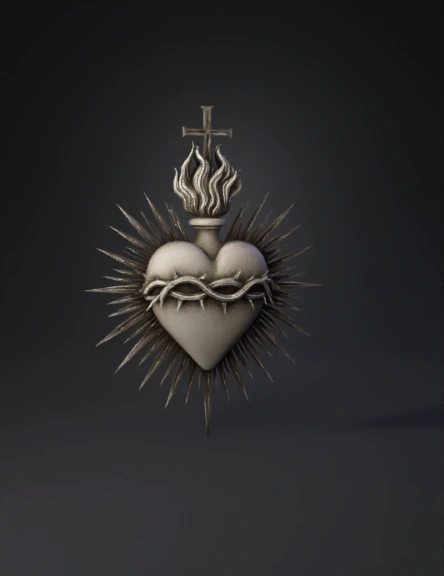
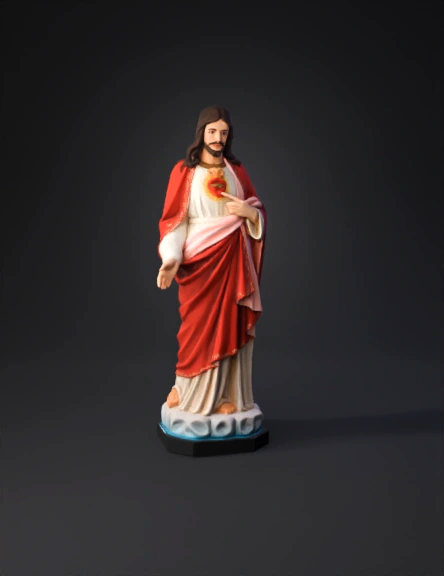
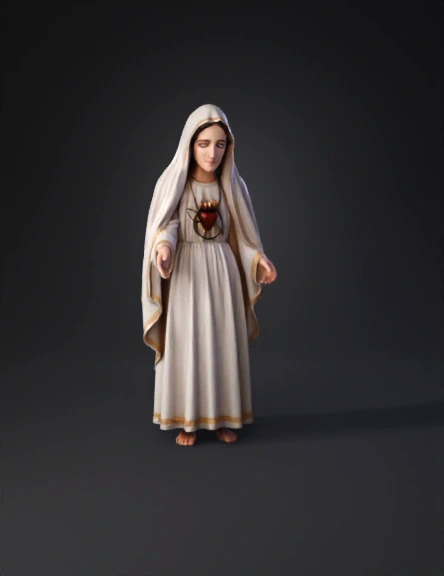
Sacred Heart
Anonymous1759146554
“The Mantle of the Unseen Flame”
(Колье Невидимого Пламени)

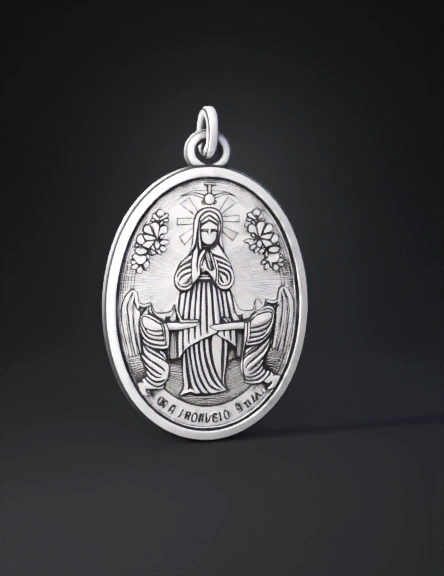
Subject: A monumental, sacred silver necklace titled “The Mantle of the Unseen Flame” — inspired by the high priestly breastplate, angelic armor, and the burning bush that was not consumed. Designed as a wearable mantle of divine calling and spiritual vigilance.
Style: Byzantine-Gothic maximalism — intricate, layered, theologically dense, yet harmonious. No gemstones — only the purity of metal and metaphor.
Material: Sterling silver, with alternating finishes: high-polish for light-catch, matte-oxidized for depth and shadow.
Overall shape: A collar-to-sternum draping piece (approx. 18–22 cm wide, 12–15 cm tall), meant to rest like a liturgical omophorion across collarbones and upper chest.
Central motif:

A large, almond-shaped mandorla (symbol of Christ’s divine presence), hollow at the center — not empty, but inviting the wearer’s own presence into the sacred space.
Around the mandorla: eight interlocking wings — four archangelic (sharp, geometric
Anonymous1765099996
A sacred pendant titled "The Bottomless Chalice", embodying the spiritual duality of its wearer: devotion and rebellion, divine love and infernal intimacy. Crafted in sterling silver (925) with two distinct surface treatments: the outer structure in high-polish mirror finish, the inner cavity in deep matte black oxidation (achieved through controlled sulfide patina).

The pendant is shaped as a six-pointed chalice—each point sharp, geometric, and elongated like a stylized flame or dagger tip, forming a symmetrical star-like silhouette. Total height: 42 mm; width at widest point: 36 mm. The chalice has no base—it tapers to an open, hollow point at the bottom, creating a visual and symbolic void.

At the center, suspended within the cavity by nearly invisible micro-struts (0.3 mm thick), floats a single teardrop-shaped red garnet (5 mm tall)—representing living, untamed fire. The stone is unfoiled, allowing light to pass through, casting a blood-red glow when backlit.

The rim of the chalice is subtly inscribed
Anonymous1765089558
Anonymous1764584496
Anonymous1764075098
sagrado coração de jesus
Anonymous1743706380
Anonymous1762173810
## History of Hinduism: From a Way of Life to a Religion

Hinduism is a religion that has survived for thousands of years. It’s a tradition born on the Indian subcontinent that has shaped its culture. Hinduism is not just a religion; it's also an integral part of the identity for the majority of Indians. However, Hinduism is a term that even those who call themselves Hindu often don't fully understand. Some call it a religion, others call it a way of life. So, what is the true meaning of **Hinduism**? This article attempts to answer this question and understand how Hinduism started as a way of life and developed into a religion.

Hinduism is one of the world's oldest religions. There is no definite answer to when it began, but it is believed to be over **4,000 years old**. Today, followers of Hinduism live in almost every corner of the world, with **90%** of them belonging to India. With approximately **900 million followers**, Hinduism is the **third-largest religion** after Christianity and Islam.

The **Sanskrit language** is an important language that grew alongside Hinduism and significantly contributed to spreading its belief systems. It is also believed that Proto-Indo-Aryan and Proto-Indo-European languages developed from Sanskrit.

***

## Origins of the Word Hindu

The word **Hindu** is derived from the **Indus River** that flows in Northern India. In ancient times, this river was known as **Sindhu**. When the Persians migrated to India, they called it **Hindu** and named the land **Hindustan** and the people living there **Hindus**. Thus, the word 'Hindu' was first used by the Persians in the **6th century BCE**.

At that time, the term 'Hinduism' was more of a **geographical label** than a cultural one. Later, it started being used to describe the religious practices of the Hindus. The first reference to the word 'Hinduism' in the context of defining religious beliefs is found in the **7th century CE** in the Chinese text, **'Records of the Western Regions' by Xuanzang**.

However, it is also believed that the English term **Hinduism**, used to describe religious practices and beliefs, is not that old. It is said to have been first used by **Raja Ram Mohan Roy** around **1816-17**. Later, around the 1830s, to oppose British colonialism and distinguish themselves from other religious groups, Indians began calling Hinduism their religion. This was the time when people in Hindustan were searching for their identity.

This covers the origin of the words Hindu and Hinduism. But the term itself came later; the beliefs and practices associated with it are even older.

***

## How Did Hinduism Start?

Unlike Christianity and Islam, Hinduism has **no single founder**, and its origin is considered older than recorded history. Hindus use the term **Sanatana Dharma** for their religion, which means **Eternal Faith**—a religion that has always existed.

Some evidence found in the **Indus Valley Civilization** is either part of or influences Hinduism. For example, the **Proto-Shiva seal**, the terracotta figure representing the **Mother Goddess**, **Swastikas**, **Lingas**, and images of **sacred animals** found there are now part of Hinduism. Therefore, it is believed that Hinduism existed in some form during that time.

The organized beginning of Hinduism is traced back to the **Vedic Culture**, as it was during this period that the sacred texts of Hindus, the **Vedas**, originated. Thus, the first literary evidence of Hinduism is found in the **Vedic Period**.

It is clear that Hinduism has neither a founder nor a definite start date. However, there are some **core beliefs** that define Hinduism.

***

## Core Beliefs

Hinduism is not an organized religion, and its value system cannot be understood by a single systematic approach. Nor do Hindus have a simple set of rules like the **Ten Commandments**. Hindu beliefs are often influenced by local, regional, caste, and community-driven practices. Nevertheless, some beliefs can be considered common across all variations.

The core beliefs include the belief in a **Supreme Being**, called **Brahman** in Hinduism. Additionally, the concepts of **Karma**, **Soul** (Atman), **Reincarnation** (Punarjanma), and **Moksha** are central to the Hindu belief system.

The concept of the **Soul** (Atman) states that all living creatures have a soul, which is a part of the divine. The concept of **Karma** is highly significant in Hinduism. According to this, people's actions determine their present and future lives.

Hinduism defines **four main aims of life**: **Dharma** (righteous conduct), **Artha** (material prosperity), **Kama** (pleasure), and **Moksha** (liberation). Achieving **Moksha** ends the cycle of births, and the Atman merges with the Supreme Soul.

**Yoga**, which means **union with God**, is also an important part of Hinduism. Whether people know about Hinduism or not, they certainly know about Yoga. Since **International Yoga Day** was first celebrated on June 21st in 2015, it has gained more popularity, and people are understanding its real-world benefits for physical, mental, and spiritual well-being.

***

## Major Gods, Sacred Texts, and Different Sects

Hindus primarily believe in **one Supreme Being**. The concept of the Supreme Being, or **Brahman**, is that of a formless God, the ultimate reality, or omnipresent energy. At the same time, Hinduism states that this being can take different forms. This is where the concept of **polytheism** originates. According to Hinduism, everything is a part of the divine, and these forms and avatars appear for the welfare of humanity.

Hindus also practice **Nature Worship**. From plants to animals, everything is worshipped in Hinduism. There are scientific reasons behind nature worship. For instance, the worship of the **Banyan Tree** in Hinduism. We all know that this tree provides oxygen 24 hours a day, meaning the followers of Hinduism understood the tree's importance. Similarly, medicinal plants like the **Tulsi** (Holy Basil) and trees like **Amla** (Indian Gooseberry) are also worshipped.

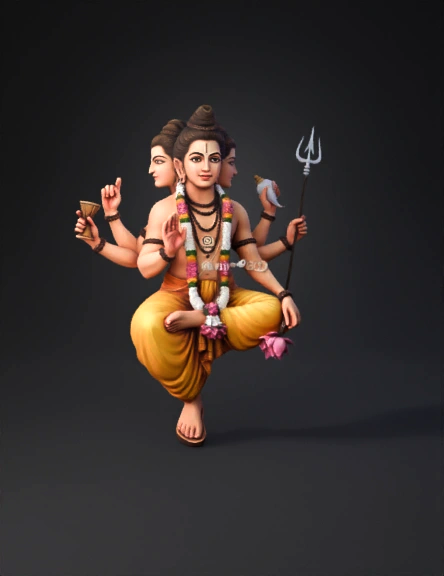
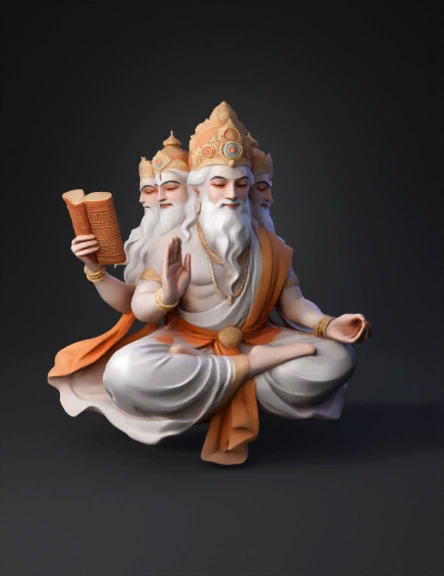
In the Vedic Period, **Indra** was worshipped as the major god, but in the later period, the concept of the **Trinity** developed. This includes the three major gods: **Brahma, the Creator; Vishnu, the Preserver; and Shiva, the Destroyer**.

Feminine energy is also worshipped in Hinduism. It is considered the Goddess **Shakti**. The concept of worshipping God in a feminine form is not seen in any other major religion. Additionally, there are multiple gods and goddesses associated with different attributes. For example, **Lord Ganesha** is called the remover of obstacles (**Vighna Harta**), and **Goddess Saraswati** is the Goddess of knowledge.

Just as Hinduism has no single founder, it is not represented by a single book like the Bible or the Quran. Instead, **multiple texts** are considered sacred in Hinduism. The oldest are the **four Vedas**: **Rigveda, Yajurveda, Samaveda, and Atharvaveda**. According to Hindu belief, the Vedas represent eternal truths revealed by God to the sages (**Rishis**). Besides the Vedas, the **Upanishads**, **Puranas**, the epics **Ramayana** and **Mahabharata**, and the **Bhagavad Gita** are the major holy books of Hindus.

Like other religions, Hinduism also has different sects. There are four major sects: **Vaishnavas, Shaivas, Shaktas, and Smartas**. **Vaishnavas** worship Lord Vishnu, **Shaivas** worship Lord Shiva, and **Shaktas** worship the Goddess Shakti. In the **Smarta** tradition, five deities are worshipped as parts of one Supreme Being. Besides these, many other sects and sub-sects are part of Hinduism.

The development of multiple sects in Hinduism is significant, but the important thing is that their development did not involve any **violence**. All sects have coexisted peacefully. A major reason for this is that the core beliefs of all Hindu sects are the same, and they do not counter each other on a philosophical basis. The sects readily accept each other's existence because **tolerance** is a core belief of Hinduism.

***

## Evolution of Hindu Social Systems

The foundation of the social order in Hinduism is the **Varna System**. The origin of the Varna System is found in the **Purusha Sukta** of the Rigveda. According to this, society was divided into four Varnas: **Brahmanas, Kshatriyas, Vaishyas, and Shudras**.

This division was based on **Karma** (work), where those involved in intellectual and spiritual activities were called **Brahmanas**. The warrior class, those who protected the public, were called **Kshatriyas**. Skillful producers were placed in the **Vaishyas** category, and unskilled laborers were called **Shudras**.

However, later, this system became **rigid**, and division started based on **birth**. Furthermore, many classes were kept outside the Varna System and considered **Untouchables**. They were only allowed to do menial jobs. Later, sub-divisions began within the Varnas, and the **Caste System** (Jatis) developed, making the social system very complex. This led to **inequality** towards the lower Varnas and Untouchables. These evil practices weakened the societal fabric.

Different social rules and religious rituals were prescribed for all Varnas. This made Hinduism look like a complex social order. Because of this complexity, different religious traditions like **Buddhism** and **Jainism** started gaining popularity in the **6th century BCE**. At one point, Buddhism and Jainism dominated the entire Indian subcontinent, and Hinduism seemed to decline to some extent. But the work of reviving Hinduism started again.

***

## Revival and Reform in Hinduism

Despite being such an ancient religion, Hinduism has survived until today. A major reason for this is that reforms were introduced and it was revived from time to time. This was done either through the **Bhakti Movement** that began in South India between the 7th and 8th centuries or by various **Acharyas**.

During the Bhakti Movement, the **Alvars** and **Nayanar** saints challenged the rigid caste system and worked to **simplify** rituals and religious practices. Their efforts helped Hinduism overcome the challenges posed by Buddhism and Jainism.

Not only this, Hinduism gradually **absorbed** local cults and deities. Whether it was the **Naga cult**, the **Yakshas and Yakshinis cult**, or the famous **Jagannath Puri** which is considered a tribal deity, all slowly became part of the Hindu Pantheon. Even the **Buddha** is considered an avatar of Vishnu. This strategy also played an important role in the survival of Hinduism.

The mention of revival in Hinduism is incomplete without **Adi Shankaracharya**. Shankaracharya worked to **reorganize and reform** Hinduism in the **8th century AD**. He popularized the **Advaita philosophy**, according to which only Brahman is the truth, and the rest of the world is just his **Maya** (illusion).

Shankaracharya traveled across India to popularize Hindu philosophy. During this time, he participated in debates and discourses with different thinkers. He established **monasteries** called **Mathas** or **Pithas** in the four corners of India. These were the **Sharada Pitha** in Sringeri, the **Kalika Pitha** in Dwarka, the **Jyoti Pitha** in Badrikashrama, and the **Govardhana Pitha** in Jagannath Puri. These are called the **Char Dham** of Hinduism. This way, he also geographically connected the followers of Hinduism.

He also popularized the **Panchayatana** form of worship, where five deities—Ganesha, Shiva, Vishnu, Surya, and Devi—are worshipped together. It is said that all of these are different forms of the Supreme Being (**Brahman**). Thus, Shankaracharya also united different sects.

He also **simplified** the Hindu scriptures. Shankaracharya wrote commentaries on religious texts like the Vedas, Upanishads, and Puranas, bringing their teachings back to life. After Shankaracharya, saints like **Ramanuja** and **Madhavacharya** also contributed to reforming Hinduism.

Later, during the Medieval Period, when Islam started challenging Hinduism, **Nirguna** and **Saguna** Bhakti saints kept Hinduism popular. Saints like **Ramananda, Kabir, Nanak, Mirabai, and Tulsidas** contributed to this.

In the Modern Period, reformers like **Raja Ram Mohan Roy, Swami Dayananda Saraswati, and Swami Vivekananda** revived Hindu glory once again. Because of these socio-religious reformers in the 19th century, Christian missionaries were not very successful in converting Hindus, unlike the success they achieved in Africa or other colonies.

**Swami Vivekananda** popularized the philosophy of Hinduism on the world stage by attending the **World Religious Conference** organized in Chicago in **1893**. Commenting on Swami Ji's speech, an American newspaper wrote, "Why send Christian missionaries to a country with such a rich religious tradition?"

Thus, reform movements have occurred at regular intervals in Hinduism. Hindu philosophy also says that whenever *Dharma* (righteousness) is in crisis, God himself takes an avatar to protect it. Therefore, these reform movements can also be justified by Hindu philosophy. Hinduism has remained eternal because it is **not static** and shows the ability to renew itself. The explanation of the word **Sanatana** in the Atharvaveda is similar: "*Sanatanam enam ahur utadyati punarnavah*" meaning: "**They proclaim him to be eternal, but he may become new again even today.**"

The most unique feature of Hinduism today is its **diversity**. It is essential to understand how it represents **unity in diversity** despite variations and diversity at different levels.

***

## How Hinduism Encompasses the Concept of Unity in Diversity

Hinduism has the concept of innumerable gods and goddesses, multiple religious texts, different sects, and a great diversity in rituals and beliefs. Despite all this, Hinduism **unites** its followers because Hindu philosophy is so **flexible** that it has accepted all viewpoints.

Hinduism believes that the paths may be different, but the destination is the same. Hinduism considers other religions to be true as well. There is no concept here that religions other than Hinduism cannot be a path to God. This is why Hinduism is also called a **tolerant** religion. However, the word 'tolerant' does not fully justify this concept because Hindus not only **respect** other religions but also keep them on par with Hinduism. This is why the concept of **forced conversion** is absent in Hinduism. Throughout the history of Hinduism, there have never been wars in the name of religion against other religions.

Whether it is the philosophy of **"Vasudhaiva Kutumbakam"** (the world is one family) or hymns like **"Sarve Bhavantu Sukhinah"** (May all be happy), Hinduism has always talked about the welfare of everyone. Hinduism also has the concept of **equal worth for all humanity**. This is evident from the ancient hymn: "*Ashtasu aknishahsu iti samratro vahadhu saubhagya*" which means: "**No one is superior, none inferior. All are brothers marching forward to prosperity.**"

This is why whether you worship Shiva or Krishna, or are a devotee of the Goddess, or perhaps don't worship anyone at all, you can still call yourself a Hindu. To be a Hindu, it is not compulsory to worship one God, nor to visit a temple. Even studying an ancient scripture is not mandatory. Hinduism accepts everyone. If you consider yourself a Hindu, you are a Hindu. No matter how much diversity there is, Hinduism unites you with its over 900 million followers.

***

## Conclusion

As we've seen, Hinduism, unlike other religions, has no single founder, no single text, and no single god. Therefore, it is difficult to understand it within the definition of a traditional religion. It developed more as a **Way of Life**. However, with the development of other religions, they began challenging this Hindu way of life. To counter them and in competition with them, Hinduism started taking the form of a **Religion**.

According to Hindu tradition, their religion is called **Sanatana Dharma**, and the definition of the word **Dharma** is said to be different from 'religion'. Dharma means a **set of rules**, and Sanatana Dharma means rules that are **always valid**. Other rules and laws change according to time and conditions, but that which remains valid forever is Sanatana Dharma.

It is an impossible task to explain Hinduism in one article. Still, we have tried to introduce you to the basic tenets of Hinduism.
Anonymous1760895845
Anonymous1752808086
make me all human arround this home
Anonymous1760378545
Anonymous1757968397
Anonymous1752599971
Representação do Divino Espírito Santo no estilo tradicional barroco brasileiro. Uma pomba branca de asas abertas, com penas detalhadas e brilhantes, emanando luz dourada suave. Atrás da pomba, um sol radiante em formato circular, com raios longos e curtos alternados em dourado envelhecido, lembrando madeira entalhada de igreja colonial. Ao redor, pequenas nuvens translúcidas dão sensação de divindade e elevação espiritual. Estilo artístico sacro, simétrico, rico em ornamentos e detalhes dourados.
Anonymous1754090978
Pablo Membribes
Pablo Membribes
Pablo Membribes
Enter invite code to get credits!