?
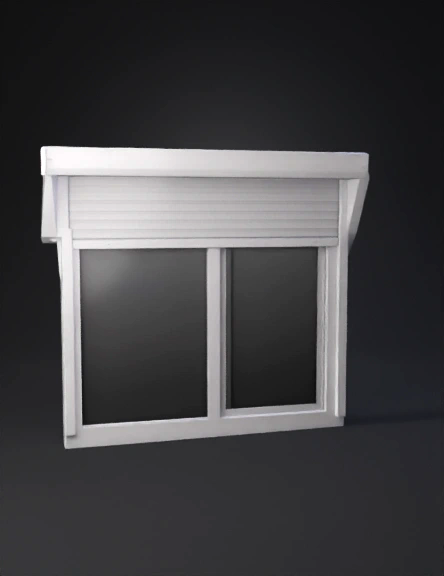
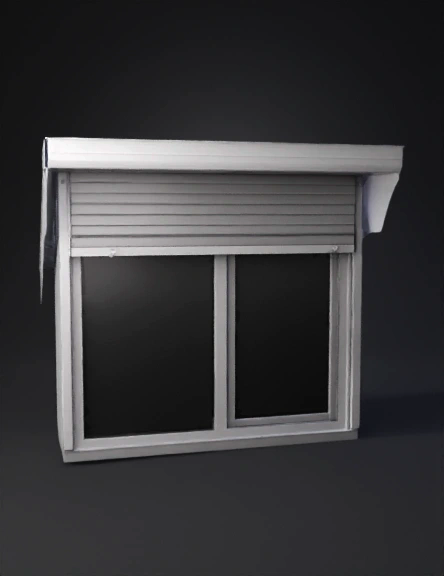
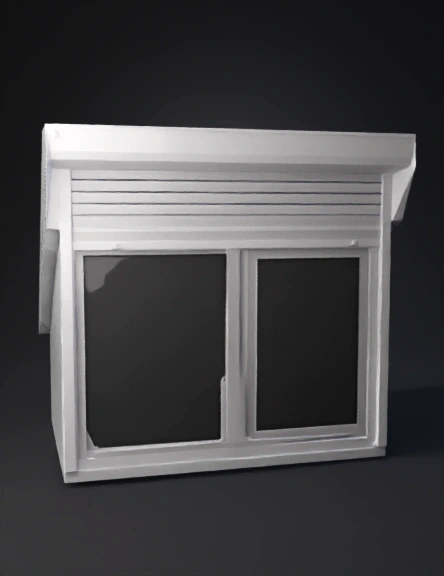
Shutter 3D Models
Find the best Shutter 3D Models, free download in STL, FBX, GLB, OBJ, 3MF, USDZ for 3D modeling and creation in Blender, 3D printing, game developing, animation, eCommerce, AR/VR and etc. Generated by Tripo AI 3D Generator.
You May Also Like :


**Primary Data Source Analysis:**
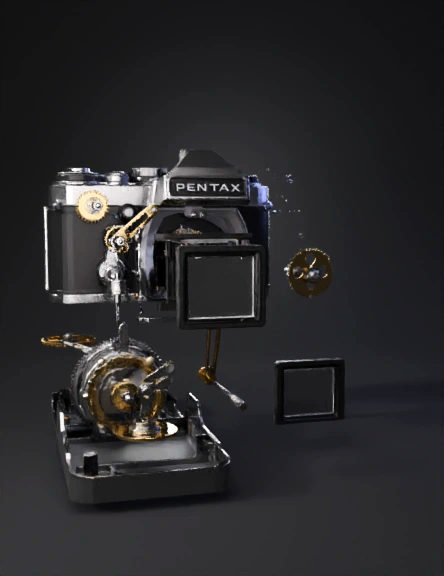
* **Pages 1-8:** Contain exploded views, parts lists, and assembly diagrams, primarily focusing on the **shutter, mirror, winding, and diaphragm control mechanisms.**
**Modeling Requirements & Constraints:**
1. **Modeling Scope (Pages 1-8):** Focus the 3D model generation on the internal mechanical systems depicted in the exploded views and parts lists on pages 1, 2, 3, 4, 5, 6, 7, and 8. This includes:
* **Page 1 & 2 (Shutter/Winding Top Mechanism):** Winding lever, shutter speed dial, film counter, top plate components.
* **Page 3 & 4 (Shutter/Mirror Bottom Mechanism):** Low-speed governor, main gears, shutter linkage, and base plate components.
* **Page 5 & 6 (Mirror Box Assembly):** Quick-return mirror, pentaprism, focusing screen, and related linkage/springs.
* **Page 7 & 8 (Front and Rear Bodies/Miscellaneous):** Diaphragm lever linkage and body shell components.
2. **Part Identification:** Each distinct component drawn and listed (e.g., 'A1', 'B12', 'C4') must be modeled as an individual object (mesh) and **labeled** with its corresponding Part Code from the PDF (e.g., "B12 - Bottom gear").
3. **Functionality (Dynamic Simulation):** The 3D model must be fully functional and allow for interactive manipulation corresponding to the physical operation and assembly of the camera. Specifically:
* **Interactive Disassembly/Assembly:** Allow users to "explode" the model to view the components as drawn in the manual, and then reassemble them following the logical stacking and connections shown in the diagrams.
* **Mechanism Movement:** Simulate the key mechanical actions:
* **Winding:** Allow the winding lever (A1) to be moved, which must correctly drive the internal gears and cock the shutter and mirror mechanisms.
* **Mirror Cycle:** When a simulated "shutter release" command is given, the mirror (C1) must flip up, and then return immediately (mirror-down action), driven by the connected levers (e.g., B54, B58) as detailed in the bottom mechanism diagrams.
* **Shutter:** Simulate the movement of the first and second shutter curtains (not fully detailed but essential for context) in conjunction with the release and winding cycle.
* **Adjustment:** Allow for the simulated rotation of adjustment screws (e.g., C63 - Focus adjust screw) to show their impact on adjacent parts.
4. **Aesthetics and Realism:** Render the parts with appropriate materials based on the manual's context (e.g., metal gears, brass axes, plastic/rubber light seals). Maintain accurate scale and spatial relationships as depicted in the exploded views.
**Instructions for the AI:**
* Prioritize the **functional relationship** between parts B (Bottom) and C (Mirror Box) as they relate directly to the user's reported faults (stuck mirror and incomplete shutter closure).
* Ensure the generated 3D model is downloadable or viewable on a standard platform (e.g., glTF, FBX, or an interactive web viewer).
```](https://tripo-data.rg1.data.tripo3d.com/tripo-studio/20251005/d12cf442-05ee-4a4a-b3e2-0ae22b348279/studio_mesh.webp?Key-Pair-Id=K1676C64NMVM2J&Policy=eyJTdGF0ZW1lbnQiOlt7IlJlc291cmNlIjoiaHR0cHM6Ly90cmlwby1kYXRhLnJnMS5kYXRhLnRyaXBvM2QuY29tL3RyaXBvLXN0dWRpby8yMDI1MTAwNS9kMTJjZjQ0Mi0wNWVlLTRhNGEtYjNlMi0wYWUyMmIzNDgyNzkvc3R1ZGlvX21lc2gud2VicCIsIkNvbmRpdGlvbiI6eyJEYXRlTGVzc1RoYW4iOnsiQVdTOkVwb2NoVGltZSI6MTc3NzMzNDQwMH19fV19&Signature=UzNMrENafjSYgFUMo~ETv2i-R2V2GgL-ZnzmjSPfq9Bk8Sf2IyHRx-dvhu5ILcV6mSumcUmOZGfSQKHvBbioNepp3oXLOLyKo60INHEP7NVIIWSjxKn9Dy8Jp0qPoAfG~S8sXErLasBZ4hkhA7pSrUTzw9i-Wvuggsh2Gq82J7amy4voi-CMXgWWQX3A4cxa-8ctlirJa-D41R-OjS5lfIHyMogWH-A~7y3wrKTjktTyivRDnc-Xq~H4TgHiyFKDoErClq4xvym0gtlKffvORuTcQkswhKjXmd5HRxaXRrmjAtQHz-AuZ-MhspQrPo1yzAWo8oF7wRPkYFiqWADybg__)