?

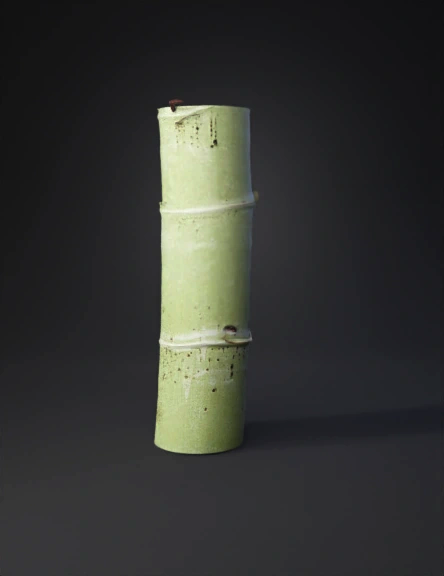
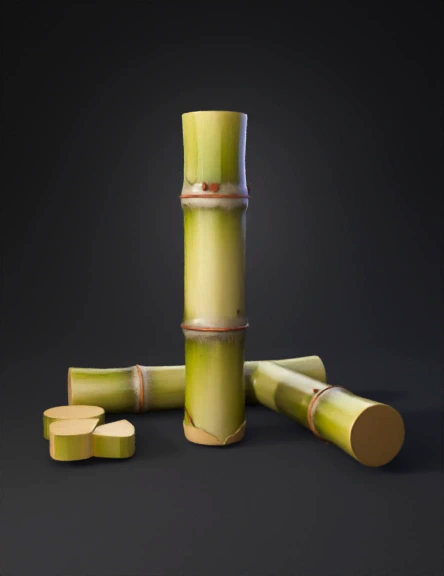
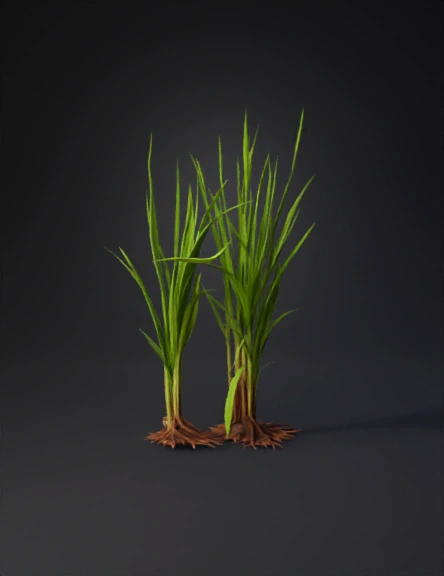
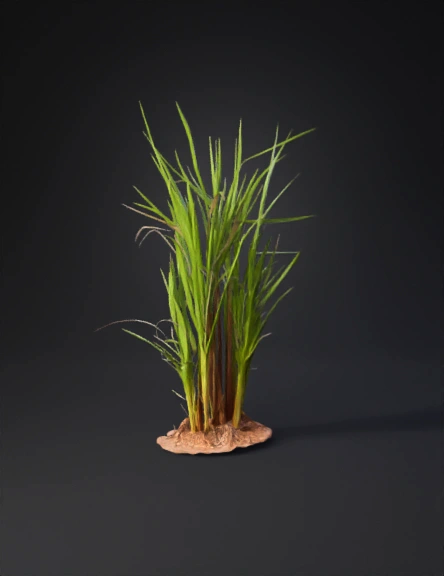
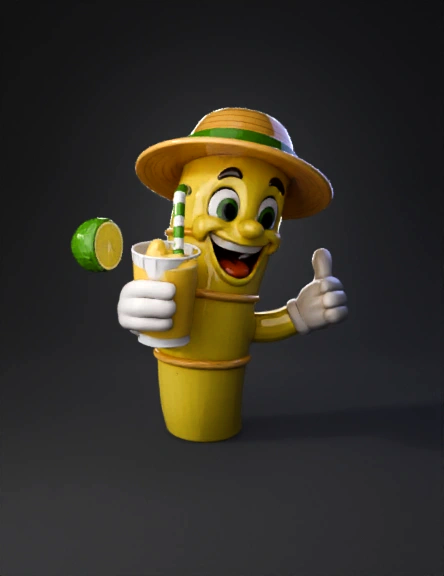
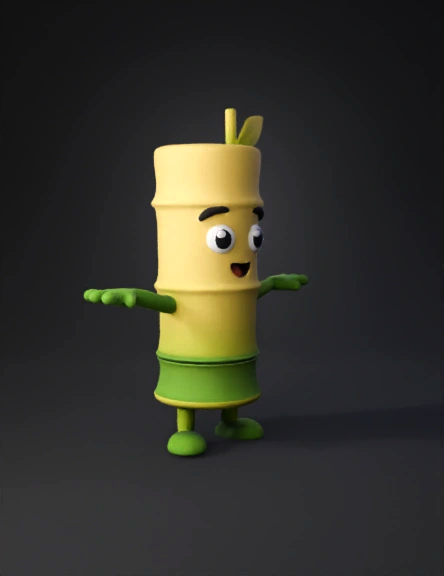
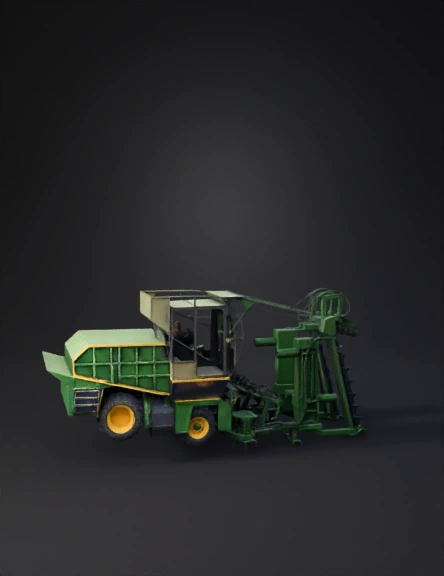
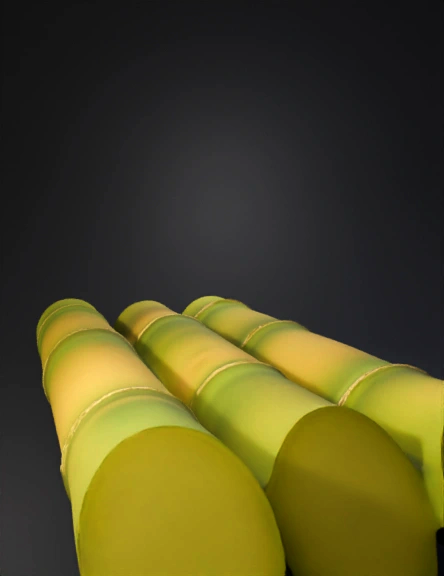
Sugarcane 3D Models

Find the best Sugarcane 3D Models, free download in STL, FBX, GLB, OBJ, 3MF, USDZ for 3D modeling and creation in Blender, 3D printing, game developing, animation, eCommerce, AR/VR and etc. Generated by Tripo AI 3D Generator.

Parts and Functions of the Sugarcane Juice Concentrator
Evaporation Kettle. The main processing vessel made of food-grade stainless steel where sugarcane juice is heated and concentrated into molasses through water evaporation.

Heating System. Provides controlled thermal energy to the evaporation kettle through either electric immersion heaters or steam jacket arrangement for efficient water evaporation.

Agitation System. Consists of central shaft with scraping paddles that continuously stir the juice during concentration to prevent burning and ensure even heat distribution.

Agitation Motor. Serves as the power source for the agitation system, providing controlled rotational movement to the scraping paddles.

Gear Reduction System. Reduces the motor speed to achieve optimal 30-60 RPM for the agitation system, ensuring thorough mixing without splashing.

Temperature Control System. Electronic system with sensors and PID controller that maintains precise temperature levels in the evaporation kettle to prevent caramelization.

Juice Inlet Valve. Controls the flow of clarified sugarcane juice into the evaporation chamber from the feed system.

Vapor Outlet. Port located at the top of the evaporation kettle that allows water vapor to escape during the concentration process.

Condenser Unit. Cools and condenses water vapor from the evaporation kettle back into liquid form for measurement and disposal.

Molasses Discharge Valve. Located at the bottom of the evaporation kettle for draining the final concentrated molasses product.

Structural Frame. Powder-coated steel framework that provides stable support and proper alignment for all machine components.

Insulation Jacket. Thermal insulation material surrounding the evaporation kettle to minimize heat loss and improve energy efficiency.

Control Panel. Houses all electrical controls, temperature displays, and operation switches for monitoring and adjusting concentration parameters.

Safety Guards. Protective covers installed around moving parts and hot surfaces to ensure operator safety during machine operation.

Piping System. Network of food-grade stainless steel pipes and sanitary fittings that connect all fluid handling components of the system. Juice Extraction

Step 1: Feeding. Raw sugarcane stalks are fed into the machine's crusher unit.

Step 2: Crushing. The stalks pass through the rollers, which compress them to extract the raw juice.

Step 3: Initial Filtration. The extracted juice, which contains small bagasse particles, flows into the juice collection tank equipped with a mesh screen. This screen filters out the large, solid impurities.

2. 🧪 Juice Clarification

Step 4: Transfer. The filtered juice is pumped from the collection tank into the clarification chamber.

Step 5: Settling. In the clarification chamber, fine suspended particles and sediments settle at the bottom over time, resulting in clearer juice ready for concentration.

3. 🔥 Concentration into Molasses

Step 6: Heating & Evaporation. The clarified juice is transferred into the evaporation kettle. The heating system (electric or steam) brings the juice to a controlled boil, and the agitation system continuously stirs it to prevent burning.

Step 7: Water Removal. As the juice boils, water evaporates as steam, which exits through the vapor outlet. This steam can be directed to a condenser to be collected as distilled water. The juice gradually thickens as its water content reduces.

Step 8: Concentration Check. The process continues until the juice reaches the target concentration of 70-85° Brix, transforming it into a thick, viscous molasses.

Step 9: Product Discharge. The final molasses product is drained from the kettle through the molasses discharge valve for packaging and use.
Anonymous1760337438
Mechanical and Electro-Mechanical Components
The machine is essentially divided into two main sections: the Juice Extraction System and the Concentration/Heating System.

1. Juice Extraction and Transfer
These components handle the sugarcane and the liquid product flow throughout the system.

Component	Type	Function
Sugarcane Mill/Crusher	Mechanical	Extracts the raw juice from the sugarcane stalks.
Electric Motor (e.g., 6–7.5 HP)	Electro-Mechanical	Provides the rotational power to drive the mill rollers.
Juice Collection Tank	Mechanical	Receives and holds the raw juice after milling, often serving as a primary clarification or settling tank.
Juice Transfer Pump (Feed Pump)	Electro-Mechanical	Pumps the clarified juice from the collection tank into the main Evaporator unit.
Piping, Valves, and Fittings	Mechanical	Controls and directs the flow of juice, steam, vapor, and condensate throughout the entire system.

Export to Sheets
2. Concentration and Heating System
These components are responsible for generating the heat, transferring it to the juice, and managing the resulting vapor.

Component	Type	Function
Steam Boiler	Mechanical/Thermal	Generates high-pressure steam that is circulated through the evaporator jacket as the heating medium.
Propane Burner (or other heating element)	Thermal/Mechanical	Supplies the heat energy directly to the Steam Boiler to convert water into steam.
Steam Jacketed Evaporator	Mechanical/Thermal	The main chamber where the juice is concentrated. The outer jacket holds the steam, transferring heat to the juice inside the inner chamber.
Vapor Vent/Outlet	Mechanical	A chimney or pipe to release the water vapor driven off the sugarcane juice during the boiling process.
Condenser	Mechanical/Thermal	Cools the vapor released from the evaporator, converting it back into liquid water (condensate).
Condensate Return Pump	Electro-Mechanical	Recovers the hot condensate from the steam jacket and returns it to the boiler for reuse, improving thermal efficiency.
Anonymous1758330396
Machine Overview
Add a gravity feed trough under the roller crusher:

Place a wide, shallow rectangular trough directly beneath the roller outlet so crushed cane juice drops straight into it.

Trough should be slightly concave or have a shallow center gutter to keep flow concentrated.

Slope the trough downward at ~5–8° toward the collector tank’s inlet.

Replace the short pipe currently under the roller with the trough→collector section:

Extend the trough forward and down until its outlet sits directly over the top opening of the first (primary) collector tank (the small conical tank at lower center).

Where the trough meets the tank, show a flared lip or short open spout so juice visibly pours into the tank (no enclosed piping).

Keep a small clearance gap (~5–10 mm visible) between trough end and tank rim or show the spout inserted slightly into tank mouth — whichever reads clearer.

Make the flow visibly one-way (gravity):

Emphasize the slope and add three short downward motion lines (small, simple strokes — not arrows) along the trough or at the spout to show downward flow.

Remove any return pipes or loops that would imply backflow from that collector back to the crusher.

Connect rest of system visually but keep it closed-type:

Keep the existing pipe connections from the collector tank to the evaporator/processing tank as they are, but ensure none of them loop back to the roller.

If there’s a pump later in the system, show it downstream of the collector to indicate suction/transfer after gravity collection.

Visual styling & clarity:

Make the trough material the same as other juice-contact parts (SUS304 look: subtle reflected highlights).

Keep line weights consistent; slightly darker outline on the trough and spout helps it read as a new addition.

Remove or tone down any small pipes that clutter the area under the rollers so the trough and the collector tank opening are clear.

Suggested dimensions (visual scale for the drawing)

Trough width: same as roller crusher outlet — approx 25–30 cm in drawing scale.

Trough depth: 4–6 cm (shallow).

Slope: 5–8° down toward the tank.

Spout length: 3–5 cm beyond trough to show a visible pour into tank.
This machine integrates:

Extraction (roller-type juice crusher)

Filtration (primary and secondary filters)

Concentration chamber (evaporator/condenser system)

Collection and storage system

It’s designed for compact operation — ideal for small-scale sugarcane processing (5–10 L/hr).

⚙️ II. Major Components and Functions
No.	Part	Function	Approx. Dimension (L × W × H, cm)	Notes
1	Feed Hopper	Funnel where sugarcane stalks are fed into the rollers.	30 × 30 × 25	Stainless steel, tapered walls
2	Three-Roller Crushing Assembly	Extracts juice from sugarcane by compression between rollers.	40 × 25 × 30	Mild steel rollers, rubber-coated or stainless finish
3	Gearbox & Motor Drive	Transfers power to rollers; speed ~50 rpm.	Motor: 25 × 20 × 25	1.0–1.5 HP electric motor, chain-driven
4	Juice Collection Tray	Collects extracted juice below rollers.	25 × 25 × 10	Sloped bottom to direct juice into pipe
5	Primary Filter (Settling Tank)	Separates bagasse fibers and impurities.	Ø20 × 40	Simple mesh and gravity filtration
6	Heater Tank / Evaporator	Main heating vessel for juice concentration.	Ø45 × 60	25–30 L capacity; double-walled for steam or LPG heating
7	Condenser / Vapor Tube	Condenses evaporated moisture into water output line.	Ø5 × 60 (pipe)	Stainless tubing; mounted overhead
8	Concentrate Collector Tank	Collects thickened molasses/syrup from evaporator outlet.	Ø25 × 40	Stainless steel; outlet valve for bottling
9	Storage / Feed Drum (LPG or Electric Heater)	Houses the heating source (steam or LPG line).	Ø30 × 40	Optional: insulated LPG tank or heating coil system
10	Control Box	Manages temperature, mixing speed, and heating duration.	15 × 10 × 8	Digital or analog thermostat and relay switches
🔁 III. Process Flow

Feeding & Extraction

Sugarcane stalks are inserted into the hopper.

The roller crusher squeezes out the juice, which flows into the collection tray.

Filtration

Juice passes through the primary filter tank, removing coarse fibers and sediments.

Evaporation / Concentration

Filtered juice is pumped into the heating tank (evaporator).

Heat (from LPG burner or electric element) evaporates water from juice.

Steam exits via the vapor condenser, and condensed water is released separately.

Concentration Control

Temperature and time are managed via the control panel (e.g., 80–90°C for ~45–60 minutes).

Collection

The concentrated syrup (molasses) flows into the collector tank.

The output is ready for cooling and bottling.

📏 IV. Overall Dimensions
Parameter	Value
Overall Height	140–150 cm
Overall Length	110–120 cm
Overall Width	55–60 cm
Weight (est.)	65–75 kg
Material	Food-grade Stainless Steel (SUS304)
Production Rate	5–10 L/hr concentrated syrup
Power Requirement	220 V AC, 1–1.5 HP motor
Heating Source	LPG burner or electric heating coil
Anonymous1758331978
I. Machine Overview

This machine integrates:

Extraction (roller-type juice crusher)

Filtration (primary and secondary filters)

Concentration chamber (evaporator/condenser system)

Collection and storage system

It’s designed for compact operation — ideal for small-scale sugarcane processing (5–10 L/hr).

⚙️ II. Major Components and Functions
No.	Part	Function	Approx. Dimension (L × W × H, cm)	Notes
1	Feed Hopper	Funnel where sugarcane stalks are fed into the rollers.	30 × 30 × 25	Stainless steel, tapered walls
2	Three-Roller Crushing Assembly	Extracts juice from sugarcane by compression between rollers.	40 × 25 × 30	Mild steel rollers, rubber-coated or stainless finish
3	Gearbox & Motor Drive	Transfers power to rollers; speed ~50 rpm.	Motor: 25 × 20 × 25	1.0–1.5 HP electric motor, chain-driven
4	Juice Collection Tray	Collects extracted juice below rollers.	25 × 25 × 10	Sloped bottom to direct juice into pipe
5	Primary Filter (Settling Tank)	Separates bagasse fibers and impurities.	Ø20 × 40	Simple mesh and gravity filtration
6	Heater Tank / Evaporator	Main heating vessel for juice concentration.	Ø45 × 60	25–30 L capacity; double-walled for steam or LPG heating
7	Condenser / Vapor Tube	Condenses evaporated moisture into water output line.	Ø5 × 60 (pipe)	Stainless tubing; mounted overhead
8	Concentrate Collector Tank	Collects thickened molasses/syrup from evaporator outlet.	Ø25 × 40	Stainless steel; outlet valve for bottling
9	Storage / Feed Drum (LPG or Electric Heater)	Houses the heating source (steam or LPG line).	Ø30 × 40	Optional: insulated LPG tank or heating coil system
10	Control Box	Manages temperature, mixing speed, and heating duration.	15 × 10 × 8	Digital or analog thermostat and relay switches
🔁 III. Process Flow

Feeding & Extraction

Sugarcane stalks are inserted into the hopper.

The roller crusher squeezes out the juice, which flows into the collection tray.

Filtration

Juice passes through the primary filter tank, removing coarse fibers and sediments.

Evaporation / Concentration

Filtered juice is pumped into the heating tank (evaporator).

Heat (from LPG burner or electric element) evaporates water from juice.

Steam exits via the vapor condenser, and condensed water is released separately.

Concentration Control

Temperature and time are managed via the control panel (e.g., 80–90°C for ~45–60 minutes).

Collection

The concentrated syrup (molasses) flows into the collector tank.

The output is ready for cooling and bottling.

📏 IV. Overall Dimensions
Parameter	Value
Overall Height	140–150 cm
Overall Length	110–120 cm
Overall Width	55–60 cm
Weight (est.)	65–75 kg
Material	Food-grade Stainless Steel (SUS304)
Production Rate	5–10 L/hr concentrated syrup
Power Requirement	220 V AC, 1–1.5 HP motor
Heating Source	LPG burner or electric heating coil
⚡ V. Key Features

Closed-type design: Prevents contamination and heat loss

Modular layout: Extraction, filtration, and heating systems detachable for cleaning

Food-grade build: All juice-contact parts are SUS304 stainless steel

Automatic temperature control: Optional PID or thermostat system

Compact & portable: Ideal for small cooperatives or local syrup production
Anonymous1758331978
I. Machine Overview

This machine integrates:

Extraction (roller-type juice crusher)

Filtration (primary and secondary filters)

Concentration chamber (evaporator/condenser system)

Collection and storage system

It’s designed for compact operation — ideal for small-scale sugarcane processing (5–10 L/hr).

⚙️ II. Major Components and Functions
No.	Part	Function	Approx. Dimension (L × W × H, cm)	Notes
1	Feed Hopper	Funnel where sugarcane stalks are fed into the rollers.	30 × 30 × 25	Stainless steel, tapered walls
2	Three-Roller Crushing Assembly	Extracts juice from sugarcane by compression between rollers.	40 × 25 × 30	Mild steel rollers, rubber-coated or stainless finish
3	Gearbox & Motor Drive	Transfers power to rollers; speed ~50 rpm.	Motor: 25 × 20 × 25	1.0–1.5 HP electric motor, chain-driven
4	Juice Collection Tray	Collects extracted juice below rollers.	25 × 25 × 10	Sloped bottom to direct juice into pipe
5	Primary Filter (Settling Tank)	Separates bagasse fibers and impurities.	Ø20 × 40	Simple mesh and gravity filtration
6	Heater Tank / Evaporator	Main heating vessel for juice concentration.	Ø45 × 60	25–30 L capacity; double-walled for steam or LPG heating
7	Condenser / Vapor Tube	Condenses evaporated moisture into water output line.	Ø5 × 60 (pipe)	Stainless tubing; mounted overhead
8	Concentrate Collector Tank	Collects thickened molasses/syrup from evaporator outlet.	Ø25 × 40	Stainless steel; outlet valve for bottling
9	Storage / Feed Drum (LPG or Electric Heater)	Houses the heating source (steam or LPG line).	Ø30 × 40	Optional: insulated LPG tank or heating coil system
10	Control Box	Manages temperature, mixing speed, and heating duration.	15 × 10 × 8	Digital or analog thermostat and relay switches
🔁 III. Process Flow

Feeding & Extraction

Sugarcane stalks are inserted into the hopper.

The roller crusher squeezes out the juice, which flows into the collection tray.

Filtration

Juice passes through the primary filter tank, removing coarse fibers and sediments.

Evaporation / Concentration

Filtered juice is pumped into the heating tank (evaporator).

Heat (from LPG burner or electric element) evaporates water from juice.

Steam exits via the vapor condenser, and condensed water is released separately.

Concentration Control

Temperature and time are managed via the control panel (e.g., 80–90°C for ~45–60 minutes).

Collection

The concentrated syrup (molasses) flows into the collector tank.

The output is ready for cooling and bottling.

📏 IV. Overall Dimensions
Parameter	Value
Overall Height	140–150 cm
Overall Length	110–120 cm
Overall Width	55–60 cm
Weight (est.)	65–75 kg
Material	Food-grade Stainless Steel (SUS304)
Production Rate	5–10 L/hr concentrated syrup
Power Requirement	220 V AC, 1–1.5 HP motor
Heating Source	LPG burner or electric heating coil
⚡ V. Key Features

Closed-type design: Prevents contamination and heat loss

Modular layout: Extraction, filtration, and heating systems detachable for cleaning

Food-grade build: All juice-contact parts are SUS304 stainless steel

Automatic temperature control: Optional PID or thermostat system

Compact & portable: Ideal for small cooperatives or local syrup production
Anonymous1758331978
ALGUNAS CAÑAS DE AZUCAR
Anonymous1760038045
Un busto, que tenga cañas de azucar y abajo diga: "JAARAUJO S.R.L". Es el logo de una empresa.
Anonymous1760038045
create a 3d model from this image
Anonymous1759139348
create a 3d model from this image
Anonymous1759139348
एक गरीब किसान, साधारण फटे-पुराने कपड़े, पसीना बहाता हुआ, गन्ने के खेत में कुदाल से काम करता हुआ, गर्म धूप, मेहनत और संघर्ष का माहौल।
Anonymous1759146336
Anonymous1759139348
Anonymous1761362476
Anonymous1774159916
Anonymous1774536284
Anonymous1757676443
Anonymous1762241796
Anonymous1762241796
卡通甘蔗
Anonymous1772160183
Enter invite code to get credits!