3D Workspace
Home
Assets
Affiliate Program
Sign up/Log in
?
Upgrade
DCC Bridge
Anonymous1770045530
02-02 15:24
Model Name
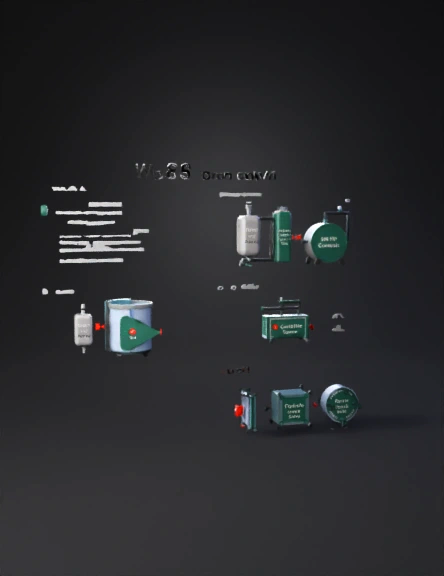
carbon-negative fuel system 3d model
Tags
biomass
machine
machine realistic
machine rendering
machine rendering realistic
realistic
rendering
rendering realistic
Prompt
📊 PRESENTATIOSystem Design of Low-Cost Electrochemical PM2.5 Control System 1. Overall System Description The system is designed to remove PM2.5 particles from polluted air using electrostatic charging combined with electrochemical wet capture at low voltage and low cost. The system consists of four main sections: Air inlet & flow conditioning Electrostatic charging section Electrochemical capture cell Mist eliminator & outlet 2. Process Flow Diagram (PFD – Text Description) PM-Laden Air ↓ Flow Straightener ↓ Electrostatic Charging Zone ↓ Electrochemical Wet Capture Cell ↓ Mist Eliminator ↓ Clean Air Outlet 3. Detailed System Design 3.1 Air Inlet & Flow Conditioning Unit Purpose Ensure uniform air velocity Prevent turbulence before charging zone Design PVC pipe (diameter: 50–75 mm) Honeycomb / mesh flow straightener Design Parameters Parameter Value Air velocity 0.5–1 m/s Flow rate 15–30 m³/hr Reynolds number Laminar–transition Chemical Engg Concept: Fluid flow, velocity profile control 3.2 Electrostatic Charging Section Purpose Impart electrical charge to PM2.5 particles Construction Anode: Thin copper wire (Ø 0.5–1 mm) Cathode: Aluminum mesh / plate Power supply: 12–24 V DC adapter Design Geometry Length: 15–20 cm Electrode gap: 1–2 cm Working Principle Electric field causes particle charging Charged particles migrate under Coulomb force 𝐹 = 𝑞 𝐸 F=qE Where: 𝐹 F = Electrostatic force 𝑞 q = Particle charge 𝐸 E = Electric field strength Chemical Engg Relevance: Particle dynamics, electrostatics, transport phenomena 3.3 Electrochemical Capture Cell (Main Unit) Purpose Capture charged PM2.5 particles Agglomerate particles using electrocoagulation 3.3.1 Cell Construction Component Specification Reactor body Plastic / acrylic container Volume 3–5 L Electrodes Aluminum / Iron plates Electrode size 10 × 5 cm Electrode spacing 1–2 cm Electrolyte 0.02 M NaCl / Na₂SO₄ 3.3.2 Electrochemical Reactions Anode (Aluminum): Al → Al 3 + + 3 𝑒 − Al→Al 3+ +3e − Cathode: 3 𝐻 2 𝑂 + 3 𝑒 − → 3 2 𝐻 2 + 3 𝑂 𝐻 − 3H 2 O+3e − → 2 3 H 2 +3OH − Floc Formation: Al 3 + + 3 𝑂 𝐻 − → Al(OH) 3 Al 3+ +3OH − →Al(OH) 3 ➡ Al(OH)₃ flocs trap PM2.5 particles 3.3.3 Operating Parameters Parameter Range Voltage 12–24 V Current 0.5–1 A pH 6.5–8 Residence time 2–4 s Chemical Engg Concepts Used: Electrochemistry Reaction engineering Mass transfer Gas–liquid–solid contact 3.4 Mist Eliminator Section Purpose Remove water droplets from outlet air Design Steel wool / wire mesh Thickness: 3–5 cm Mechanism Inertial impaction Droplet coalescence 3.5 Clean Air Outlet PVC outlet pipe Final PM2.5 concentration measured here 4. Material Balance (Simplified) PM 𝑖 𝑛 = PM 𝑐 𝑎 𝑝 𝑡 𝑢 𝑟 𝑒 𝑑 + PM 𝑜 𝑢 𝑡 PM in =PM captured +PM out Removal efficiency: 𝜂 ( % ) = 𝐶 𝑖 𝑛 − 𝐶 𝑜 𝑢 𝑡 𝐶 𝑖 𝑛 × 100 η(%)= C in C in −C out ×100 5. Energy Consumption Design Power = 𝑉 × 𝐼 Power=V×I For 12 V, 0.8 A: 𝑃 = 9.6 W P=9.6 WN CONTENT Carbon-Negative Fuel Production Using Biomass Pyrolysis 🟦 Slide 1: Title Slide Title: Design and Development of a Low-Cost Carbon-Negative Fuel Production System Using Biomass Pyrolysis Presented by: Manak Das Department: Chemical Engineering Degree: B.Tech Institute: ______ Guide: ______ Year: 2026 🟦 Slide 2: Introduction Rising energy demand and climate change are major global challenges Fossil fuels increase CO₂ emissions Need for sustainable and carbon-negative energy sources Carbon-negative fuel removes more CO₂ than it emits 🟦 Slide 3: What is Carbon-Negative Fuel? Fuel whose net carbon emission is negative CO₂ absorbed during biomass growth Carbon permanently stored as biochar Remaining energy used as fuel 👉 Result: Atmospheric CO₂ reduction 🟦 Slide 4: Why Biomass? Renewable and easily available Agricultural waste otherwise burned or dumped Absorbs CO₂ during photosynthesis Low cost and eco-friendly Examples: Rice husk, sawdust, bagasse, wood waste 🟦 Slide 5: Project Objectives Design a low-cost pyrolysis reactor Produce bio-oil, syngas, and biochar Demonstrate carbon-negative fuel concept Analyze fuel yield and carbon storage potential 🟦 Slide 6: Principle of Pyrolysis Thermal decomposition of biomass Occurs in absence of oxygen Temperature range: 400–600°C Converts biomass into solid, liquid, and gas products 🟦 Slide 7: Process Flow Diagram (You can draw this neatly) Biomass → Drying → Pyrolysis Reactor ↓ Biochar + Bio-oil + Syngas 🟦 Slide 8: Reactor Design Type: Batch-type fixed bed reactor Material: Mild steel / stainless steel Capacity: 1–3 kg biomass Heating: External electric/gas heating Condition: Airtight, oxygen-free 🟦 Slide 9: Components of the System Pyrolysis reactor vessel Heating system Gas outlet pipe Condenser (copper coil) Bio-oil collection bottle Syngas outlet 🟦 Slide 10: Experimental Methodology Biomass drying Loading biomass into reactor Sealing reactor (no oxygen entry) Heating to 500°C Vapour generation Condensation of vapours Collection of bio-oil Biochar recovery 🟦 Slide 11: Products Obtained 1️⃣ Biochar (Solid) High carbon content Long-term carbon storage Soil improvement 2️⃣ Bio-oil (Liquid) Can be used as industrial fuel Renewable alternative 3️⃣ Syngas (Gas) CO, H₂, CH₄ Can be reused for heating 🟦 Slide 12: Typical Yield Analysis Product Percentage Biochar 25–35% Bio-oil 30–40% Syngas 20–30% (Values depend on temperature and biomass type) 🟦 Slide 13: Why This Process is Carbon-Negative Biomass absorbs CO₂ while growing Biochar locks carbon for hundreds of years Fuel emissions < CO₂ absorbed Net result: Negative carbon footprint 🟦 Slide 14: Applications Renewable fuel production Carbon sequestration Waste management Agriculture (soil amendment) Climate change mitigation 🟦 Slide 15: Advantages Low-cost technology Uses waste materials Renewable and sustainable Reduces greenhouse gases Easy to scale up 🟦 Slide 16: Limitations Batch process Temperature control required Bio-oil needs upgrading Limited production at lab scale 🟦 Slide 17: Safety and Environmental Aspects Airtight reactor to prevent oxygen entry Controlled heating Proper gas handling No liquid waste generation 🟦 Slide 18: Cost Analysis Item Cost (₹) Reactor vessel 500 Heating system 400 Condenser setup 300 Pipes & fittings 300 Miscellaneous 200 Total ~1700 🟦 Slide 19: Future Scope Scale-up for industrial use Integration with bio-refineries Carbon credit generation Biochar-based hydrogen production Rural energy solutions 🟦 Slide 20: Conclusion Carbon-negative fuel is a promising solution Biomass pyrolysis effectively produces fuel and stores carbon Project demonstrates sustainability with low cost Suitable for future clean energy applications 🟦 Slide 21: Acknowledgement Guide Department Institute Friends & family 🟦 Slide 22: Thank You Thank You Any Questions?
Detailed Info
Related Models
Enter invite code
Enter invite code to get credits!
 Anonymous1770045530


 Anonymous1770045530