3D Workspace
Home
Assets
Affiliate Program
Sign up/Log in
?
Upgrade
DCC Bridge
3D Creation Made Simple
Text & Image to 3D Model in seconds
One-Click Texturing & Smart Detail Editing
Free Credits Monthly
Start Free
Anonymous1772938010
03-08 02:54
Model Name
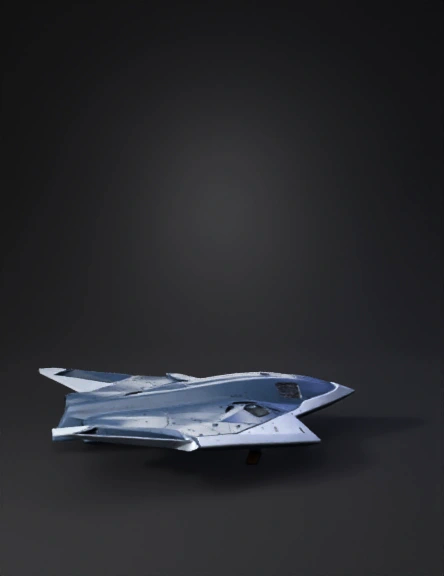
stealth drone 3d model
Tags
vehicle
rendering
realistic
Prompt
A drone design whose body is “radar invisible” (stealth). Use physics and math calculations to achieve this. Convert the calculations into a 3D model. Here’s a detailed, physics-based explanation and approach: 1. Physics Behind Radar Stealth Radar detects objects by bouncing electromagnetic (EM) waves off surfaces. To avoid detection: Shape Matters (Geometry) Avoid flat surfaces perpendicular to radar sources. Use angled surfaces to deflect radar waves away from the source. Example: F-117 stealth fighter uses many flat, angled panels. Materials (Electromagnetic Absorption) Radar-Absorbent Material (RAM) converts EM energy into heat. Materials with high permittivity and permeability can absorb radar waves. Size & Wavelength Radar detection depends on object size relative to radar wavelength. Smaller drones are harder to detect by long-wavelength radar. Surface Smoothness Edges, protrusions, and gaps increase radar reflection. Minimize joints and keep the surface smooth. 2. Mathematical Modeling Radar Cross Section (RCS) is key. For a flat plate: 𝜎 = 4 𝜋 𝐴 2 cos 2 𝜃 𝜆 2 σ= λ 2 4πA 2 cos 2 θ Where: 𝜎 σ = radar cross section 𝐴 A = surface area 𝜃 θ = angle of incidence 𝜆 λ = radar wavelength Key insight: Reduce 𝐴 A, deflect 𝜃 θ, or choose 𝜆 λ out of your control. For curved bodies, RCS depends on integration over the surface: 𝜎 total = ∫ 𝑆 4 𝜋 ( 𝑛 ⃗ ⋅ 𝑘 ⃗ ) 2 𝜆 2 𝑑 𝑆 σ total =∫ S λ 2 4π( n ⋅ k ) 2 dS Where 𝑛 ⃗ n is the local surface normal, 𝑘 ⃗ k is incoming radar vector. Optimization: Use calculus and vector math to minimize 𝜎 total σ total . 3. 3D Modeling Conversion Once you have angles, curves, and dimensions from your math: Use CAD software: SolidWorks, Fusion 360, or Blender. Apply surface geometry from your calculations. Simulate radar reflection using EM simulation plugins: CST Microwave Studio ANSYS HFSS This lets you see which surfaces reflect radar before physical prototyping. 4. Other Physics Tricks Edge alignment: Align edges parallel to radar direction. Composite materials: Carbon fiber with resin + RAM coating. Internal placement: Place motors and electronics inside, away from edges. Frequency tuning: Design drone to avoid common radar bands (X, S-band, etc.). If you want, I can make a step-by-step workflow where you input size, material, and angles, and it gives you optimized RCS and a ready 3D model file.
Detailed Info
Related Models
Enter invite code
Enter invite code to get credits!