3D Workspace
Home
Assets
Affiliate Program
Creator Program
Sign up/Log in
View Plans
DCC Bridge
julienthompson9
01-22 03:52
Model Name
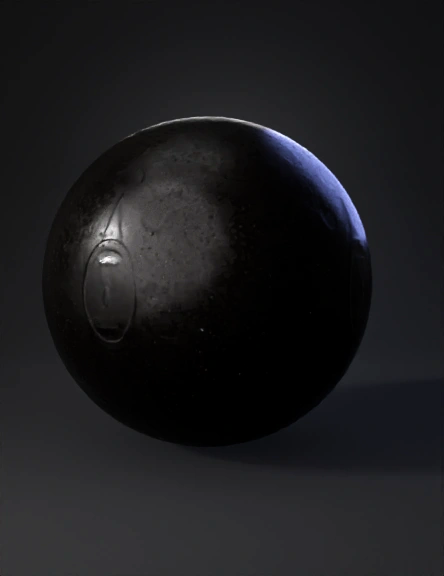
black hole 3d model
Tags
black hole
nature environment
nature environment realistic
nature environment rendering
nature environment rendering realistic
realistic
rendering
rendering realistic
Prompt
// BlackHoleStats.h - Core statistical parameters for any astrophysical black hole // Due to the No-Hair Theorem, EVERY black hole is fully defined by exactly these three values. // Nothing else (baryon number, composition, formation history) affects its external behavior. USTRUCT(BlueprintType) struct FBlackHoleStats { GENERATED_BODY() // 1. Mass (M) - Primary parameter. Measured in solar masses (M⊙ = 1.989 × 10^30 kg) // Determines horizon size, gravitational pull, temperature, and lifetime. UPROPERTY(EditAnywhere, BlueprintReadWrite, Category = "Core Stats", meta = (UIMin = "3.0", ClampMin = "3.0")) float Mass_SolarMasses = 10.0f; // Typical range: // Stellar-mass: 3–150 M⊙ // Intermediate: 10²–10⁵ M⊙ // Supermassive: 10⁶–10¹⁰ M⊙ // Real examples: // GW150914 merger product: ~62 M⊙ // M87*: ~6.5 × 10⁹ M⊙ // Sgr A*: ~4.3 × 10⁶ M⊙ // 2. Spin parameter (a* or a) - Dimensionless, 0 ≤ a* < 1 // 0 = non-rotating (Schwarzschild), approaching 1 = near-extremal (Kerr) UPROPERTY(EditAnywhere, BlueprintReadWrite, Category = "Core Stats", meta = (UIMin = "0.0", UIMax = "0.999", ClampMax = "0.999")) float Spin = 0.0f; // Observed statistics (from LIGO/Virgo/KAGRA + X-ray binaries): // Most merger remnants: a* > 0.6–0.9 // Many astrophysical BHs show high spin (a* ≈ 0.9+) // 3. Electric charge (Q) - Almost always negligible in real universe // Extreme charge would produce huge electric fields; neutralized instantly. UPROPERTY(EditAnywhere, BlueprintReadWrite, Category = "Core Stats") float Charge = 0.0f; // Realistic value: effectively 0 // Extremal charged (Reissner-Nordström) limit: |Q|/M ≈ 1 (in geometric units) // ==================== DERIVED GAME-RELEVANT STATS (compute in code) ==================== // Schwarzschild radius (event horizon for non-spinning) in kilometers float GetSchwarzschildRadius_km() const { return 2.95f * Mass_SolarMasses; } // Approximate Hawking temperature in Kelvin (colder = larger mass) float GetHawkingTemperature_K() const { // T = ħ c³ / (8 π G M k_B) ≈ 6.17 × 10^-8 K * (M⊙ / M) return 6.17e-8f / Mass_SolarMasses; } // Bekenstein-Hawking entropy (in units of k_B) double GetEntropy() const { // S / k_B = (4 π G M²) / (ħ c) ≈ 1.05 × 10^77 * (M / M⊙)² return 1.05e77 * FMath::Square(Mass_SolarMasses); } // Innermost Stable Circular Orbit (ISCO) radius in units of GM/c² (smaller = closer orbits for high spin) float GetISCO_Radius_GM_c2() const { if (Spin == 0.0f) return 6.0f; // Schwarzschild float Z1 = 1.0f + FMath::Pow(1.0f - Spin*Spin, 1.0f/3.0f) * (FMath::Pow(1.0f + Spin, 1.0f/3.0f) + FMath::Pow(1.0f - Spin, 1.0f/3.0f)); float Z2 = FMath::Sqrt(3.0f * Spin*Spin + Z1*Z1); return 3.0f + Z2 - FMath::Sqrt((3.0f - Z1)*(3.0f + Z1 + 2.0f*Z2)); // Prograde ISCO (realistic) } };
Detailed Info
Related Models
Enter invite code
Enter invite code to get credits!
 julienthompson9


 julienthompson9