3D Workspace
Home
Assets
Affiliate Program
Creator Program
Sign up/Log in
View Plans
DCC Bridge
jm3450222
12-26 21:37
Model Name
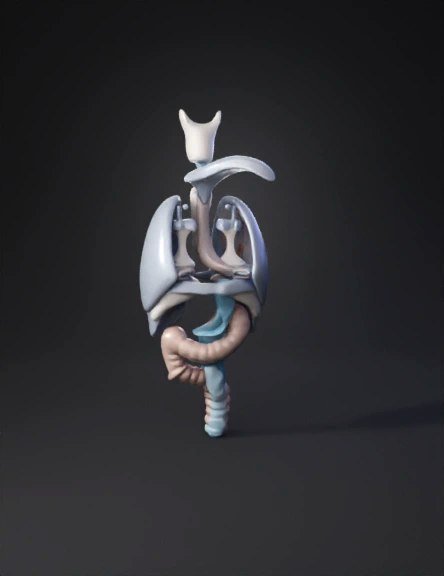
inner ear 3d model
Tags
cochlea
inner ear anatomy
larynx
nature environment
nature environment realistic
nature environment rendering
nature environment rendering realistic
realistic
rendering
rendering realistic
Prompt
Create a high-accuracy 3D anatomical model of the human larynx and its immediately surrounding structures, engineered for functional articulation and procedural animation rather than static display. The model must include the larynx as a coherent mechanical system, not a single fused mesh. Represent the following anatomical components as clean, separable meshes or logically grouped sub-structures with correct spatial relationships and neutral resting pose: Thyroid cartilage (laminae and notch clearly defined) Cricoid cartilage (complete ring, anatomically proportioned) Arytenoid cartilages positioned correctly on the cricoid Corniculate cartilages integrated with arytenoids Epiglottis with correct curvature and hinge relationship Hyoid bone positioned superior to the larynx Trachea segment inferior to the cricoid Vocal fold region represented as a functional midline structure (median model acceptable; left/right separation optional but not required) Relevant ligaments and membranes, including hyoepiglottic, thyrohyoid, cricothyroid, and aryepiglottic regions, modeled as passive connective structures (non-actuating) Design the model so that motion is anatomically plausible and constrained. The larynx should be capable of: Vertical elevation and depression as a unit Subtle anterior/posterior tilt of the thyroid cartilage Inlet constriction and dilation at the epilaryngeal region Epiglottic tilt correlated with laryngeal elevation Visual indication of airflow or expansion in the tracheal region Do not include baked animations. Do not include facial skin, tongue, or mandible unless necessary for spatial reference. Focus on throat anatomy only. Topology should be clean, non-stylized, and suitable for rigging. Avoid unnecessary symmetry splits unless functionally meaningful. Use consistent real-world scale and orientation. Neutral pose should represent quiet breathing. The final model should be suitable for: Procedural rigging with bones or control points Driver-based or signal-driven animation (audio, AI, simulation) Export to Blender and real-time engines (GLTF/FBX compatible) Prioritize structural correctness, articulation readiness, and clarity of anatomical relationships over surface detail or texture realism.
Detailed Info
Related Models
Enter invite code
Enter invite code to get credits!
 jm3450222


 jm3450222