3D Workspace
Home
Assets
Affiliate Program
Creator Program
Sign up/Log in
View Plans
DCC Bridge
mariamdaifallah313
11-07 16:07
Model Name
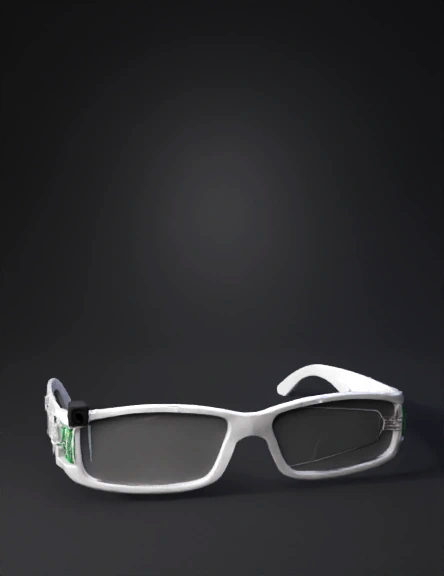
smart glasses 3d model
Tags
3d printing
3d printing realistic
props
props 3d printing
props 3d printing realistic
props realistic
realistic
smart glasses
Prompt
Design a fully self-contained smart glasses prototype called EchoLens, powered by artificial intelligence for real-time translation between spoken language and sign language without the need for any smartphone or external device. EchoLens aims to create seamless communication between the deaf and the hearing community through compact, wearable technology. The design must focus on comfort, efficiency, and an elegant futuristic aesthetic. General Design and Structure The frame should be lightweight, matte white, and ergonomically curved, appearing as if it were made using 3D printing technology. The design should balance realism with innovation — minimal thickness, rounded corners, and smooth transitions between components. Ensure the model is 3D-printable, modular, and internally detailed, showing how each component fits neatly inside the frame. Display and Visual System On the right side of the glasses, embed a 0.96-inch OLED microdisplay (SSD1306) inside the arm. Place a semi-transparent reflective mirror angled in front of the right lens to project the OLED’s display text into the user’s field of view without obstructing vision. This projection creates a holographic-like overlay where translated text appears in real time — for instance, when someone speaks, the AI converts it to readable text that appears on the reflective lens. Use subtle transparent effects to show how light travels from the OLED to the mirror, emphasizing clarity and realism. Camera and Gesture Detection Mount a micro camera module (OV2640) at the upper corner of the glasses’ front frame. The camera captures sign language gestures from the other person and sends the visual data to the processing unit for recognition and translation into speech. Show small wiring paths leading from the camera to the main processing board within the right arm — realistic but clean, emphasizing precision. Audio System Add a MEMS microphone (INMP441) near the right temple, used to detect speech input from the environment. When someone talks, the microphone captures the sound, and the onboard AI model processes it, converting it into text displayed on the OLED. Additionally, embed miniature speakers or bone-conduction audio units inside both arms for voice output when translating from sign language to spoken form. Ensure all these components are visually integrated into the frame — no external attachments. Internal Electronics and Power Inside the right arm of the glasses, place an ESP32-S3 Mini microcontroller as the central processing unit. Connect the OLED, camera, and microphone directly to this board with ultra-thin internal wiring. Add a 3.7V lithium polymer battery (Li-Po) and a micro USB-C charging port at the rear of the arm. Include a small LED indicator light that glows softly when the device is active or charging. Show the internal layout in an exploded or transparent view to make it clear how the components fit efficiently together. All parts must be self-contained — no external wires, phones, or Bluetooth connections. AI Functionality and System Operation The embedded AI model runs directly on the ESP32-S3 chip. When the microphone detects speech, it uses a small-scale on-device speech recognition model to convert it into text. The text is instantly projected on the OLED display and reflected through the semi-transparent mirror into the user’s view. When the camera detects hand gestures or sign language, it processes the visual data using lightweight AI algorithms for gesture recognition, converting it into spoken audio played through the built-in speakers. Both translation directions — voice-to-text and sign-to-speech — operate locally, maintaining real-time performance without internet access. Aesthetic and Presentation Use high-quality materials and soft studio lighting to create a realistic product-style render. The background should be dark or gradient gray to emphasize the white body of the glasses. Add small hints of glowing light near the OLED lens to suggest active operation. Textures should look smooth and modern — like polished 3D-printed polymer. Label internal parts (ESP32, OLED, battery, camera, mic) subtly in the render to make the technology clear for presentation at science fairs or exhibitions. Final Notes EchoLens must appear as a functional AI-powered medical-assistive prototype, not just a concept design. It should visually demonstrate how each component contributes to seamless two-way translation between the deaf and hearing users. The model should be ready for real-world prototyping and 3D printing, practical, elegant, and compact — the kind of innovation that bridges communication through smart engineering
Detailed Info
Related Models
Enter invite code
Enter invite code to get credits!
 mariamdaifallah313


 mariamdaifallah313