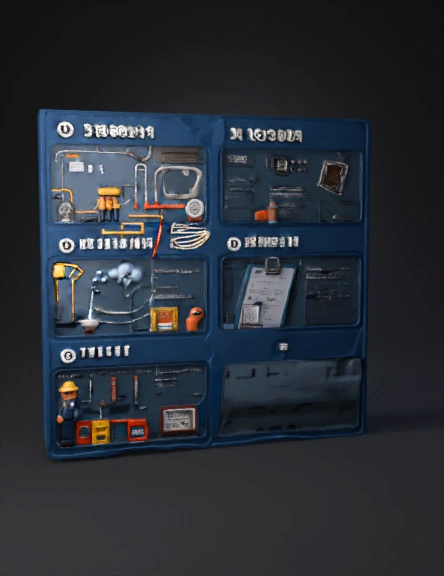
3D Workspace
Home
Assets
Affiliate Program
Sign up/Log in
?
Upgrade
DCC Bridge
3D Creation Made Simple
Text & Image to 3D Model in seconds
One-Click Texturing & Smart Detail Editing
Free Credits Monthly
Start Free
Anonymous1771819088
02-23 04:26
Model Name
safety poster 3d model
Tags
props
rendering
realistic
Prompt
Fatal Risk Standard – Confined Space (Barrick Gold Corporation) SCENE 1: OPENING – SAFETY MESSAGE Visual: Workers at a mine site. Fade to confined space visuals (tank, vessel, pit, duct). Voice-over: At Barrick, our safety vision is simple: Every person goes home safe and healthy, every day. Confined Space work is identified as a Fatal Risk. This video explains how we manage those risks — and what is expected from everyone. SCENE 2: WHAT IS A CONFINED SPACE Visual: Examples of tanks, silos, vessels, pits, ducts. Voice-over: A confined space is an enclosed or partially enclosed area that is not designed for continuous occupancy, has limited entry or exit, and may contain hazardous atmospheres or conditions. SCENE 3: WHY CONFINED SPACES ARE DANGEROUS Visual: Animated hazards (gas clouds, rising liquid, sparks, energy lines). Voice-over: Working in confined spaces can expose workers to serious hazards, including: • Oxygen deficiency or toxic gases • Fire or explosion • Engulfment or drowning • Uncontrolled release of energy Without proper controls, these risks can be fatal. SCENE 4: PURPOSE OF THIS STANDARD Visual: Policy document → shield icon. Voice-over: The purpose of the Fatal Risk Standard for Confined Space is to eliminate fatalities, injuries, and serious incidents. It defines the minimum mandatory controls that must be in place before any confined space work begins. SCENE 5: CRITICAL CONTROLS Visual: Checklist appearing one by one. Voice-over: The following critical controls must always be implemented: • Confined Space Entry Permit • Atmospheric testing and monitoring • Energy isolation • Access control and spotter • A documented rescue plan SCENE 6: SAFE BEHAVIORS Visual: Workers following procedures correctly. Voice-over: Safe behaviors save lives. Before and during entry, always ensure: • All energy sources are isolated and verified zero-energy • The atmosphere is tested and continuously monitored • Ventilation is used when required • A valid permit is completed and authorized • A trained spotter is present • Two-way communication is maintained • Only trained and authorized personnel enter SCENE 7: PLANNING & PERMIT Visual: Permit being filled, supervisor signing. Voice-over:No one may enter a confined space without a Confined Space Entry Permit. The permit must be: • Generated before work and at the start of each shift • Reviewed and approved by a competent supervisor • Displayed at the entry point If conditions change — stop work, reassess risks, and issue a new permit. SCENE 8: ATMOSPHERIC MONITORING Visual: Gas detector in use. Voice-over: Atmospheric hazards are one of the greatest dangers in confined spaces. The atmosphere must be tested before entry and continuously monitored during work. Safe oxygen levels are between 19.5% and 23.5%, and flammable gases must remain below 10% of the Lower Explosive Limit. SCENE 9: ROLES & RESPONSIBILITIES Visual: Three workers labeled Entrant, Spotter, Supervisor. Voice-over: Confined space work requires a trained team: Entrant – performs work inside the space Spotter – remains outside, monitors conditions Entry Supervisor – ensures all controls are in place Everyone must understand their role and never work alone. SCENE 10: ENERGY ISOLATION Visual: Lockout/Tagout animation. Voice-over: All hazardous energy sources must be identified, isolated, locked, tagged, tested, and verified. No entry is permitted until zero-energy state is confirmed. SCENE 11: HEAT & IDLH CONDITIONS Visual: Temperature gauge, SCBA equipment. Voice-over: Heat stress and IDLH conditions increase risk significantly. When working in high temperatures or dangerous atmospheres: • Follow hot-work protocols • Use appropriate PPE • Ensure medical clearance • Implement forced ventilation • Notify the rescue team in advance SCENE 12: RESCUE PLANNING Visual: Rescue equipment staged near entry. Voice-over: A confined space rescue plan must be in place before entry. Rescue is not improvisation — it is planned, practiced, and ready. SCENE 13: COMPETENCY & TRAINING Visual: Training session, certification icons. Voice-over: Only trained and competent personnel may: • Enter confined spaces • Issue or approve permits • Perform atmospheric testing • Act as spotters or supervisors Annual refresher training is mandatory. SCENE 14: CLOSING MESSAGE Visual: Workers exiting site safely. Voice-over: Confined space work can be done safely — only when standards are followed. Stop work if something feels unsafe. Speak up. Protect yourself and your team. Every person goes home safe and healthy — every day.
Detailed Info
Related Models
Enter invite code
Enter invite code to get credits!