3D Workspace
Home
Assets
Affiliate Program
Sign up/Log in
?
Upgrade
DCC Bridge
3D Creation Made Simple
Text & Image to 3D Model in seconds
One-Click Texturing & Smart Detail Editing
Free Credits Monthly
Start Free
Anonymous1759653135
10-05 08:33
Model Name
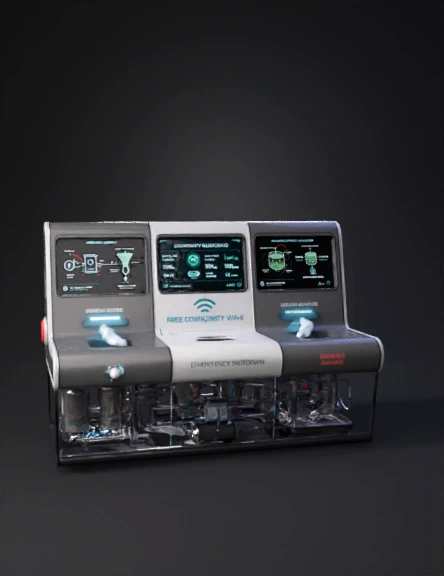
smart waste bench 3d model
Tags
machine
rendering
realistic
Prompt
Turn common urban pain points-plastic waste, poor internet access, and energy gaps-into community-powered solutions through smart design and clean tech. Multifunctional public benches that convert discarded plastic and organic waste into energy, which in turn powers free community WiFi hotspots and charging stations—especially in low-connectivity areas or underserved neighborhood. 1. How it works: • Smart Waste Intake: Users feed plastic bottles or biodegradable waste into a slot in the bench. • Micro Recycling Tech: Built-in compact pyrolysis and composting units safely convert waste into small amounts of bioenergy. • Clean Energy Use: The energy powers a WiFi router and USB charging ports integrated into the bench. • Digital Dashboard: Shows data like local air quality, how much waste’s been recycled, and community usage stats. 2. How is the energy converted: • The bench would be designed such to have a dual system within it which would convert energy from plastic and biowaste separately. The dual system is explained in the given table: Waste Type Processing System Energy Output a) Plastic Mini Pyrolysis Reactor Syngas, oil for electricity b) Organic Biowaste Micro Anaerobic Digester Methane for low-voltage power • These systems can be small and modular—each one tailored for its specific feedstock. Bonus: the leftover compost from biowaste can be used as soil enrichers in nearby parks or gardens. a) Pyrolysis system (plastic): Pyrolysis is the thermal decomposition of materials at high temperatures (typically 300–900°C) in the absence of oxygen. Unlike burning, it does not combust the material—it breaks it down into simpler compounds. Core Products of Pyrolysis: • Syngas: Will be used for On-site powering in Wi-fi routers, USB ports and LED screens. • Bio-oil: Will be used for maintaining the temperature of the catalyst (CO converter) • Char: Will be sent for the constructions of roads or pavements providing them with durability and stiffness. Steps to Energy: i. Feedstock Preprocessing o Waste (e.g., plastic) is shredded and dried to reduce moisture. o Uniform particle size ensures even heating. ii. Reactor Chamber o The heart of the system. o Heats the feedstock in an oxygen-free environment. o Types: rotary kiln, fluidized bed, or fixed-bed reactors. iii. Heating System o External burners (often powered by syngas from the system itself) raise the temperature to 400–600°C. o Heat is applied indirectly to avoid combustion. o External burner to be used- Radiant tungsten heater. iv. Condensation Unit o Hot vapors from the reactor are cooled. o Condensable vapors become bio-oil. o Non-condensable gases are collected as syngas. v. Gas Cleaning & Scrubbing o Removes tar, particulates, and acidic gases. o Ensures clean syngas for reuse or safe release. vi. Char Collection o Solid residue is removed from the reactor. o Can be used as biochar or further processed. vii. Energy Recovery System o Syngas is burned in a generator or heater to power the system itself—making it self-sustaining. Install safety features such as: • Explosion-proof components: Use explosion-proof electrical equipment and materials in hazardous areas. • Gas detection sensors: Monitor for leaks of flammable gases and trigger alarms if necessary. • Emergency shutdown system: Provide a quick and safe way to shut down the system in case of an emergency. Efficient Gas Treatment: Implement a multi-stage gas treatment system including: • Condensers: To condense pyrolysis vapours into liquids. • Scrubbers: To remove acidic gases like hydrogen chloride. • Catalytic Converters: To break down volatile organic compounds (VOCs) and other pollutants. • Particulate Filters: To remove ash and other particulate matter. A closed loop system is going to favour safety and avoid hazard. With this we can make a compact and small pyrolysis system that makes us the energy. b) Anaerobic Digestion (biowaste): What Is Anaerobic Digestion? It is a biological process where microorganisms break down organic matter (like food waste, manure, or plant material) in the absence of oxygen, producing: • Biogas (mainly methane + CO₂) → used for energy • Digestate → a nutrient-rich slurry used as fertilizer Components of an Anaerobic Digester: Component Function Feedstock Inlet Where organic waste enters the system Digestion Tank Airtight chamber where microbes break down the waste Mixing System Keeps the slurry uniform and prevents scum or sediment buildup Heating System Maintains optimal temperature (usually 35–55°C) for microbial activity Gas Collection Dome Captures biogas produced during digestion Gas Scrubber Removes impurities like H₂S and water vapor from the biogas Digestate Outlet Releases the leftover slurry for use as fertilizer or compost ________________________________________ What You Get Out of It • Biogas (50–75% methane): Can be burned to generate electricity or heat. • Digestate: Rich in nitrogen, phosphorus, and potassium—great for soil. • Reduced Waste Volume: Up to 60–70% less solid waste.
Detailed Info
Related Models
Enter invite code
Enter invite code to get credits!