3D Workspace
Home
Assets
Affiliate Program
Creator Program
Sign up/Log in
View Plans
DCC Bridge
gpsbased7363
09-29 08:36
Model Name
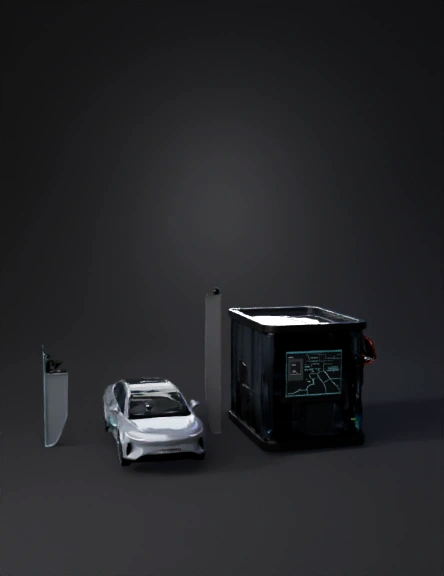
wireless ev charging 3d model
Tags
architecture
architecture rendering
architecture rendering sci fi
architecture sci fi
electronics bay
rendering
rendering sci fi
sci fi
wireless
Prompt
Design a realistic, futuristic electric vehicle (EV) charging station modeled similarly to a traditional petrol bunk but adapted for modern, automated, wireless charging. The station should feature a clean, modular, and organized layout with multiple charging lanes or bays, each acting as a designated charging slot. These lanes are arranged under a shared canopy or structure with visible support pillars, LED strip lighting, and signage. The entire station must appear smart, high-tech, and automated — combining physical hardware with digital interaction elements. Each charging lane should have an ESP32-controlled wireless charging unit mounted on the ground or embedded within a platform, visually indicated with glowing rings or energy patterns to show active wireless power transfer. These units are connected to buck-boost converters housed inside weather-proof utility boxes near each slot. Thin glass panels or enclosures around each charging bay display voltage and current values on small OLED displays, showcasing real-time stats. Above or near each charging lane, include a small vertical OLED screen mounted on a post or arm — this display shows the vehicle number, charging status, and live wattage. Also, place a Pi Camera v2-like module mounted on an overhead bar or a side post at the entrance to each lane, aimed downward to scan vehicle number plates. Indicate this with a small lens module and cable routing back to the main control unit. At the center or side of the station, include a small, semi-enclosed central control booth or terminal, containing a Raspberry Pi 4 unit (can be represented with an industrial PC enclosure with status LEDs and display) which acts as the brain of the entire station. This unit connects to the cloud via Wi-Fi or Ethernet (show antennas or cables). The control booth should have a larger OLED screen or digital interface that displays session status, available slots, and guidance to drivers. A glowing digital map of slot assignments (e.g., "Car KA05MB1011 → Slot 3") adds a futuristic touch. Surround the station with minimalistic security and status indicators — CCTV-style camera domes, motion sensors, and maybe solar panels on the canopy for energy support. A Supabase cloud icon (or modern database/cloud motif) floats above or is indicated on a digital display to represent real-time syncing of user data, charging sessions, wallet balances, and energy analytics. Vehicles in the scene should be modern electric cars or futuristic EVs pulled into the charging bays. Some cars should appear actively charging with subtle glowing underbody lights where the charging coil aligns with the transmitter. Transparent visual overlays or animations may depict magnetic field lines or wireless energy transfer between the ground unit and the vehicle coil receiver. At least one car should be shown approaching the entrance, where its number plate is being scanned by the camera module. Include signage or branding that reads: “Smart Wireless EV Charging Hub” or “Automated Charging Station – AI Controlled” on the canopy edge or side wall. Ensure the visual style is clean, sleek, with smart lighting, metallic surfaces, glass panels, and glowing UI elements to indicate the station is fully automated and smart. Allow visibility into key technical components, either through transparent walls or labeled cutaways: MOSFET drivers (IR2110) on PCB boards near the buck-boost circuit Sensors (INA219 / ACS712) monitoring voltage/current Microcontrollers (ESP32s) mounted inside utility boxes or poles with Wi-Fi antennas Raspberry Pi controlling the full logic, placed in the control terminal with connected wiring Include a status LED panel or holographic indicator outside the station that shows the number of available charging slots, session time, total kWh transferred today, and network status (online/offline/cloud sync). Additionally, design an optional RFID authentication terminal as a backup system. This should be a small panel near each lane or at the control booth where users can tap a card to authenticate, useful when OCR fails. Show one user scanning a card. The environment should suggest scalability — show additional unused lanes or wiring that hints at future expansion. Also, represent real-time data caching or offline operation by showing a digital fallback icon (e.g., local storage or cache symbol near the Raspberry Pi), emphasizing that the station can work temporarily without internet. Color theme: Use tones of cool gray, electric blue, green LEDs, black glass, and white ambient lighting. Vehicles can be silver, white, or matte black, matching the high-tech aesthetic. Use glowing blue rings or wave patterns under the EVs to indicate active wireless charging. Optional: Include a mobile app mockup or digital kiosk interface in the background, showing wallet balance, vehicle ID, session cost, and a stop/start button to represent user control. A notification popup on the display can say: “Charging Session Started: KA05MB1011 – Slot 2 – ₹15.20 deducted from wallet.” Label key components subtly: “OCR Camera (Pi Cam v2)” “Wireless Charging Coil – Powered via IR2110 Driver” “ESP32 Controller – Wi-Fi Connected” “Session Monitor – OLED Live Stats” “Raspberry Pi 4 – Master Node + Local Cache” “Supabase Cloud Sync – Real-Time Logs + Billing” Overall, the model must depict a fully functional, futuristic wireless EV charging station, blending IoT control, cloud integration, wireless power delivery, and smart billing into one clean, real-time automated system.
Detailed Info
Related Models
Enter invite code
Enter invite code to get credits!
 gpsbased7363


 gpsbased7363