3D Workspace
Home
Assets
Affiliate Program
Sign up/Log in
?
Upgrade
DCC Bridge
Anonymous1761481152
10-26 12:29
Model Name
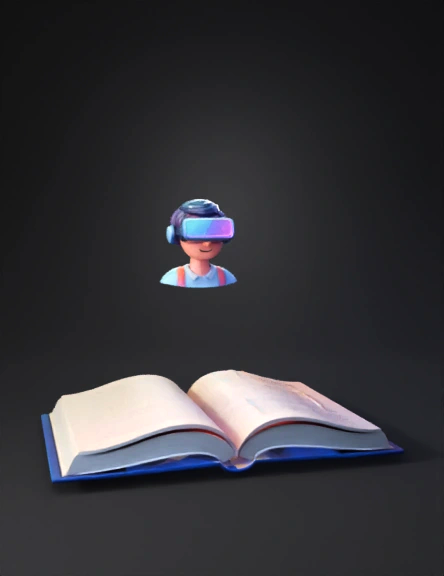
open book holographic 3d model
Tags
concept art
concept art sci fi
props
props concept art
props concept art sci fi
props sci fi
sci fi
textbooks
Prompt
Got it! Here’s the same 7-minute script on “The Impact of Technology on Education” — this time without time stamps, written smoothly for a presentation, video narration, or speech. 🎙️ The Impact of Technology on Education Imagine a classroom where students aren’t confined to four walls… Where lessons come alive through virtual reality, where teachers connect with learners across the globe, and where knowledge is just a tap away. This isn’t science fiction — this is today’s education. Technology has transformed how we teach, how we learn, and how we think about education itself. Today, let’s explore how technology has reshaped education — the opportunities, the challenges, and what it all means for the future of learning. The Digital Classroom Revolution Twenty years ago, classrooms relied on blackboards, textbooks, and handwritten notes. Today, we see smartboards, tablets, laptops, and cloud-based learning platforms. Tools like Google Classroom, Microsoft Teams, and Zoom have turned traditional classrooms into digital learning environments. Students can now submit assignments online, receive instant feedback, and even collaborate on projects without being in the same room. During the COVID-19 pandemic, technology became the lifeline of education. Over 1.6 billion students around the world moved to online learning almost overnight. That moment didn’t just show what technology could do — it proved that it was essential. But the digital classroom isn’t just about convenience. It’s about access — giving students in remote or underserved areas the chance to learn from the same materials as anyone else. Personalized and Interactive Learning One of the biggest advantages of technology is personalization. Every student learns differently — some are visual learners, some are auditory, others learn best through doing. Technology allows teachers to tailor lessons to those needs. For example, AI-powered learning platforms like Khan Academy or Duolingo adjust the difficulty level based on each student’s performance. If you’re struggling with a concept, the program slows down and offers extra help. If you’re excelling, it challenges you with more advanced material. Gamification has also changed how students engage with learning. Apps like Kahoot! and Quizizz turn lessons into games, making learning fun, interactive, and competitive. Virtual reality and augmented reality are taking this even further. Imagine studying ancient Egypt inside a virtual pyramid, or learning biology by walking through a 3D model of the human body. This kind of immersive experience brings subjects to life in ways textbooks never could. Expanding Global Access Technology has also broken down geographical barriers. Students in rural India can take coding courses taught by professors from MIT. A teenager in Nigeria can learn graphic design from YouTube tutorials. A working parent can earn a degree entirely online while caring for their family. Massive Open Online Courses — or MOOCs — from platforms like Coursera, edX, and Udemy have made high-quality education available to millions, often for free or at very low cost. Education has become more democratic. Knowledge is no longer limited to those who can afford it or who live near prestigious institutions — it’s accessible to anyone with an internet connection. The Challenges and the Digital Divide But technology in education also brings new challenges. First, there’s the digital divide. Not everyone has reliable internet, a laptop, or even electricity. According to UNESCO, nearly one-third of students worldwide still lack access to online learning tools. So while technology expands opportunities, it can also widen inequality if we’re not careful. Then there’s the issue of distraction and screen fatigue. Endless notifications, social media, and multitasking can make it hard for students to focus. Teachers now have to balance the benefits of digital tools with the need for discipline and attention. And finally, data privacy and cybersecurity. With more learning happening online, protecting student information has become a top priority. The Teacher’s Evolving Role Technology hasn’t replaced teachers — it’s redefined their role. Instead of being the sole source of knowledge, teachers are now facilitators and mentors. They guide students through oceans of information, helping them think critically, evaluate sources, and apply what they learn in the real world. In the past, education was about memorizing facts. Today, it’s about developing skills — creativity, collaboration, digital literacy, and problem-solving. Technology gives teachers powerful tools, but human connection remains at the heart of effective learning. The Future of Learning So, what’s next? Artificial intelligence tutors that adapt in real time. Holographic classrooms connecting students from every continent. And perhaps — schools that exist entirely in virtual worlds. Technology will continue to evolve, but one thing will remain constant: the human desire to learn, grow, and share knowledge. Education powered by technology isn’t just about gadgets — it’s about creating a smarter, more connected, and more inclusive world. And that’s the true impact of technology on education
Detailed Info
Related Models
Enter invite code
Enter invite code to get credits!
 Anonymous1761481152


 Anonymous1761481152