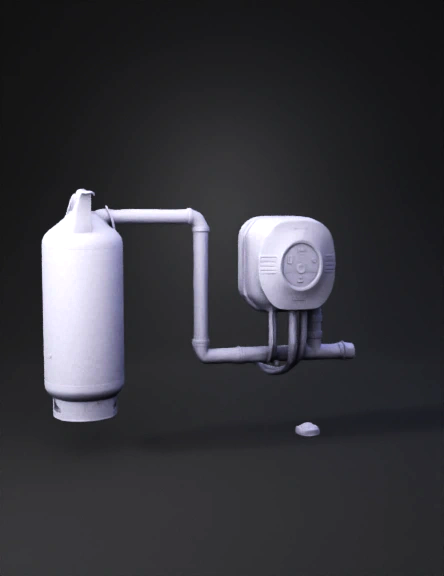
gas detector setup 3d model
In the modern landscape of home automation and household safety, the design of LeakShield represents a vital evolution from passive hazard monitoring to proactive, autonomous risk mitigation. Traditional consumer gas detectors often function as isolated, reactive appliances that rely entirely on audible alarms to warn occupants of a threat. However, this design philosophy contains a critical flaw: if a gas leak occurs while the home is vacant, or if the residents are asleep, incapacitated, or away at work, a simple buzzer is entirely ineffective at preventing a catastrophe. Liquefied Petroleum Gas (LPG)—which is composed primarily of propane and butane—possesses a vapor density significantly greater than that of ambient air. Consequently, when a leak occurs near cylinders, regulators, or pipelines, the escaping gas does not disperse evenly throughout the room; instead, it rapidly sinks, pools along the kitchen floor, and accumulates in low-lying pockets. This silent accumulation create
v3.1-20260211


