3D Workspace
Home
Assets
Affiliate Program
Creator Program
Sign up/Log in
View Plans
DCC Bridge
Anonymous1767607056
01-05 10:04
Model Name
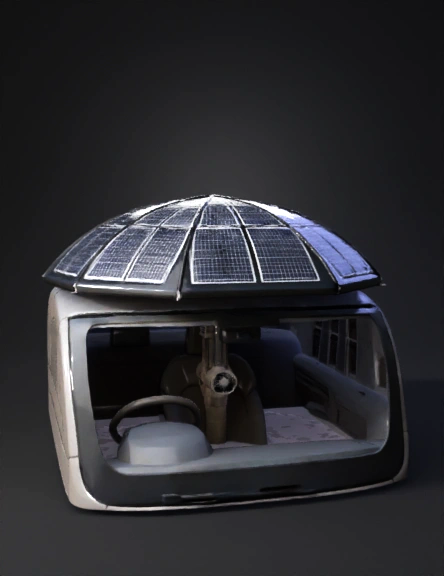
car sunshade umbrella 3d model
Tags
evaporator
moisture
props
props realistic
props rendering
props rendering realistic
realistic
rendering
rendering realistic
thermal
Input
Prompt
Is it possible to recirculate and cool air in a closed environment? Yes, air can be recirculated and cooled in enclosed spaces. This is the fundamental operating principle of most modern air-conditioning systems. This process is carried out through the following steps: Recirculation: The air-conditioning unit draws warm air from inside the space through return vents, instead of continuously pulling in fresh outdoor air. Cooling: The air passes over cold evaporator coils, where the refrigerant absorbs heat from the air. Filtration: During airflow, filters remove dust and contaminants before the air is supplied back into the space. Dehumidification: The cooling process condenses moisture from the air, improving thermal comfort. Important safety note: Operating with 100% air recirculation for extended periods may lead to carbon dioxide accumulation and oxygen depletion. Therefore, the International Organization for Standardization (ISO) recommends introducing a percentage of fresh air or providing periodic ventilation to maintain acceptable indoor air quality. Advanced ventilation solutions can be referenced through the American Society of Heating, Refrigerating and Air-Conditioning Engineers (ASHRAE). Concept Proposal I have an idea that I would like to implement: a car sunshade in the form of an umbrella, where the upper surface is equipped with solar energy strips for power generation. On the opposite side, a small fan draws air in and discharges it through the umbrella shaft. During intake, the air passes over a cooling medium before being released. Is this concept technically feasible, considering that the car windows are completely closed? Technical Feasibility Assessment Your concept is innovative and combines two existing technologies (solar shading and ventilation). From a technical standpoint, implementation is possible; however, it presents several engineering and physical challenges that must be addressed to ensure effectiveness. Below is a detailed feasibility analysis based on 2026 technology assumptions: 1. Power Source (Flexible Solar Panels) Feasibility: Thin-film solar cells or perovskite solar cells—both significantly more efficient by 2026—can be used. These technologies are lightweight and flexible enough to be integrated into the umbrella fabric. Limitation: The available surface area inside a vehicle is limited, meaning the generated power would be sufficient only for operating a small fan, not a high-capacity cooling system such as an air conditioner. 2. Air Cooling Medium (Intermediate Cooling Material) This is the most critical component of the concept. A viable solution includes: Phase Change Materials (PCM): Materials such as specialized waxes or hydrated salts that absorb heat during phase transition (melting). These could be embedded inside the umbrella shaft. As hot air passes over them, heat is absorbed, reducing air temperature. Limitation: PCM requires “recharging” (re-solidification), typically via refrigeration or overnight cooling, once fully melted—reducing practicality for commercial use. 3. Operation in a Sealed Vehicle Cabin Air Recirculation: With windows fully closed, the system only recirculates existing cabin air. Without an active cooling mechanism (e.g., PCM or thermoelectric cooling), the fan would merely circulate hot air without meaningful temperature reduction. Heat Accumulation: Vehicle glazing acts as a greenhouse, trapping heat inside. While the sunshade protects the dashboard and interior surfaces, meaningful air cooling requires energy levels exceeding what small solar panels can deliver. Conclusion: Is Implementation Possible? Yes, as a prototype designed to reduce localized heat around the driver’s seat: Success factors: Advanced PCM integration within the umbrella shaft and optimized airflow channels that maximize air contact time with the cooling medium. Limitations: This solution cannot replace a vehicle air conditioner, but it can significantly reduce perceived heat, making cabin entry more tolerable and protecting steering wheels and seats from extreme temperatures. Technical recommendation: Incorporating a small lithium battery for energy storage could allow continuous fan operation; however, this introduces safety concerns in high-temperature environments. Safety and Commercial Viability Considerations Lithium batteries pose an explosion risk under high thermal loads, and PCM-based systems requiring manual recharging reduce user convenience—both of which undermine commercial viability. Commercially Viable Engineering Alternatives (2026) 1. Battery Replacement: Supercapacitors Advantage: Can withstand high temperatures (up to ~85°C) without explosion risk. Function: Store short-term solar energy to stabilize fan operation and safely discharge when sunlight is unavailable. 2. Cooling Alternative: Thermoelectric (Peltier) Cooling Principle: When electrical current passes through a thermoelectric module, one side becomes cold while the other becomes hot. Application: The cold side is placed inside the umbrella shaft for air cooling, while the hot side dissipates heat toward the windshield-facing surface. Benefit: Solid-state, no fluids, long operational life, and no manual intervention. 3. Radiative Cooling Fabric Function: Advanced fabrics coated with nanomaterials that reflect up to 95% of solar radiation and emit internal heat through the atmospheric transparency window—even behind glass. Impact: Reduces thermal load, increasing overall cooling efficiency. Key Physical Challenge With closed windows, extracted heat must be expelled outside the cabin. Otherwise, thermal equilibrium will be re-established. Engineering solution: Design the umbrella so that its upper edges seal against the windshield, directing heat from the Peltier module toward the glass for outward dissipation, while cooler air is discharged downward toward the driver’s seat. Product Positioning Clarification Defining the product as a “thermal comfort device” rather than a full air-conditioning system is critical for commercial success. It manages customer expectations and addresses the immediate issue of extreme cabin heat upon entry. Final Proposed System Architecture (2026) 1. Airflow System Fans: Use compact centrifugal blower fans (similar to laptop cooling fans). They provide higher static pressure, low noise, and slim form factors. Air Path: Warm air is drawn from the upper cabin region, passes through the shaft (acting as a heat exchanger), and exits near the handle, directed toward the driver and steering wheel. 2. Active Cooling (Battery-Free) Solar-powered thermoelectric cooling providing instant operation whenever sunlight is available. 3. Umbrella Fabric Enhancement Passive daytime radiative cooling textiles to minimize surface temperature and improve system efficiency. Engineering and Commercial Constraints Power balance: Peltier modules require relatively high power. High-efficiency monocrystalline solar panels (≈24% efficiency in 2026) are essential. Weight: Use carbon fiber or lightweight aluminum for the shaft, serving both as a structural element and a heat sink—enhancing perceived product quality. Commercial Summary Your product would represent the world’s first actively cooled, solar-powered smart car sunshade. Target market: Hot-climate regions (Gulf countries, North Africa, Southern U.S.). Unique Selling Proposition (USP): “Instant solar-powered cooling—no batteries, no liquids, no explosion risk.” Safety: Fully solid-state, passive-safe design. Technical Next Step Recommendation Build a laboratory prototype using: A small thermoelectric (Peltier) module A flexible solar panel A metallic shaft as a heat exchanger Measure temperature differentials to determine required airflow rates and solar power capacity before moving to industrial design and manufacturing.
Detailed Info
Related Models
Enter invite code
Enter invite code to get credits!
 Anonymous1767607056


 Anonymous1767607056