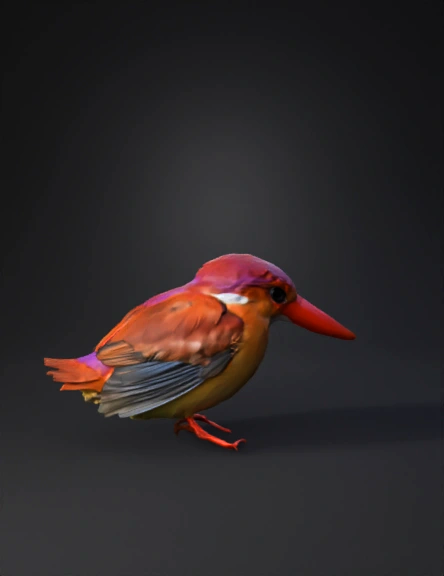
rufous-backed kingfisher 3d model

One of the most distinctive morphological features of the Rufous-backed Kingfisher (Ceyx rufidorsa) is its unusual foot structure. Unlike most birds that possess four toes, this species has only three toes—a trait known as tridactyly. This evolutionary adaptation is characteristic of many species within the Ceyx genus. The three toes are small, reddish-orange in color, and well-adapted for perching on slender branches near streams and forest edges. Typically, two toes point forward and one backward, providing a stable grip despite the reduced number. The absence of the fourth toe does not hinder the bird’s mobility or agility; in fact, it reflects the specialized perching behavior and compact size of this forest-dwelling kingfisher. The reduced toe count is a rare and notable trait among birds and serves as an important identifier for species classification within this group. This tridactyl foot structure highlights the bird’s evolutionary refinement for life in dense tropical environm
2K·PBR·v3.0-20250812


