3D Workspace
Home
Assets
Affiliate Program
Creator Program
Sign up/Log in
View Plans
DCC Bridge
biluta97506
12-05 06:23
Model Name
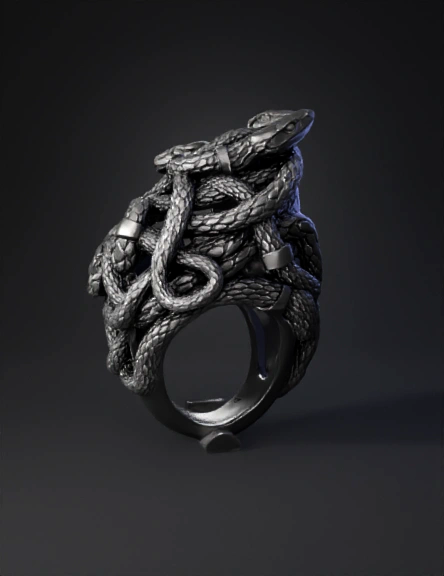
snake ring 3d model
Tags
props
props realistic
props rendering
props rendering realistic
realistic
rendering
rendering realistic
snake ring
Prompt
Oversized fantasy half‑hand ring composed of many interwoven silver snakes; no gemstones. Final piece spans approximately 80 mm (8 cm) along the finger/back of the hand. - Primary intent: wearable jewelry cast in silver (925). Strong sculptural volumes, complex line work, varied surface texture (polished ridges, matte fields, darkened patina in recesses). Emphasize depth, negative space, and readable silhouettes from a short distance. Hard specs and scale - Overall length (fingerwise): 80 mm ±2 mm. - Max width across the piece (side to side): target ~55–65 mm (designer to balance ergonomics). - Max height above finger plane: ~25–35 mm (avoid extremes that impede wearability). - Default inner diameter (ring opening): 18.2 mm (US size 8). If different finger size required, replace with exact inner diameter in mm. - Inner sleeve: smooth, comfortable surface with a step back from the ornate top (allow ~2–3 mm clearance under heaviest sculpted areas to reduce weight and contact). - Minimum wall/thickness for casting in silver: generally ≥1.6–1.8 mm for decorative elements; structural shank areas ≥2.0 mm. Confirm with the caster. Design requirements - Multiple snakes of varying thickness (thin, medium, thick) should intertwine and overlap, creating flowing lines and pockets of negative space. Avoid identical repetition. - Snake details: mixed scale textures (small scalation, smooth bands, raised ridges). Some heads slightly raised; mouths closed (no stones). Do not create fragile spikes thinner than minimum thickness. - Topography: combine high‑relief snakes and lower bas‑relief elements to create contrast. Use deliberate channels and undercuts to catch patina. - Underside (contact with skin): keep smooth and slightly contoured for comfort; avoid sharp edges and deep cavities that trap dirt. - Structural integrity: add hidden internal ribs or gentle hollows where needed to maintain strength while reducing weight. Ensure all sculpted pieces merge into a single, castable unity or clearly labeled weld points if made in sections. - Manufacturability: design with casting tolerances in mind. Include 1.2–1.8% shrinkage allowance per foundry recommendation; keep features >1.6 mm where possible; provide drainage/venting considerations for complex cavities if requested by foundry. Technical deliverables - High‑res sculpt: ZPR/ZTL or OBJ with high subdivision (for details). - Watertight printable STL for resin printing (for lost‑wax casting), 25–50 µm resolution recommended. - Clean CAD export (STEP/IGES) or retopologized mesh for CNC if needed. - Orthographic views with dimensions (top, side, underside) and a scale reference (ruler or coin). - Notes: indicate intended finish (polished ridges, satin fields, patina in recesses) and casting alloy (Sterling 925). Printing & finishing notes - Preferred prototype print: high‑resolution SLA resin (25–50 µm). Orient to minimize supports on fine decorative faces; supports acceptable on undersides. - Post‑processing: cast, clean, file contact edges, apply selective patina in recesses, final polish on raised ridges leaving matte contrast. Reference style cues - Provide 3–6 reference images: ornate medieval/Baroque metalwork, snake jewelry, high‑relief sculpture. Indicate preferred scale of scale pattern (fine vs coarse). Optional: deliver an alternate lighter version with increased hollows and internal ribs to reduce weight by ~20–30% while preserving silhouette.
Detailed Info
Related Models
Enter invite code
Enter invite code to get credits!
 biluta97506


 biluta97506