3D Workspace
Home
Assets
Affiliate Program
Sign up/Log in
?
Upgrade
DCC Bridge
Anonymous1766740356
03-12 00:19
Model Name
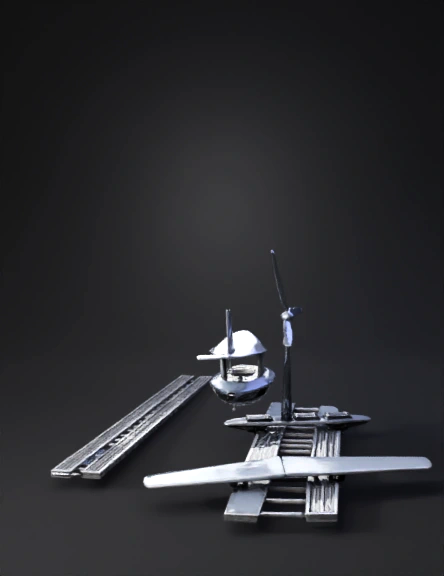
wind-powered maglev vehicle 3d model
Tags
maglev
realistic
rendering
rendering realistic
vehicle
vehicle realistic
vehicle rendering
vehicle rendering realistic
Prompt
Perfect Wind-Powered Mag-Lev Vehicle Description Overall Concept The vehicle is designed as a long, narrow, wedge-shaped aerodynamic body that rides above a magnetic track using four magnets mounted underneath the base. It is powered by wind propulsion using a sail, meaning airflow from a fan pushes the vehicle forward. The shape of the vehicle minimizes air resistance while keeping the center of mass low and stable so the craft remains aligned on the track. The design prioritizes three key goals: Minimal aerodynamic drag Stable levitation and alignment Efficient wind propulsion Shape and Body Structure Streamlined Wedge Body The body of the vehicle is shaped like a low wedge that gradually slopes upward from the front to the rear. The front nose is extremely low and narrow, allowing air to split smoothly around the vehicle rather than hitting a flat surface. This reduces pressure drag and allows air to flow evenly across both sides of the craft. The body then gradually rises toward the rear in a smooth slope, forming a streamlined profile. This gradual slope allows air to stay attached to the surface of the vehicle, reducing turbulence and preventing drag caused by airflow separation. The top of the vehicle is slightly curved, forming a shallow dome shape. Curved surfaces guide airflow smoothly over the vehicle rather than creating turbulence that occurs with flat surfaces. At the rear, the vehicle reaches its maximum height, where structural components such as the sail mount are located. The rear edge tapers slightly to prevent air from forming a low-pressure wake behind the craft. Bottom Platform (Magnetic Levitation Base) The underside of the vehicle is flat and rigid, forming the main structural platform of the craft. This base performs several functions: Holds the four magnets used for levitation Supports the body of the vehicle Maintains alignment on the track The flat surface ensures even magnetic force distribution, which helps the vehicle remain level while levitating. The edges of the base are slightly rounded so they do not catch on the walls of the track. Magnet Placement System The vehicle uses four magnets arranged in a rectangular pattern near the corners of the base. The magnets are positioned so that: Two magnets are placed near the front corners Two magnets are placed near the rear corners This layout provides balanced magnetic lift and stability. Each magnet sits inside a small mounting bracket or recessed slot that keeps it firmly attached to the base while still allowing small adjustments. These adjustments allow the magnets to be moved slightly inward or outward to find the best alignment with the magnetic track. Correct alignment allows the magnetic fields to repel the magnets in the track, creating magnetic levitation with minimal friction. Sail Propulsion System The vehicle is powered by a vertical sail positioned near the rear of the craft. The sail acts like a wind catcher. When the fan blows air down the track, the airflow hits the sail and pushes the vehicle forward. The sail has the following design characteristics: It is tall and thin, maximizing surface area facing the wind It is positioned toward the back of the vehicle, which helps keep the center of mass forward and prevents tipping The sail is mounted on a vertical mast attached to the main body The sail itself is slightly curved, similar to an airplane wing or boat sail. This curved surface helps capture airflow more effectively and convert wind energy into forward motion. Stability Features Because the vehicle rides on magnets rather than wheels, it must remain balanced and aligned on the track. To maintain stability, the vehicle includes: Low Center of Gravity Most of the weight of the vehicle is located close to the bottom platform. This prevents the vehicle from tipping or wobbling during movement. Side Stabilizer Fins Small vertical fins are placed near the rear sides of the vehicle. These fins act like the tail fins on an airplane and help keep the vehicle moving straight by stabilizing airflow around the craft. Even Weight Distribution The magnets, sail mount, and body structure are arranged so the vehicle remains balanced from front to back and side to side. Balanced weight prevents the craft from leaning toward one side of the track. Aerodynamic Efficiency The vehicle is designed to reduce the three main types of drag: Pressure Drag The pointed front nose splits airflow smoothly, preventing large pressure differences between the front and rear of the vehicle. Skin Friction The smooth curved surfaces allow air to glide across the vehicle without creating excessive friction. Turbulence Drag The gradual slope of the body prevents airflow from separating and forming turbulent vortices behind the vehicle. Together, these features allow the vehicle to move quickly down the track using only the force of wind from the fan.
Detailed Info
Related Models
Enter invite code
Enter invite code to get credits!
 Anonymous1766740356


 Anonymous1766740356