3D Workspace
Home
Assets
Affiliate Program
Sign up/Log in
?
Upgrade
DCC Bridge
Anonymous1772721245
03-05 14:38
Model Name
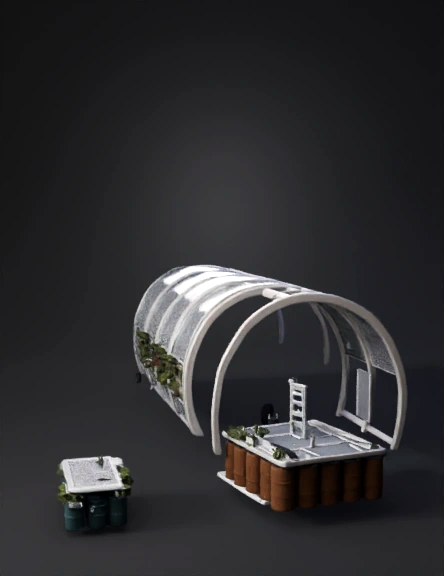
futuristic pavilion 3d model
Tags
architecture
rendering
modern
Prompt
Petroform is a modular civic pavilion that draws inspiration from the discovery of oil at Dammam No. 7 discovery, which is the well that made Saudi Arabia one of the world’s leading players in the energy sector. Petroform draws inspiration from the oil barrel, which is one of the most recognizable icons of the oil and gas sector, but gives it a modern twist as a new form of architectural system that celebrates the history of the Kingdom while dealing with environmental concerns of the future. Petroform deconstructs the oil barrel into a series of curved structural arches that provide shade for a public pavilion, which is recognizable as a new form of architectural system that can be used across different urban environments while retaining its recognizable form. While Petroform celebrates the history of oil, it is also a reflection of the evolution of the energy sector towards sustainability. A key innovation of the pavilion is the integration of recycled plastic construction components. Plastics are derived from hydrocarbons, the same resource that historically fueled the petroleum industry. By reclaiming and recycling plastic waste into durable building panels, seating elements, and modular wall systems, Petroform demonstrates how petroleum-derived materials can be reimagined as part of a circular economy rather than a source of pollution. Another innovative feature of this pavilion is the inclusion of recycled plastic construction materials. Plastic, like petroleum, has its roots in hydrocarbons. Hydrocarbons have been the primary fuel for the petroleum industry for decades. However, this pavilion shows how recycled plastic waste can be transformed into strong construction materials, furniture, and wall components, thus giving a new life to petroleum products rather than polluting the environment. Thus, this pavilion has been constructed to symbolically transform petroleum products from a fuel to a more environmentally friendly product. The recycled plastic components of this pavilion have been chosen for their lightweight properties, durability, and resistance to moisture and corrosion. This feature of the recycled plastic components makes them suitable for modular architecture, which has to be transported from one location to another and assembled in different climates and environments. The modular kit of parts includes components like curved structural arches, rammed earth components, perforated corten steel screens, recycled plastic composite components, solar roof canopies, and living green walls. Passive strategies for a more environmentally friendly design are integrated into the design. The design's curvaceous shape, reminiscent of a barrel, allows for maximum shading and ventilation. Solar panel canopies enable renewable energy harvesting for lighting and other uses, while green wall modules can be used for evaporative cooling and air quality enhancement. Water harvesting systems can be used to collect rainfall and condensation for vegetation and reduce environmental impact. Petroform is a design that can be rapidly deployed and adapted for different urban needs and requirements. It can be extended, reduced, or adapted to suit different urban requirements, such as a community market, cultural exhibition, shaded public space, or a festival structure. Petroform can be found across different urban environments, including Saudi Arabia's ROSHN cities, Saudi landscapes, and global cities, and can be seen as an identifier of Saudi Arabia's changing relationship with energy, materials, and sustainability. The design ultimately transforms the oil barrel into a community and cultural hub and a symbol of environmental responsibility, linking Saudi Arabia's industrial past with a vision for a sustainable urban future." make it 500 letters
Detailed Info
Related Models
Enter invite code
Enter invite code to get credits!