3D Workspace
Home
Assets
Affiliate Program
Creator Program
Sign up/Log in
View Plans
DCC Bridge
njan.nf
10-20 08:52
Model Name
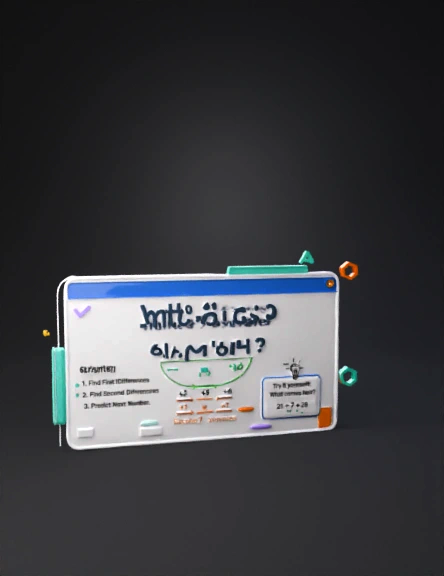
educational slide 3d model
Tags
diagram
presentation
props
props realistic
props rendering
props rendering realistic
realistic
rendering
rendering realistic
Prompt
Create an engaging and educational presentation that helps students preparing for Victoria Selective School entrance exams understand how to recognize and solve number sequences, especially those involving variable differences (non-constant gaps). Target Audience: Year 8–9 students preparing for Victoria Selective High School entrance tests (academic aptitude tests). Tone & Style: Student-friendly and visually engaging Step-by-step explanations with examples Interactive tone — include short quizzes or “try it yourself” slides Professional but easy to understand Content Outline: Introduction to Pattern Recognition What is pattern recognition? Why it’s important in selective tests Simple examples of patterns in daily life (shapes, sounds, numbers) Understanding Number Sequences Definition of a number sequence Common types: arithmetic, geometric, and variable-difference sequences Constant vs Variable Differences Example of constant difference (Arithmetic sequence): 2, 5, 8, 11, 14 … Example of variable difference: 3, 6, 10, 15, 21 … (differences: +3, +4, +5, +6) Explanation of how to find the pattern Strategies to Solve Variable Difference Sequences Step 1: Find the first differences Step 2: If differences aren’t constant, find the second differences Step 3: Predict the next number Visual illustrations using arrows or tables Examples & Practice Questions Example 1: 1, 4, 9, 16, 25, ? Example 2: 5, 8, 13, 20, 29, ? Example 3: 10, 20, 37, 61, 92, ? Include “Find the next term” and “Explain the pattern” tasks Common Tricks and Test Tips Watch out for alternating patterns Combine multiple rules (e.g., +2, ×2, +3, ×3...) Eliminate distractor options quickly Mini Quiz Section 3–5 sample problems for students to solve in 30 seconds each Answers with short explanations Summary and Key Takeaways Always look for how the sequence grows Test both differences and patterns within patterns Practice boosts recognition speed Challenge Question (for advanced students) Example: 2, 6, 12, 20, 30, ? (Differences: +4, +6, +8, +10 → Next +12 = 42) Visual Suggestions: Use arrows and color-coded differences Charts or tables for comparison Include animations showing sequence building step-by-step Duration: 10–15 minutes presentation (8–10 slides)
Detailed Info
Related Models
Enter invite code
Enter invite code to get credits!