3D Workspace
Home
Assets
Affiliate Program
Sign up/Log in
?
Upgrade
DCC Bridge
3D Creation Made Simple
Text & Image to 3D Model in seconds
One-Click Texturing & Smart Detail Editing
Free Credits Monthly
Start Free
Anonymous1726903416
10-11 13:01
Model Name
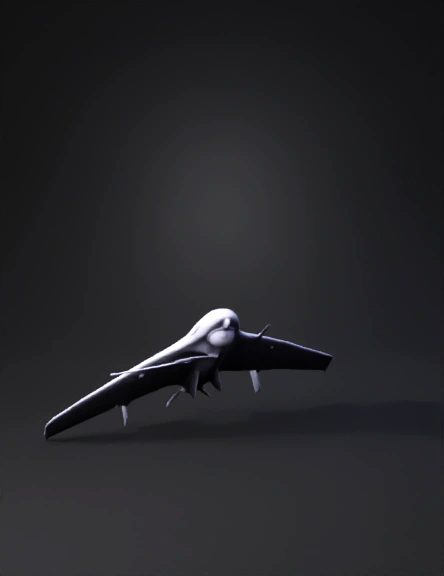
military drone 3d model
Tags
vehicle
rendering
realistic
Input
Prompt
Project objective: Create a highly realistic, physics-plausible 3D model of a small military reconnaissance UAV inspired by the "Eleron-3SV" blended-wing pusher drone shown in the references. Target use: high-quality product/visualization renders and close-up inspection. Deliverables should include a high-poly model, a baked low-poly version with clean UVs, and a full PBR texture set (albedo/base color, normal map, roughness, metallic, ambient occlusion). Provide LODs (LOD0 high poly ~200k-400k tris, LOD1 ~50k, LOD2 ~10k) and a 32-bit PNG or EXR height/normal bake. Overall shape & proportions: - Aircraft type: blended flying-wing / lifting-body with a central slightly raised fuselage. - Approximate wingspan: 1.5–2.0 m (scale can be metric). Fuselage length ~1.0–1.4 m. Keep proportions compact and squat like the reference. - Wing planform: straight inner trailing edge, slightly tapered leading edge to rounded tips; gentle dihedral (~1–3°). Wing thickness tapers from center to tip. - Twin small vertical endplates/stubs at wing tips (about 8–12% of half-span height). - Rear fuselage smoothly blends into pusher prop area. Rear-mounted two-blade pusher propeller on a short motor nacelle (prop hub recessed slightly into fuselage). - Nose: small, rounded, semi-spherical EO/IR turret protruding slightly below the nose centerline (sphere-like camera dome with a black glass aperture). - Top fuselage: low aerodynamic spine/bulge for electronics, with two small dorsal antenna fairings (thin rod/whip antennas approx. 20–30 cm equivalent scaled to model). - Underside: subtle access/panel lines, two small trapezoidal camera/antenna hatches, mounting points for payload bay (flat recessed rectangular hatch). - Control surfaces: subtle elevons at the trailing edge of wing (distinct panel separations). Fine surface detail: - Add seam lines for removable panels, small flush screw/fastener heads, recessed rivet rows (sparse and realistic, not overdone). - Molded composite panel joins and inspection plates. - Stenciled text decals: include a Cyrillic marking "ЭЛЕРОН-3СВ" on the top-right wing area and small technical stencils near access panels (keep text legible at close-up). - Navigation lights: green LED on the right wing top surface near mid-span; red LED on the left wing top surface near mid-span. Make them slightly recessed with small lens covers. - Small pitot/static probe on the nose right side (thin needle-like rod). Materials & textures (PBR): - Primary material: matte fiberglass / carbon-fiber reinforced polymer composite with subtle micro-roughness. Not glossy. Provide roughness map values 0.35–0.6 variance. - Small exposed metallic parts: brushed aluminum or stainless steel for fasteners and motor mounting. Metallic map: non-zero only for hardware. - EO/IR turret: black glass aperture (very low roughness, non-metallic), with visible lens reflection on specular. - Provide texture maps at 4k (4096×4096) for the high-quality variant; 2k (2048×2048) acceptable for LODs. - Normal map: high-frequency panel/fastener detail + bump for molded texture. - AO pass baked into combined AO map. Two texture variants to produce: 1) Technical gray scheme: - Uniform light gray base (Roughly 70–80% neutral gray), subtle sun-faded wear and fine dirt buildup near panel seams. - Cyrillic stencils in dark gray/black, subtle registration numbers on the centerline. - Scuffed leading edges and very light abrasion around the prop hub and cargo hatch. 2) Digital camouflage scheme: - Pixelated digital camo pattern in muted green / gray / white / olive tones (military-style pixels, irregular scale). - Pattern applied with correct UV continuity across blended surfaces; slightly varied roughness where paint overlaps. - Add subtle edge wear and chipping at panel lines. Technical requirements & export: - Clean quad/tri topology, non-overlapping UV islands, 2–4 material slots (composite, metal hardware, EO glass, lights). - Provide FBX and OBJ exports with embedded textures and separate PNG/TGA files for each map. - Include a low-poly collision mesh (simple convex hull) and LOD files as described. - Provide naming convention for parts (fuselage_top, wing_left, prop_blade_1, eo_turret, antenna_1, lights_right). Presentation & camera setup suggestions (optional): - Provide three render cameras: top orthographic, 45° three-quarter view, and close-up of nose turret. Use neutral photographic lighting HDRI + 3-point key fill. - Suggested neutral environment: soft overcast sky HDRI for accurate material appraisal. Notes for modeler: - Prioritize realistic aerodynamic curves and believable thickness distribution; avoid exaggerated toy-like proportions. - Keep moving parts separate (propeller, elevons) with correct pivots for animation.
Detailed Info
Related Models
Enter invite code
Enter invite code to get credits!