3D Workspace
Home
Assets
Affiliate Program
Creator Program
Sign up/Log in
View Plans
DCC Bridge
moshituntun130
12-03 17:02
Model Name
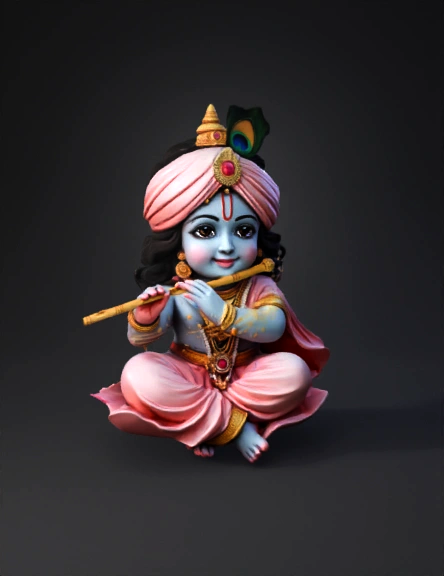
krishna 3d model
Tags
character
character fantasy
character rendering
character rendering fantasy
fantasy
flute
image
krishna playing
rendering
rendering fantasy
Input
Prompt
The image you uploaded is a vibrant, traditional Indian painting depicting Bal Krishna (Child Krishna) playing the flute. Here is a detailed description and the spiritual significance of the elements in the painting: 🖼️ Description of the Image Central Figure: The main figure is a young, beautiful Lord Krishna, typically shown with blue or dark skin, which is a common iconographic feature symbolizing his divinity and cosmic nature (like the color of a dark storm cloud or the deep ocean). Pose: He is seated or standing in a serene and playful posture, holding the flute (bansuri) to his lips and seemingly playing a melodious tune. Adornments: He is richly adorned with: A peacock feather in his crown (Mor Mukut), which is his most famous and distinctive head ornament. Traditional golden jewelry, including necklaces, earrings, bracelets, and perhaps ankle bells. A brightly colored cloth, often a dhoti or similar attire, in shades like yellow, pink, or green. Setting: The background often features a natural, pastoral setting, like the lush gardens of Vrindavan (where Krishna spent his childhood), complete with greenery, flowers, and sometimes animals like cows or peacocks, reflecting his role as the divine cowherd. 🙏 Spiritual Significance The depiction of Krishna as a child playing the flute is one of the most beloved and significant forms in Hinduism, embodying themes of divine love, joy, and spiritual awakening. 1. The Flute (Bansuri) The flute is arguably Krishna's most important symbol, carrying deep meaning: The Divine Call: The enchanting music from the flute is said to be the cosmic sound or the divine call that captivates all living beings, inviting them to abandon their worldly attachments and dedicate themselves to the path of devotion (Bhakti). The Hollow Body: The flute is a hollow piece of bamboo, which symbolizes the human body that must be emptied of ego, desires, and materialistic thoughts to become a pure instrument for the Divine to play its own divine melody. Divine Love: The music is also a symbol of Krishna's irresistible love, especially his eternal affection for his consort Radha and the Gopis (cowherd maidens) of Vrindavan. 2. The Peacock Feather (Mor Mukut) The feather adorning his crown is another powerful symbol: Beauty and Innocence: It represents the immense beauty, charm, and innocence of Krishna's character. Wisdom and Immortality: In some traditions, the feather, with its eye-like pattern, symbolizes all-seeing wisdom and immortality, as peacocks are known to be unharmed by venomous snakes. Lord's Gratitude: A popular legend recounts that the peacocks of Vrindavan were so overjoyed by his dance that their King offered him his feathers as a token of devotion, which Krishna graciously accepted and wore on his head as a sign of his gratitude and love for his devotees. In essence, the image is a celebration of divine joy (Ananda) and the irresistible, enchanting power of God's love and grace. Would you like to know more about the story of Krishna's childhood in Vrindavan or the symbolism of any other Hindu deity?
Detailed Info
Related Models
Enter invite code
Enter invite code to get credits!
 moshituntun130


 moshituntun130