3D Workspace
Home
Assets
Affiliate Program
Sign up/Log in
?
Upgrade
DCC Bridge
3D Creation Made Simple
Text & Image to 3D Model in seconds
One-Click Texturing & Smart Detail Editing
Free Credits Monthly
Start Free
Anonymous1764637555
12-02 01:06
Model Name
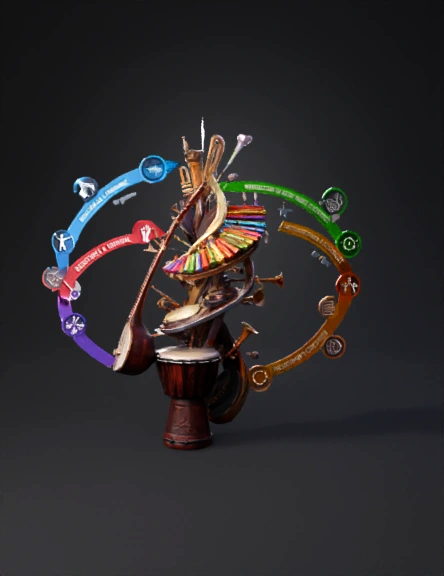
musical instrument sculpture 3d model
Tags
props
rendering
realistic
Prompt
1. Rhythm as a Language African musical traditions treat rhythm as communication—a social, spiritual, and historical language. Contributions: Polyrhythms and call-and-response structures foundational to jazz, blues, gospel, Afro-Brazilian samba, Caribbean soca and calypso, Afrobeat, hip-hop, and more. Drumming traditions (djembe, bata, ngoma, ashiko) now central to global music education and therapy. The concept of “the groove”—syncopation, swing, and improvisation—has African origins. 2. Music as Resistance & Survival Across the diaspora, African-descended peoples used music to maintain identity under enslavement, colonialism, and displacement. Examples: Spirituals encoded resistance, escape paths, and collective hope. Capoeira music (Brazil) disguised martial training as dance. Rara (Haiti) and Junkanoo (Bahamas) preserved African ritual life. Reggae expressed anti-colonial struggle and Black liberation globally. Hip-hop emerged from marginalization to become a worldwide voice for social justice. Music wasn’t only entertainment; it was survival, memory, and protest. 3. Innovation in New World Genres Nearly all major modern genres were either created or reshaped by African diasporic communities. United States Jazz Blues Gospel R&B Rock & Roll Funk House & techno Hip-hop Caribbean Reggae, dancehall (Jamaica) Calypso, soca (Trinidad & Tobago) Kompa, rara (Haiti) Bouyon (Dominica) Zouk (Guadeloupe/Martinique) Latin America Samba (Brazil) Candombe (Uruguay) Rumba & son (Cuba) Bomba & plena (Puerto Rico) Garifuna punta (Belize/Honduras) These genres are now global industries, shaping fashion, language, and technology. 4. Instruments & Techniques with African Lineage Many global instruments trace back to Africa: Banjo → descended from West African akonting/ngoni Marimba/xylophone → Southern & West African origins Steelpan → Trinidad (Caribbean, African-descended communities) Talking drums → inspired modern drum set patterns Shekere, agogo, clave, congas, bongos → African or Afro-diasporic Even the idea of improvisation in Western music gained new life through African-American jazz. 5. Philosophy of Music African and diaspora musical traditions emphasize: Community over individual virtuosity Music tied to dance, ceremony, and everyday life Cyclical rather than linear forms Improvisation and call-and-response “Feel” and “soul” as key aesthetics These ideas deeply shaped global pop, jazz, EDM, and even classical composition in the 20th and 21st centuries. 6. Cultural Bridges & Global Influence African rhythms and diaspora genres are now at the center of global music trends: Afrobeats and Amapiano dominate global charts. Caribbean dancehall rhythms power global pop (e.g., Rihanna, Drake, reggaeton). Gospel and soul influence K-pop vocal styles. African diasporic artists shape fashion, film, and political movements. African-descended musicians continuously create cultural bridges that reshape global identity. 7. Music as Global Education Through music, African-descended peoples have taught the world: new ways of hearing rhythm, harmony, and improvisation stories of freedom, migration, resilience, and joy models of cultural fusion celebration of Black identity and humanity Music becomes a living textbook of Black history and creativity. Just sum this all up into a image
Detailed Info
Related Models
Enter invite code
Enter invite code to get credits!
Expires in: 00:00:00