?

Insects 3D Models

Find the best Insects 3D Models, free download in STL, FBX, GLB, OBJ, 3MF, USDZ for 3D modeling and creation in Blender, 3D printing, game developing, animation, eCommerce, AR/VR and etc. Generated by Tripo AI 3D Generator.

Anonymous1770522237
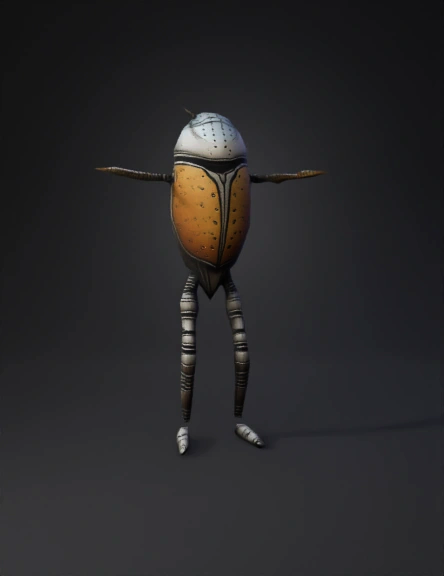
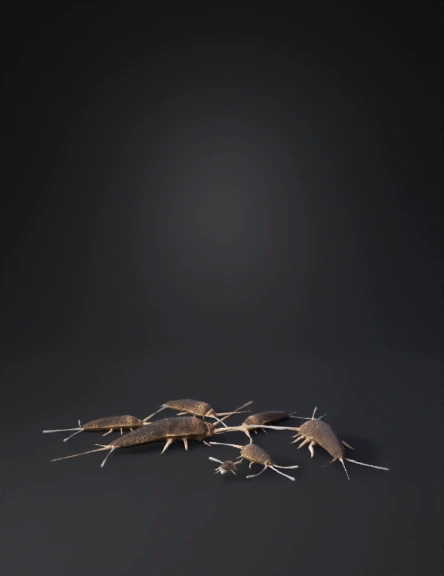
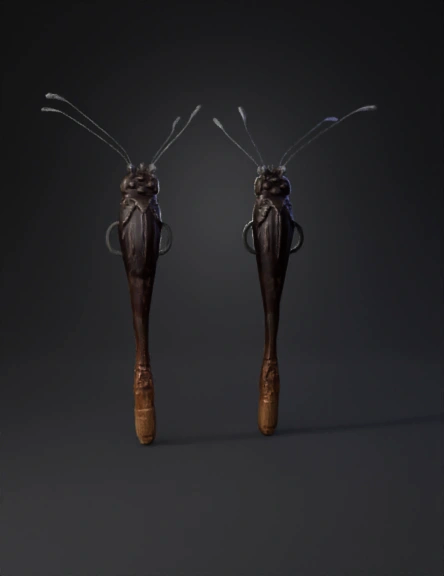
Stylized small metallic insect enemies called “Scrap-Mites”, designed for a top-down survivor game.
Insects inspired by cockroaches and ticks, made of twisted metal and space scrap.
Body segmented like an armadillo, allowing them to curl and roll.
Thin needle-like metal legs, sharp scissor-shaped mandibles.
Hand-painted style only, all textures painted by hand, no photorealism, no realistic PBR materials.
Cartoon proportions with compact bodies and exaggerated silhouettes for swarm readability.
Color palette: rusty browns, dark steel, sandy metal tones with subtle glowing accents.
Matte painted surface, visible brush strokes, simple highlights and shadows.
Aggressive but slightly stylized look, readable from distance in large groups.
Low-poly, mobile-optimized (Android), clean topology, minimal geometry.
Neutral pose, centered, ready for swarm animation.
No background, studio lighting, game-ready asset.
Anonymous1769911472
Anonymous1767829775
Stylized ranged desert creature inspired by The Spell Brigade Teethy Worm,
based on desert animals such as sand worms and desert insects,
low poly 3D character with simple shapes and hand-painted textures,
optimized for Android mobile games,

T-pose, neutral pose for rigging,

Design:
– Compact, grounded body with large central mass
– Sand worm–like segmented body with rounded chitin plates
– Short arm-like appendages near the front
– Minimal or hidden lower body, emerging from sand
– Large mouth shape, closed or slightly open, no fire or effects

Ranged archetype:
– Ranged attack implied by posture and animation only
– Mouth/front used as attack origin, no projectile geometry

Color and texture:
– Dominant moss green / dark green mixed with sandy tones
– Olive, dust and muted bone accents
– Fully hand-painted, matte finish

Technical:
– Extremely low poly
– Strong silhouette for top-down view
– Single texture atlas (512x512 or 1024x1024)
– No normal maps or transparency
– Clean topolo
Anonymous1769687670
Anonymous1768839761
Anonymous1745230811
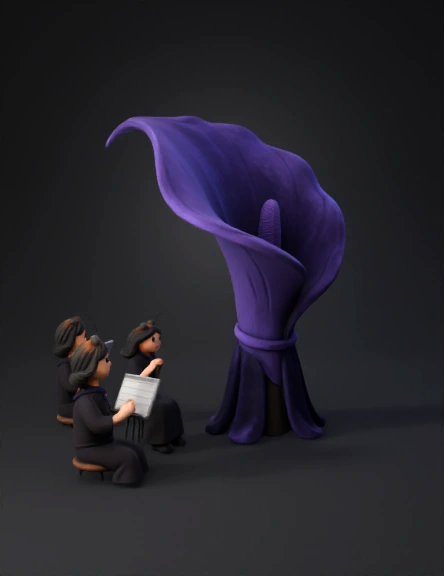
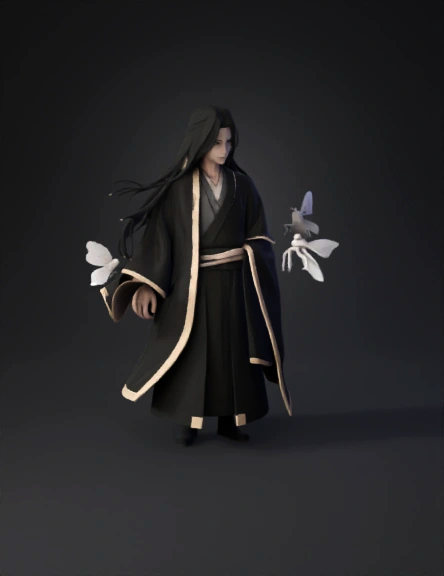
a majestic arum titan flower acting as a royal conductor, its purple spathe swaying like a velvet robe, directing an orchestra of enchanted insects
Anonymous1768838112
Anonymous1742265903
Anonymous1768152082
Anonymous1767364914
Anonymous1758291821
Anonymous1734361447
Climate-Driven Disease Outbreaks and Their Impact on Biodiversity

Climate change is increasingly amplifying the spread and intensity of wildlife diseases, creating a serious threat to global biodiversity. As temperatures rise, many pathogens are now able to survive and reproduce in regions that were previously too cold for them. A clear example is the chytrid fungus affecting amphibians, which thrives under climate-altered temperature patterns and has contributed to drastic population crashes worldwide. Additionally, vector-borne diseases carried by ticks and mosquitoes are expanding into higher altitudes and new habitats as warming conditions make these areas suitable for their survival. These climate-driven disease outbreaks weaken ecosystems, speed up species declines, and push vulnerable populations closer to extinction.
Anonymous1764529202
Anonymous1761992523
varios vagalume pequeno
Anonymous1763053525
Anonymous1740981985
Blue-throated Bee-eater The Blue-throated Bee-eater (Merops viridis) has feet that are small and adapted for perching rather than walking. Morphologically, its legs and feet show the following characteristics:

Type: Anisodactyl — three toes point forward and one toe points backward. This is the most common arrangement among perching birds.

Structure: The legs are short and weak, reflecting that the species spends most of its time flying or perching on branches, not walking on the ground.

Function: The toes and claws are strong and curved, allowing the bird to grip tightly onto thin branches or wires while scanning for flying insects.

Color: Typically dark gray or blackish, depending on the individual bird and its age.
Anonymous1761649575
Blue-throated Bee-eater The Blue-throated Bee-eater (Merops viridis) has feet that are small and adapted for perching rather than walking. Morphologically, its legs and feet show the following characteristics:

Type: Anisodactyl — three toes point forward and one toe points backward. This is the most common arrangement among perching birds.

Structure: The legs are short and weak, reflecting that the species spends most of its time flying or perching on branches, not walking on the ground.

Function: The toes and claws are strong and curved, allowing the bird to grip tightly onto thin branches or wires while scanning for flying insects.

Color: Typically dark gray or blackish, depending on the individual bird and its age.
Anonymous1761649575
Enter invite code to get credits!