?

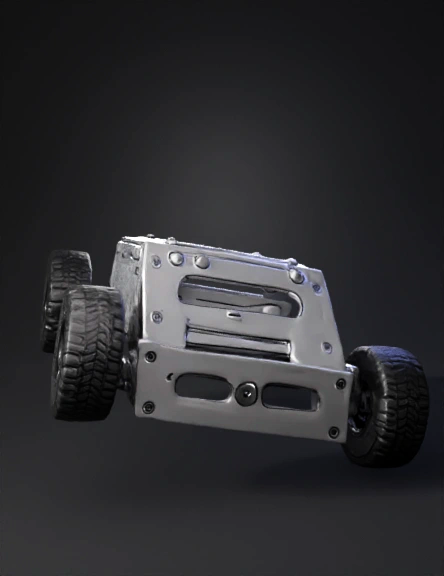
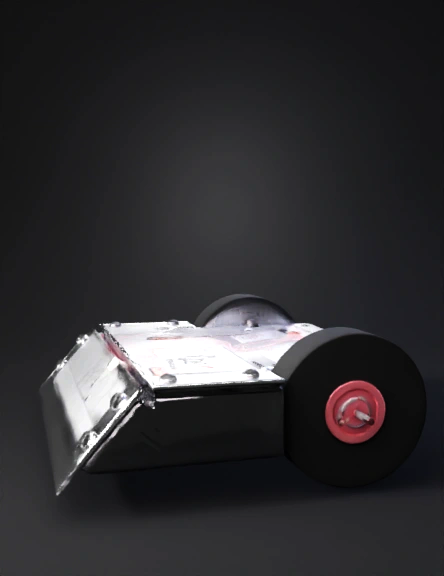
Robot chassis 3D Models

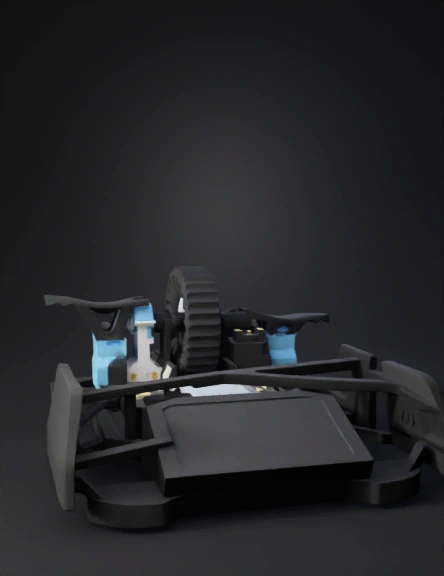
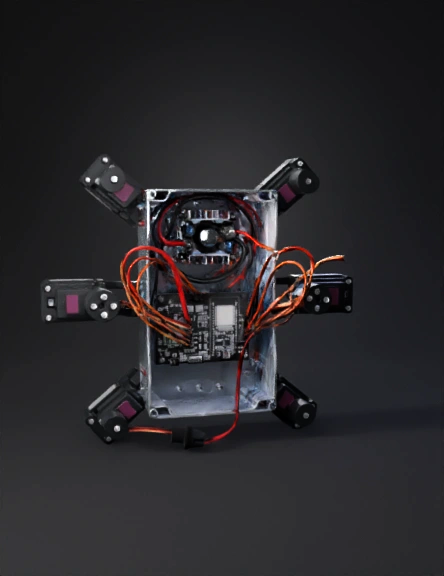
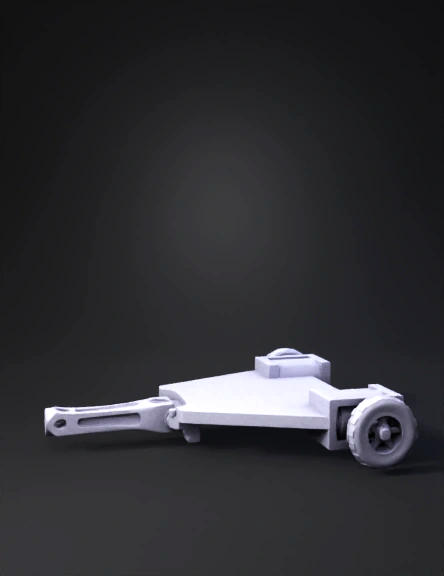
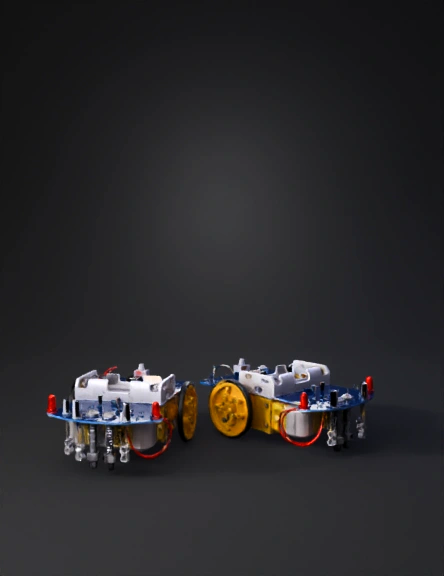
Find the best Robot chassis 3D Models, free download in STL, FBX, GLB, OBJ, 3MF, USDZ for 3D modeling and creation in Blender, 3D printing, game developing, animation, eCommerce, AR/VR and etc. Generated by Tripo AI 3D Generator.

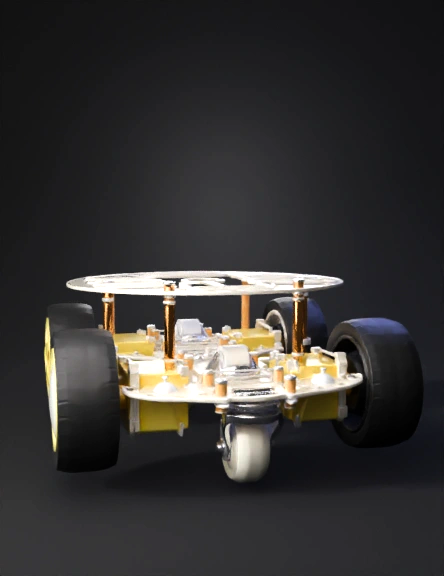
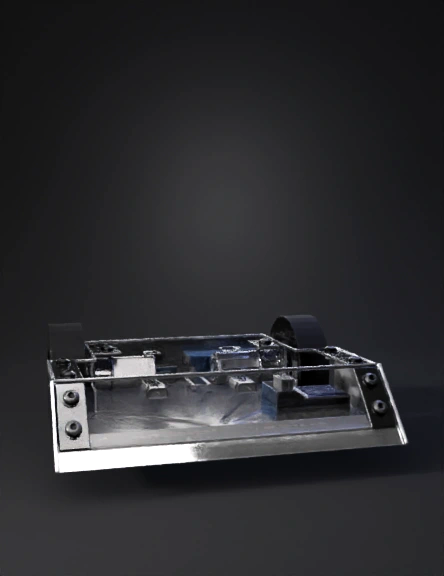
A detailed 3D CAD design of a custom two-tier robot chassis for the 'AeroGuard' project, intended for laser cutting from 4mm clear acrylic sheet.

Dimensions & Structure:

Overall Size: 220mm length x 160mm width.

Tiers: Two plates (top and bottom) separated by 50mm brass standoffs.

Material: Clear 4mm acrylic with polished edges.

Bottom Plate Features:

Four mounting bracket patterns for JGA25-370 geared motors at the corners.

A central holder compartment for a 3S 18650 battery pack and a BMS board.

A rectangular cut-out and mounting points in the center bottom for a shielded UV-C germicidal lamp module.

Slots for cable pass-through to the top layer.

Top Plate Features:

Mounting holes for an Arduino Uno R3 board, an L298N motor driver module, and an LM2596 buck converter.

A designated hole for a panel-mount 6-pin toggle switch.

A circular hole for a panel-mount SMA antenna connector.

Strategic cable management slots.

Front Section Assembly:

An angled mounting bracket (approx. 15 degrees down) fo
Anonymous1750255885
Anonymous1769363263
Generate a 3D printable internal chassis and shell structure for a compact desktop robot with a rounded futuristic body and head, based on this reference image.

3D printing constraints:
- Wall thickness 2.5–3 mm minimum.
- Avoid unsupported overhangs above 60 degrees.
- Add fillets and chamfers on edges.
- Split large parts for assembly and printability.
- Include tolerances for electronics (2–3 mm clearance).

Output:
- Parametric, clean CAD-style geometry.
- Manifold, watertight mesh suitable for STL export.
Anonymous1767530859
Design a modular robotic body with multiple internal chambers, suitable for electronics, motors, sensors, and mechanical parts.

Overall structure:

Full robot body enclosure with strong, clean, industrial design.

Leave an extra 5 mm internal clearance gap in all chambers to allow easy fitting and cable routing.

Body should be robust and symmetrical, suitable for outdoor or lab use.

Chamber 1 – Battery Compartment (Isolated):

Fully isolated chamber for the battery.

Battery must be electrically isolated but connected via wiring to motors.

Secure mounting and ventilation slots if needed.

Chamber 2 – Motor & Drive Components (Center):
Located in the middle of the robot body.

MG996R servo motor

DC geared motor, dual shaft (3–12V DC, 600 RPM)

L298 dual H-bridge motor driver

IR photoelectric encoder sensor

Provide mounting brackets and cable paths.

Chamber 3 – Control & Sensors (Top Section):
Positioned on the upper/top side.

Raspberry Pi 5 (8 GB RAM)

MPU6050 accelerometer & gyroscope

Camera cable c
Anonymous1769339760
genérame un chasis para un robot mini sumo rc
Anonymous1761676067
Anonymous1769043209
Anonymous1769043209
Anonymous1768304253
Anonymous1767959621
soccerrobot
Anonymous1768031664
Anonymous1767439399
Anonymous1766589168
genera este modelo
Anonymous1764706813
Anonymous1764484172
Design a highly detailed, professional rescue robot optimized for debris exploration and locating people. The robot must include an external shell, internal compartments (slots) for all components, wheels, vents, a removable lid, cable management, and internal supports. No actual models of the components are included—only empty spaces sized to fit them with mounting clearance. The design must be suitable for 3D printing and real-world assembly.

Chassis

- Shape: Low and wide rectangular platform for maximum stability.
- External dimensions: 180mm (length) × 140mm (width) × 40mm (height).
- Wall thickness: 3mm; rounded edges and corners for 3D printing reliability.
- Include removable lid: 3mm thick, rear hinges, front locks, with ventilation openings.
- Internal ribs and supports strategically placed for structural strength and component stability.
- Bottom maintenance hatch for easy access.

Wheels and Axles

- Two main DC-driven wheels: diameter 65mm, width 15mm.
- One front caster wheel: diameter 32mm, wi
Anonymous1764269064
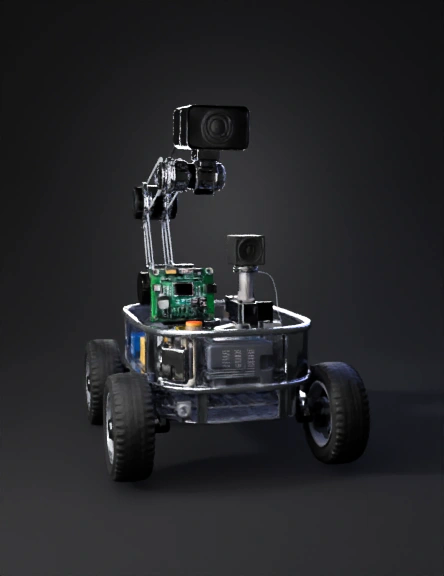
"Create a compact 4-wheel robot with a rectangular base frame. Place four small DC motors on the sides connected to four wheels. Add a flat middle plate for electronics. On the top plate, place a Raspberry Pi board at the center, and mount a small camera on a short stand at the front facing forward. Position a battery pack at the back of the robot. Add three ultrasonic sensors in the front row, and a small antenna on the top right side. Keep the design clean, organized, and realistic, with neat cable routing and a simple mechanical structure."
Anonymous1762871762
Design a compact four-wheel chassis sized approximately 25–30 cm long and wide, with four 12V DC gear motors mounted on the sides driving four rail-compatible wheels, and include a flat lower base plate for the wheel system and motor mounts, followed by a second internal electronics plate and a top transparent or metal cover plate. Place the Raspberry Pi 4 centrally on the top plate with the camera module mounted at the front on a small elevated arm angled around 45° downward toward the tracks. Position the microcontroller board (ESP32/Arduino Mega) just below the Raspberry Pi on the middle plate, along with the motor drivers (L298N/BTS7960) near the motors for short wiring. Mount the 12V battery pack toward the rear for weight balance, and place two DC-DC buck converters beside it to supply regulated 5V to the Pi and sensors. Install four ultrasonic sensors: one on the front, one on each side, and one on the rear edge; place four IR sensors underneath close to the track surface for gap detection; mount the I
Anonymous1762871762
Anonymous1762852631
Enter invite code to get credits!