3D Workspace
Home
Assets
Affiliate Program
Sign up/Log in
?
Upgrade
DCC Bridge
Anonymous1770416520
02-07 15:44
Model Name
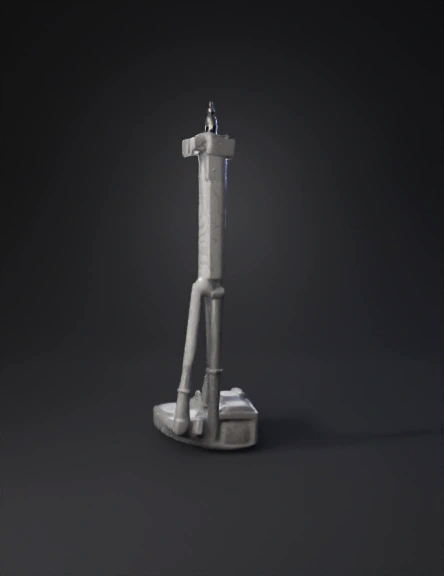
harbour wall 3d model
Tags
architecture
architecture realistic
architecture simulation
architecture simulation realistic
fortifications
realistic
simulation
simulation realistic
Prompt
📁 Contextualised study: Sheerness harbour Last edited: Feb 05, 11:20 Sheerness began as a 16th century fort, built to protect the River Medway from invasion and, after a raid on the Medway in 1667, the fortifications were strengthened. a town grew up around the dockyard at Sheerness, which remained in operation, supplying the Royal Navy, until 1960. The port remains important to Sheerness and is one of the UK’s leading car and fresh produce importers. The town is also the site of one of the UK’s first cooperative societies, and of the world’s first multi-storey building with a rigid metal frame. Sheerness harbour: the proposal As a consequence of the upturn in the economy, the harbour authority has found that it needs to increase the capacity for attracting ships to offload their cargo and therefore bring more economic prosperity to the Port of Sheerness. The harbour authority has decided to improve the existing harbour by creating a new additional sheet piled wall and adjacent hardstanding with crane rails for cargo off-loading to take place. The existing installation is shown on the drawings and is coloured green, whereas the proposed work is shown in black. The existing harbour wall, some 100m in length, is Victorian in age and built of stone blocks varying in sizes from 1m x 1m x 1m cube to 5m x 5m x 5m cube. It is now in need of strengthening. There is an existing road behind the harbour wall, which will be retained as far as possible to provide a foundation for the new road. Proposed construction Diagram of the Sheerness harbour wall plans. A further description can be found in the extended alt text below. Select here for extended ALT text. The Sheerness harbour wall plans are available to download: 7064EXQ - SC2 - Sheerness harbour proposal.pdf To strengthen and increase the height of the existing harbour wall, it is proposed to install interlocking sheet steel piles along the seaward side of the existing wall. These piles require anchors through the sheet piles, the existing harbour wall and the backfill. The position of the anchors is shown on the drawings. Mass concrete will be placed in the gap between the existing harbour wall and the interlocking sheet steel piles to ensure a watertight seal. The existing road is located below the top of the existing harbour wall and can be used for access for the piling rig during construction. In order to ensure that water drains through the existing road, it must be punctured using a pneumatic hammer, to the depth of the carriageway construction. Engineering fill (6F2) will be placed and compacted on top of the existing road to the required level. The proposed road, which will also include crane rails for the offloading of ships, is to be at the same level as the top of the capping beam of the sheet piles. Details of the proposed road are given on the drawings. Sheerness harbour: brief for the project manager Marine contractors, TMS Maritime Ltd, have successfully won the tender for the contract to construct a new harbour sea wall as described above. The works will include the construction of the new sheet pile harbour sea wall, the construction of a new road and the installation of crane rails. A typical section of the harbour wall is given at the end of this project brief. As a new project manager for TMS Maritime Ltd, your senior manager has asked you to produce a detailed programme for the construction of the harbour sea wall between chainage 0m and chainage 100m. The first operation is to set up the site offices, which are located some 500 metres from the harbour sea wall in an area adjacent to the existing access road to the harbour. The site compound should include all offices, welfare facilities (in compliance with CDM), services, storage and utilities that would be needed for the contract. Next would be the installation of the site boundary safety fence around the area of the proposed works. The installation of the sheet piles is the next step in the construction process, which will need a piling rig. The piling rig can be located on the existing road and adjacent to the existing harbour wall. 📺 Watch this: Sheet Piling Installation Animation A piling animation is available on Youtube: The voiceover is not in English but is inessential to understand the animation. The process is also described below. Once the sheet piles are installed, infill concrete is placed in two pours in the gap between sheet piles and existing wall. Each second pour must follow at least a day after each first pour, to minimise hydrostatic loading on the piles. Tie-rod anchors are required to prevent any movement of the sheet piles and are shown on the drawings. Tie rods are drilled through the sheet piles from a temporary platform on the seaward side. A plate is welded to the end of each tie rod and cast into the concrete anchor block. The concrete anchor block can be cast in sections as needed, but must be cast against undisturbed ground. A reinforced concrete capping beam needs to be constructed at the top of the sheet piles. The capping beam has fixings for tying fenders to, on the seaward side. The capping beam is constructed in 10 metre lengths, with a dowelled contraction joint between each 10 metre length. A full expansion joint is needed at the centre line (chainage 50 metres). These joint details are not shown on the drawings since for planning purposes, they can be ignored. The old crash barrier must be removed and the road must be punctured at two-metre centres each way to allow water to drain through the existing carriageway construction. The crane foundations are constructed on top of the existing road. The crane foundations have bolts cast into them for fixing the crane rail to the foundation. Engineering Fill (6F2) would then be placed on top of the existing road, around the crane foundations and compacted down to remove any voids. New bollards are constructed and then the new road is constructed around them. Fenders are fixed to the capping beam. The final task for completion of the project is to remove the site set-up, including all services, eg electricity, water and telephones, site compound and safety fencing based on the pdf and this information create a 3d model realistic one for explanation of the development which appears everything of the structural elements and precisly consider the dimentions
Detailed Info
Related Models
Enter invite code
Enter invite code to get credits!
 Anonymous1770416520


 Anonymous1770416520