?

This species 3D Models

Find the best This species 3D Models, free download in STL, FBX, GLB, OBJ, 3MF, USDZ for 3D modeling and creation in Blender, 3D printing, game developing, animation, eCommerce, AR/VR and etc. Generated by Tripo AI 3D Generator.

Anonymous1763496174
Anonymous1747937865
cria nisso em formato de 3d conforme a foto com 19 a 15 de poliguinos forma rbolox
Anonymous1763422031
lagartija ibérica realista
Anonymous1763220905
Anonymous1757633655
Anonymous1758358536
crea un quetzalcoatlus lowpoly
Anonymous1759504919
ящерица
Anonymous1762549381
Anonymous1718259149
Anonymous1760527015
microlophus atacamensis
Anonymous1755191886
Anonymous1761916089
Anonymous1718012751
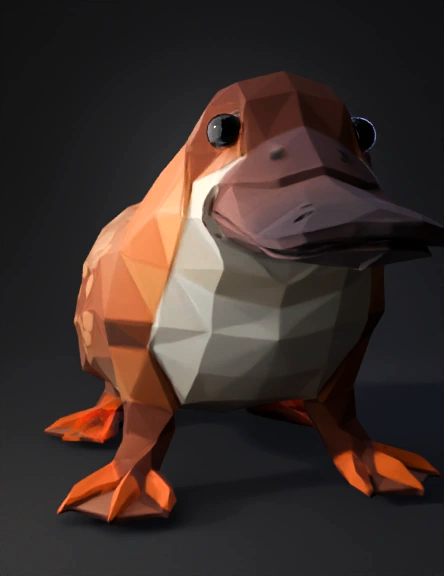
ornitorrinco con gafas exactamente como aparece en la imagen
Anonymous1742393232
triturus cristatus
Anonymous1760198956
triturus cristatus
Anonymous1760198956
One of the most distinctive morphological features of the Rufous-backed Kingfisher (Ceyx rufidorsa) is its unusual foot structure. Unlike most birds that possess four toes, this species has only three toes—a trait known as tridactyly. This evolutionary adaptation is characteristic of many species within the Ceyx genus. The three toes are small, reddish-orange in color, and well-adapted for perching on slender branches near streams and forest edges. Typically, two toes point forward and one backward, providing a stable grip despite the reduced number. The absence of the fourth toe does not hinder the bird’s mobility or agility; in fact, it reflects the specialized perching behavior and compact size of this forest-dwelling kingfisher. The reduced toe count is a rare and notable trait among birds and serves as an important identifier for species classification within this group. This tridactyl foot structure highlights the bird’s evolutionary refinement for life in dense tropical environm
Anonymous1760188810
One of the most distinctive morphological features of the Rufous-backed Kingfisher (Ceyx rufidorsa) is its unusual foot structure. Unlike most birds that possess four toes, this species has only three toes—a trait known as tridactyly. This evolutionary adaptation is characteristic of many species within the Ceyx genus. The three toes are small, reddish-orange in color, and well-adapted for perching on slender branches near streams and forest edges. Typically, two toes point forward and one backward, providing a stable grip despite the reduced number. The absence of the fourth toe does not hinder the bird’s mobility or agility; in fact, it reflects the specialized perching behavior and compact size of this forest-dwelling kingfisher. The reduced toe count is a rare and notable trait among birds and serves as an important identifier for species classification within this group. This tridactyl foot structure highlights the bird’s evolutionary refinement for life in dense tropical environm
Anonymous1760188834
Enter invite code to get credits!