?

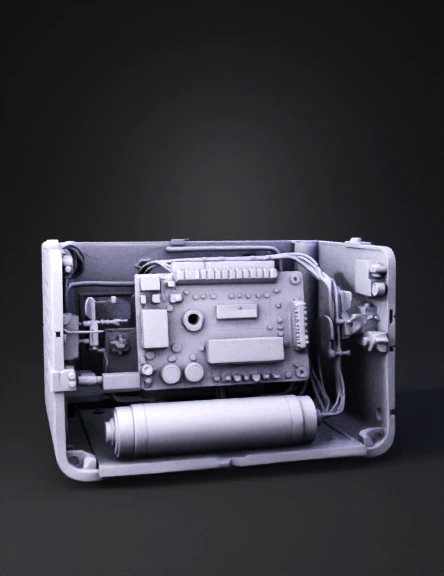
Electronics enclosure 3D Models

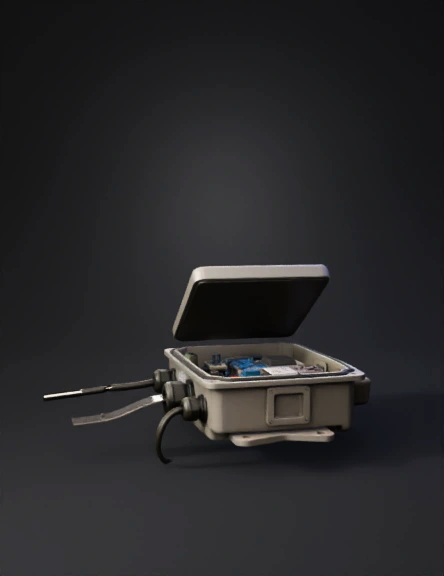
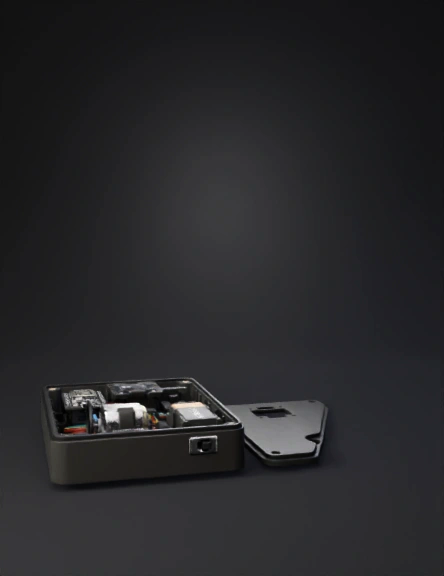
Find the best Electronics enclosure 3D Models, free download in STL, FBX, GLB, OBJ, 3MF, USDZ for 3D modeling and creation in Blender, 3D printing, game developing, animation, eCommerce, AR/VR and etc. Generated by Tripo AI 3D Generator.

Anonymous1774277984
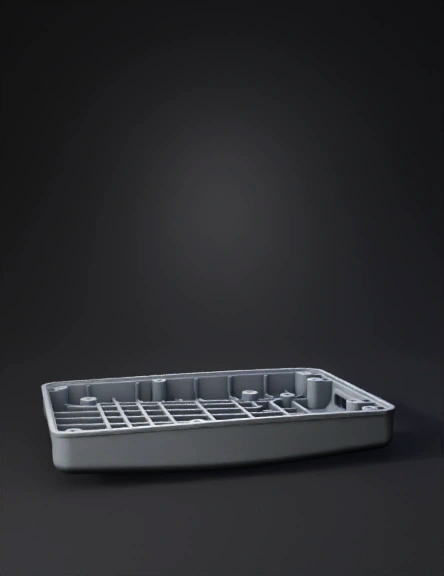
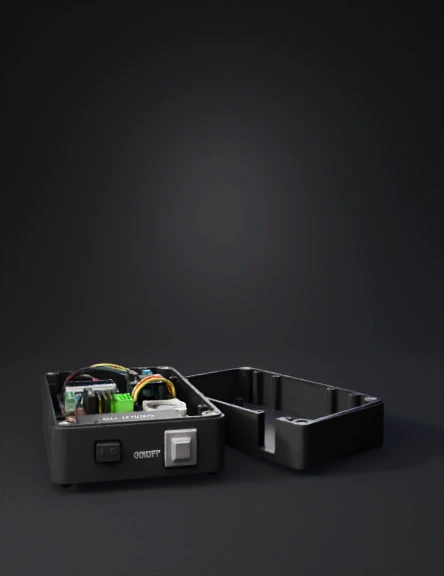
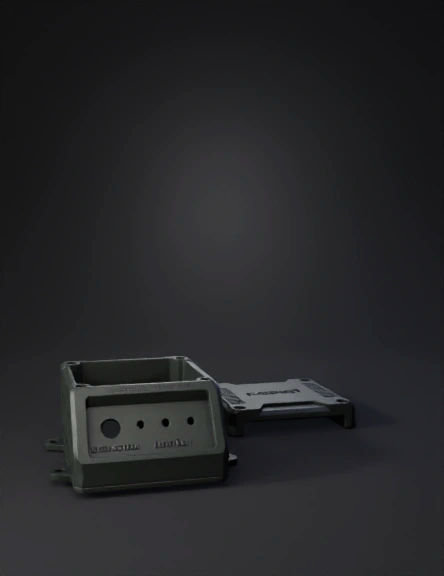
Design a compact two-piece electronics enclosure made entirely of plain plastic geometry.
CRITICAL — READ FIRST:

This model contains ONLY plastic parts. No PCBs, no electronic components, no circuits, no solder joints, no chips, no wires, no connectors, no metal parts of any kind are to be modeled or appear anywhere in the scene
The colored zones are simply flat colored plastic floor surfaces painted onto the base tray floor — they are just colored rectangles recessed 0.5mm into the floor surface to visually indicate where a real component will be placed later by hand
Do not model, imply, or suggest any electronic component in any way. If it has circuits on it, do not include it


Overall dimensions: 130mm (L) × 90mm (W) × 50mm (H), wall thickness 2mm, internal corners filleted 1mm, external corners filleted 2mm. Every part is plain grey plastic except the three colored floor zones.

BATTERY HOLDER DIMENSIONS — this drives the overall case width:

Exact size: 69.85mm (L) × 63.5mm (W) × 19.05mm (H) — converte
Anonymous1773951132
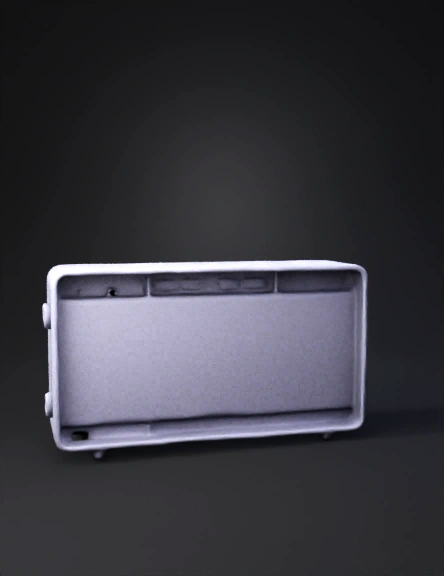
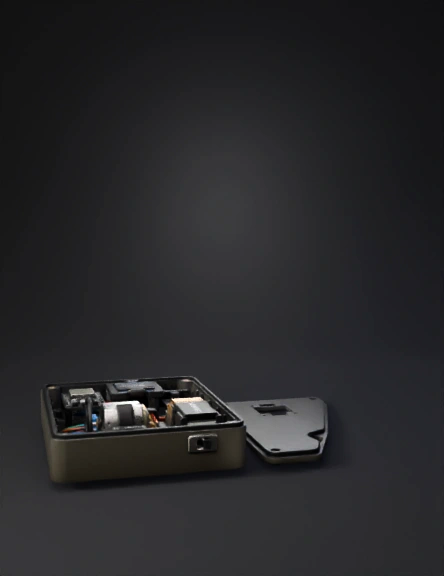
Design a compact two-piece electronics enclosure. Visualization model only — do not prepare for slicing or printing, no supports, no print orientation. Do not add any decorative features, spider legs, servo arms, or themed geometry. Plain mechanical enclosure only.
Overall dimensions: 110mm (L) × 80mm (W) × 40mm (H), wall thickness 2mm, internal corners filleted 1mm, external corners filleted 2mm.

COMPONENT ZONES — solid filled colored floor surfaces only. Do not model the actual components. Just fill the zone with solid color flush with the base floor so placement is immediately obvious:
BLUE zone — PCA9685 servo driver:

Exact board dimensions: 62.5mm (L) × 25.4mm (W)
Placed along the back long wall of the case interior
The 2-pin terminal block is on the LEFT short end of the board — the wall directly beside the terminal block must have a 10mm × 8mm rectangular cutout so power wires from the battery can plug straight into the terminal block from outside the case without opening the lid
The servo header pin
Anonymous1773951132
3D Model Prompt: Parametric Arduino Uno R3 Enclosure
Model Purpose
A fully customizable, professional-grade 3D printable enclosure designed specifically to house Arduino Uno R3 projects. This parametric model protects sensitive electronics from dust, damage, and short circuits while providing a clean, finished look for any Arduino-based creation. Unlike generic plastic boxes, this enclosure is precision-engineered to fit the exact dimensions of your project with built-in mounting for the Arduino board itself.

Core Design Features
1. Parametric Scalability
The entire enclosure is built using parametric equations, allowing users to generate any size needed. Key adjustable parameters include:

Exterior width (adjustable in mm)

Exterior height (adjustable in mm)

Exterior depth (adjustable in mm)

Wall thickness (default 2-3mm, adjustable)

Corner radius (for rounded edges, adjustable)

2. Integrated Arduino Uno R3 Mounting System
The base plate features precision-engineered standoffs that align perfectly with
Anonymous1773289893
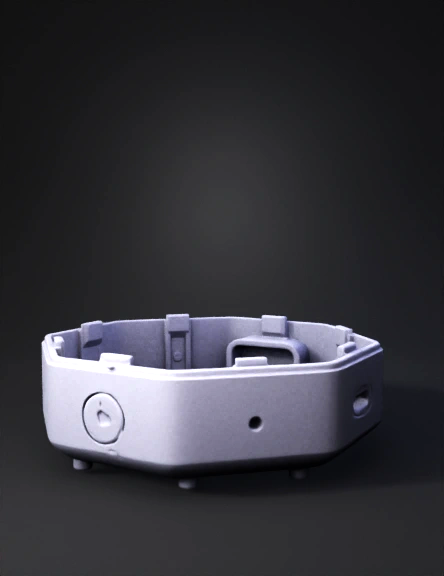
Create a simple rectangular 3D printable electronics enclosure box.

Outer dimensions: 80mm length, 60mm width, 30mm height.

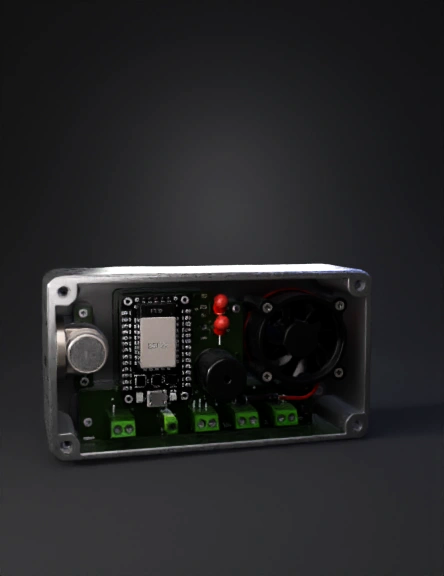
The box should be hollow inside with internal space around 70mm x 40mm x 25mm to fit an ESP32 board with extra space.

Features:
- removable top lid with four screw holes
- four internal mounting standoffs for a small PCB
- one rectangular cutout for a USB port
- two small circular holes for wires
- simple flat surfaces
- optimized for FDM 3D printing
- functional engineering enclosure design, not decorative
Anonymous1773666641
Prismatic CAD model of a 2-part electronics enclosure (Base + Lid) optimized for FDM 3D printing. Professional industrial design with 3mm wall thickness.

1. Dimensions:

Outer Dimensions: 81x66x43mm.

Internal Cavity: 75x60x37mm.

2. Base Components:

Cable Outlet: 15mm wide rectangular cutout on the 75mm side.

USB-C Port: Centered 12x6mm rectangular cutout on the 60mm side.

Ventilation: Clean, horizontal cooling slots on both long sides.

3. Lid Components (Separate Part):

Top Surface: Bold embossed text reading 'QUAD BINARY'.

Antenna Mount: Raised 20x20mm centered square platform.

Wire Exit: 6mm circular hole near corner.

Fitment: Separate part with matching 3mm snap-fit lip.

4. Style:

Clean CAD geometry, non-organic, perfectly straight walls, manifold STL. Matte grey finish."
Anonymous1773564142


"Generate a high-detail, technical CAD-style STL model of a custom two-part electronics enclosure (base and snap-fit lid) for an IoT device. The enclosure must be hollow with a wall thickness of 3 mm.

The rectangular base part should have precise internal dimensions of **7.5 cm length, 6 cm width, and 3.7 cm height**. It should feature rounded exterior edges. Specific features on the base include:

* A centered USB-C port cutout on one of the **6 cm width** sides.
* Two small circular wire pass-through holes on one of the **7.5 cm length** sides (similar to the placement shown in `image_0.png`, but without the internal standoffs).
* A clean pattern of horizontal ventilation slots on the side panels.
* **no mounting standoffs or internal screw points. The lid and base must be designed with matching snap-fit features for assembly.

The separate, matching top lid must be flat with rounded corners and include the following features on the top surface:

The brand name 'QUAD BINARY'
Anonymous1773564142
Create a realistic 3D printable plastic electronics enclosure for a medical prototype medical device.

The enclosure must have **two parts**:

1. a **bottom box**
2. a **removable snap-fit lid**.

Dimensions (slightly larger for easier component placement):

Length: **120 mm**
Width: **80 mm**
Height: **35 mm**
Wall thickness: **2 mm**

Features required:

1. Bottom enclosure:

* Simple hollow interior for placing electronics (no dedicated ESP32 mounting platform required).
* Space for a **9V battery and wires** inside the box.
* At the **bottom surface**, design a **sliding outlet slot for an FSR (Force Sensitive Resistor) sensor** so it can slide in and out when needed.
* The sliding mechanism should have **two guiding rails** to hold the FSR in place.

FSR rail specifications:

Rail distance: **16 mm apart**
Rail height: **4 mm**
Rail length: **50 mm**
Slot opening at bottom so the FSR can **slide in and slide out easily**.

2. Front panel openings:

* Three circular holes for LEDs (diameter **5 mm** each)
Anonymous1773251408
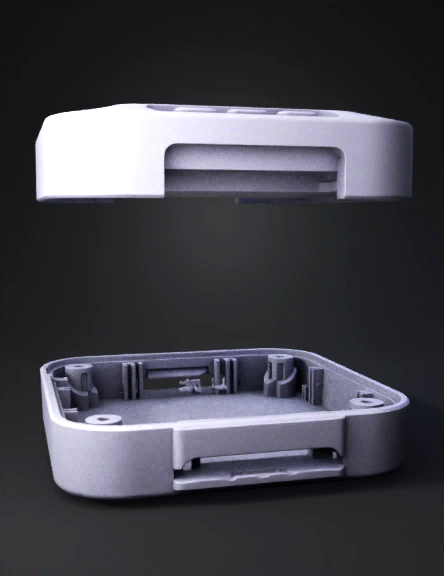
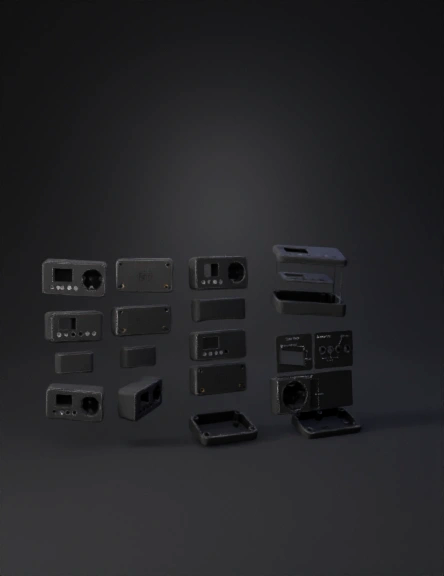
A sleek, shA highly detailed, shallow, low-profile two-part surface-mounting project box. A complete assembly showing a detachable matching lid (tampa) and base (copo), presented in a technical exploded perspective. The smooth front panel of the tampa features two precisely-positioned, clean-edged horizontal rectangular recesses, designed for screens, aligned to the visual aspect ratio proportions previously discussed. All sides of the copo base feature an enhanced, clean array of slanted parallel passive ventilation fins (louvers), angled upward at 45 degrees, as seen in previous designs but more refined. The model includes pre-molded details for specific component mounting bosses and mating screw-holes, precisely detailed for M3 screws to take brass inserts. There are absolutely no numbers (like '1.11') or text on the panel or sides. The entire assembly has a matte industrial gray finish, set against a technical workbench with engineering tools (generic shield, ESP32 reference PCB correct OLED screen, calib
Anonymous1773189396
electronics enclosure with ventilation and front display
Anonymous1772865892
GENERAL ENCLOSURE:Create a high-resolution, modern parametric project box with a matte black finish and a separate, detachable top lid. The overall shape should be a rectangular prism with rounded exterior edges (2mm radius) and an approximate wall thickness of 2.5mm for the main body. It must include four internal screw bosses (standoffs) on the corners for securing the lid with M3 screws.TOP LID (0.5cm Thickness):The top lid must be a solid plane with a 0.5cm wall thickness. Centrally located on this lid, create a precision rectangular gap (cutout) measuring exactly 3.4cm (34mm) in width and 2.4cm (24mm) in height to fit a 0.96" OLED screen. Include small internal screw hole bosses (e.g., four holes spaced at 31mm x 18mm) around the internal perimeter of this gap for screen mounting, ensuring $0.2\text{mm}$ tolerance for the screen's edge.
Anonymous1773072992
Anonymous1772724621
Anonymous1772197879
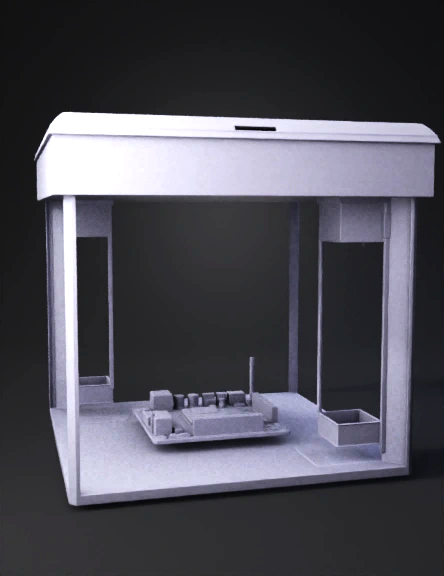
Create a rectangular dry electronics compartment sized to fit inside a 200x200x130mm enclosure. Include a vertical PCB (100x60mm) mounted on standoffs. Include a battery block (80x40x20mm) secured with brackets. Add ventilation slots and charging port opening on outer wall. Keep mechanical and realistic.
Anonymous1772452087
Anonymous1772116884
Gemini said
I understand your frustration—generic AI generators often struggle with internal electronic layouts and can mistakenly render technical parts as solid plastic blocks. To get a high-quality, functional file, you need a prompt that specifies a "Shell" or "Enclosure" design rather than a solid object, and clearly defines the cutouts for your specific components.

Here is a refined, technical prompt designed for high-accuracy 3D modeling tools (like Sloyd.ai, Masterpiece X, or for a freelance designer).

The Corrected 3D Design Prompt
"Design a two-piece (top lid and bottom base) hollow enclosure for a medical device. External dimensions: 80mm x 50mm x 25mm. Material: White Medical Plastic.

Internal Technical Requirements:

Hollow Interior: The model must be a hollow shell with a 1.5mm wall thickness to accommodate internal electronics.

MCU Stand-offs: Include 4 small mounting posts (bosses) inside the base to elevate an ESP32-C3 SuperMini board.

Component Cutouts (Crucial):

Top Face: A rectangula
Anonymous1761714487
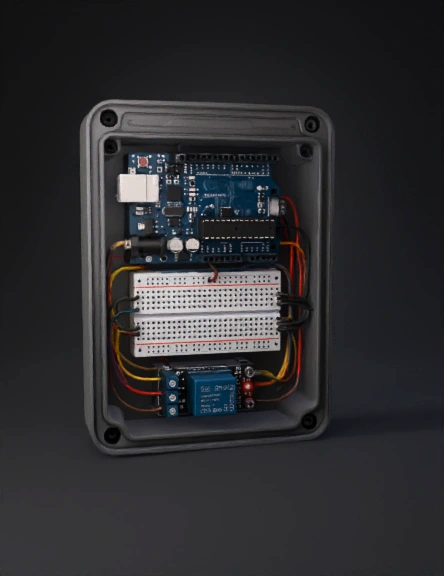
Design a simple rectangular 3D printable electronics enclosure with internal dimensions of approximately 14 cm × 9 cm × 5 cm. The box should have a flat base and completely empty internal space to accommodate a breadboard and electronic modules. Include four internal corner screw posts for M3 screws to secure a removable flat top lid. The lid should slightly overlap the box edges for basic splash protection. Add one circular side hole for external sensor wires and one small top hole for a LoRa antenna. The wall thickness should be 3 mm for strength. The design should be simple, minimal, and suitable for FDM 3D printing without complex hinges or internal compartments.
Anonymous1771921289
📦 Состав моделей
1️⃣ Корпус (основная деталь)

Внутри:

карман под NFC ⌀26 × 1.3 мм

окно QR 40×40 мм с направляющими

посадка под кнопку 12×6 мм

стойки под тактовую кнопку

универсальный слот ESP32 30×22×7 мм

4 стойки под M2

упор под USB

канал проводов к батарейке

карман под держатель CR2032 25×21×6.8 мм

защёлки под заднюю крышку

нижнее окно USB 11×5 мм (утоплено)

Толщина стенок: 2.2 мм
Габарит: 95×60×16 мм

2️⃣ Задняя крышка

защёлки по периметру

2 отверстия под M2

рёбра жёсткости

внутренняя выборка под батарейку

3️⃣ Кнопка-толкатель

ход 0.6 мм

ограничитель

посадка в направляющие корпуса

4️⃣ QR вставка (сменная)

39.6×39.6×1.2 мм

легко вставляется спереди

можно печатать другим цветом

5️⃣ Прижим NFC

защёлкивается в 2 точки

не давит на антенну

держит метку без клея

6️⃣ Подставка-док

Функции:

защёлкивание устройства

угол 12°

канал под USB кабель

окно подключения снизу

карманы под TPU ножки

Габарит: 70×65×18 мм

🔩 Крепёж

Используется:

4× M2×6 → крепление ESP32

2× M2×6 → задняя к
Anonymous1769374759
Enter invite code to get credits!